Division of Biochemistry, Department of Basic Sciences, Loma Linda University, Loma Linda, CA, USA.
Department of Pathology and Human Anatomy, Loma Linda University School of Medicine, Loma Linda, CA, USA.
Mol Oncol. 2020 Nov;14(11):2796-2813. doi: 10.1002/1878-0261.12762. Epub 2020 Aug 21.
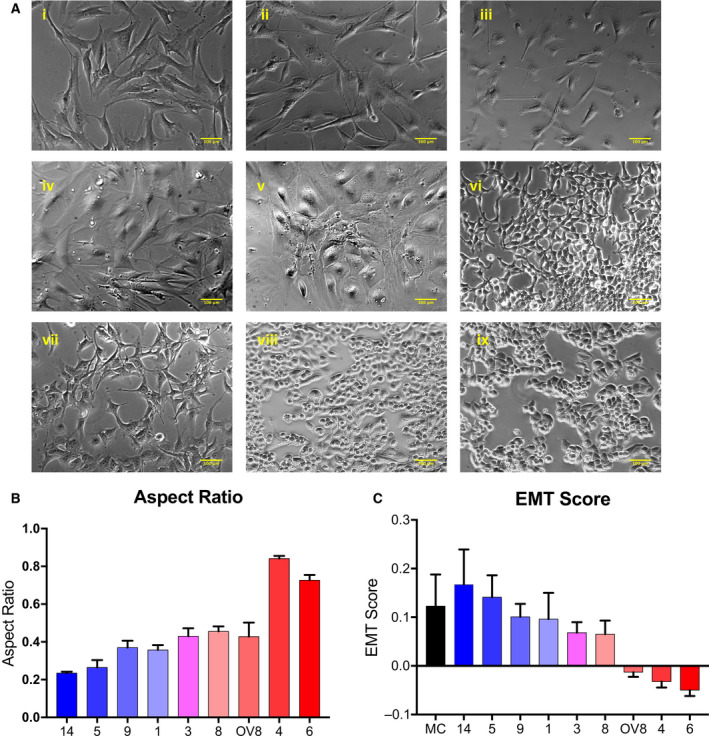
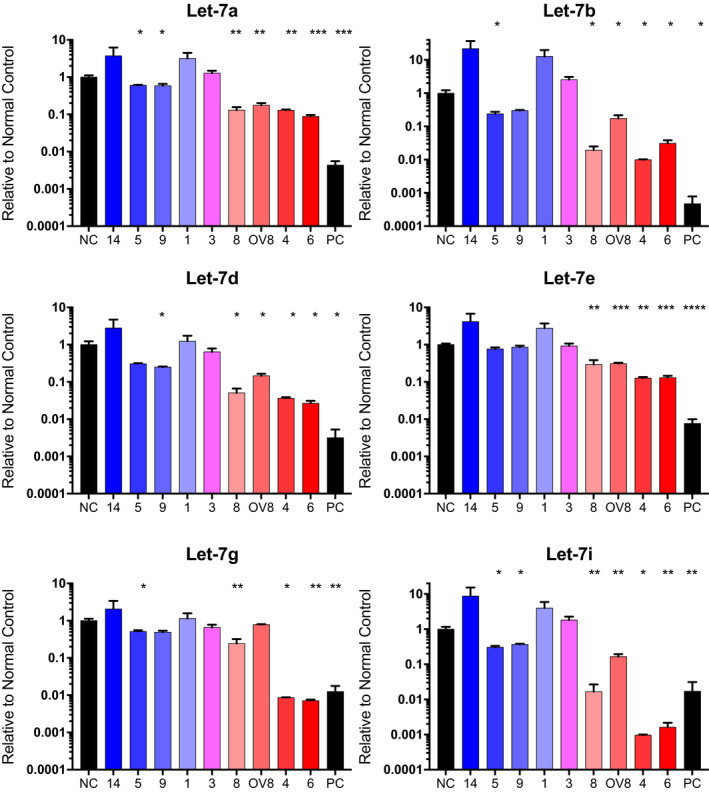
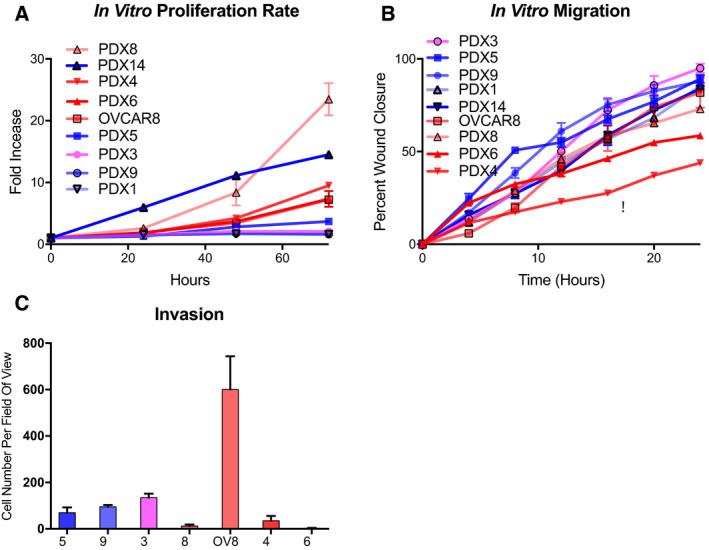
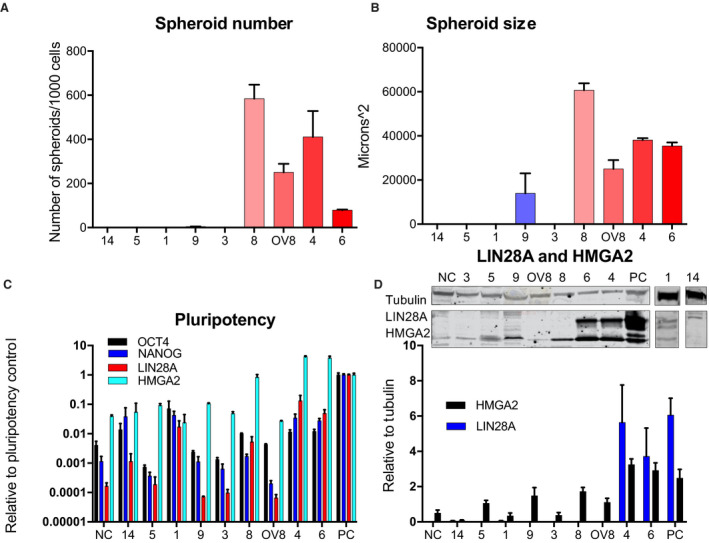
Patient-derived samples present an advantage over current cell line models of high-grade serous ovarian cancer (HGSOC) that are not always reliable and phenotypically faithful models of in vivo HGSOC. To improve upon cell line models of HGSOC, we set out to characterize a panel of patient-derived cells and determine their epithelial and mesenchymal characteristics. We analyzed RNA and protein expression levels in patient-derived xenograft (PDX) models of HGSOC, and functionally characterized these models using flow cytometry, wound healing assays, invasion assays, and spheroid cultures. Besides in vitro work, we also evaluated the growth characteristics of PDX in vivo (orthotopic PDX). We found that all samples had hybrid characteristics, covering a spectrum from an epithelial-to-mesenchymal state. Samples with a stronger epithelial phenotype were more active in self-renewal assays and more tumorigenic in orthotopic xenograft models as compared to samples with a stronger mesenchymal phenotype, which were more migratory and invasive. Additionally, we observed an inverse association between microRNA let-7 (lethal-7) expression and stemness, consistent with the loss of let-7 being an important component of the cancer stem cell phenotype. We observed that lower let-7 levels were associated with the epithelial state and a lower epithelial mesenchymal transition (EMT) score, more efficient spheroid and tumor formation, and increased sensitivity to platinum-based chemotherapy. Surprisingly, in these HGSOC cells, stemness could be dissociated from invasiveness: Cells with lower let-7 levels were more tumorigenic, but less migratory, and with a lower EMT score, than those with higher let-7 levels. We conclude that let-7 expression and epithelial/mesenchymal state are valuable predictors of HGSOC proliferation, in vitro self-renewal, and tumor burden in vivo.
患者来源的样本与高级别浆液性卵巢癌(HGSOC)的现有细胞系模型相比具有优势,因为后者并不总是可靠且表型忠实于体内 HGSOC 的模型。为了改进 HGSOC 的细胞系模型,我们着手对一组患者来源的细胞进行特征分析,并确定其上皮和间充质特征。我们分析了 HGSOC 患者来源异种移植(PDX)模型中的 RNA 和蛋白质表达水平,并使用流式细胞术、划痕愈合试验、侵袭试验和球体培养对这些模型进行了功能表征。除了体外工作外,我们还评估了 PDX 在体内(原位 PDX)的生长特征。我们发现所有样本都具有混合特征,涵盖了从上皮到间充质状态的范围。与具有较强间充质表型的样本相比,具有较强上皮表型的样本在自我更新试验中更为活跃,在原位异种移植模型中更具致瘤性,而具有较强间充质表型的样本则更具迁移和侵袭性。此外,我们观察到微 RNA let-7(致死-7)表达与干性之间存在反比关系,这与 let-7 的缺失是癌症干细胞表型的重要组成部分一致。我们观察到较低的 let-7 水平与上皮状态和较低的上皮间质转化(EMT)评分相关,更有效地形成球体和肿瘤,并增加对铂类化疗的敏感性。令人惊讶的是,在这些 HGSOC 细胞中,干性可以与侵袭性分离:具有较低 let-7 水平的细胞具有更高的致瘤性,但迁移性较低,EMT 评分较低,而具有较高 let-7 水平的细胞则相反。我们得出的结论是,let-7 表达和上皮/间充质状态是 HGSOC 增殖、体外自我更新和体内肿瘤负担的有价值预测因子。