Department of Physiology & Biophysics, University of Mississippi Medical Center, Jackson, MS, USA.
Department of Pharmacology and Toxicology, University of Mississippi Medical Center, Jackson, Mississippi, USA.
Physiol Rep. 2020 Jul;8(13):e14501. doi: 10.14814/phy2.14501.
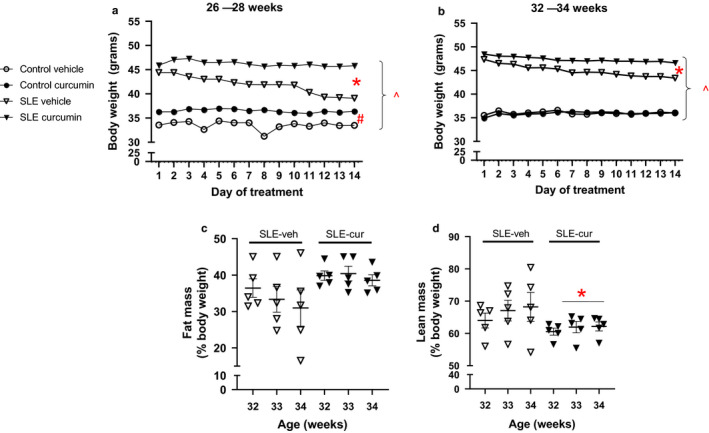
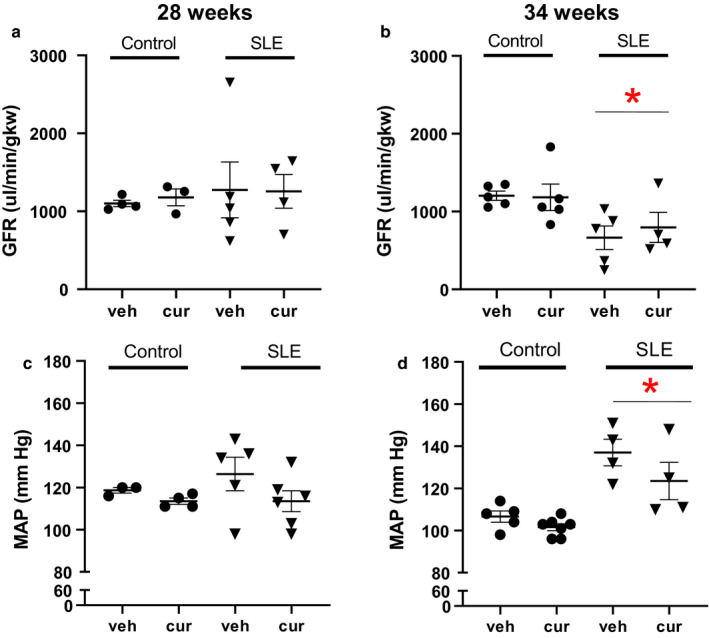
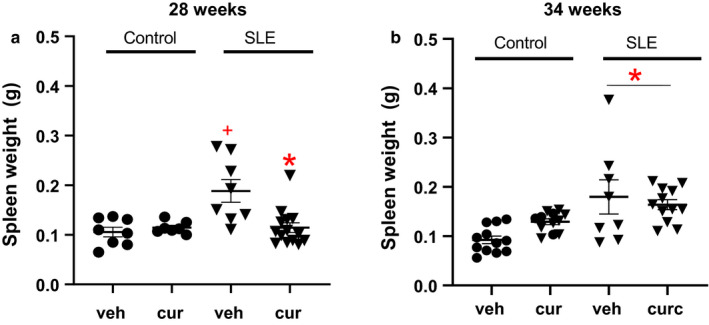
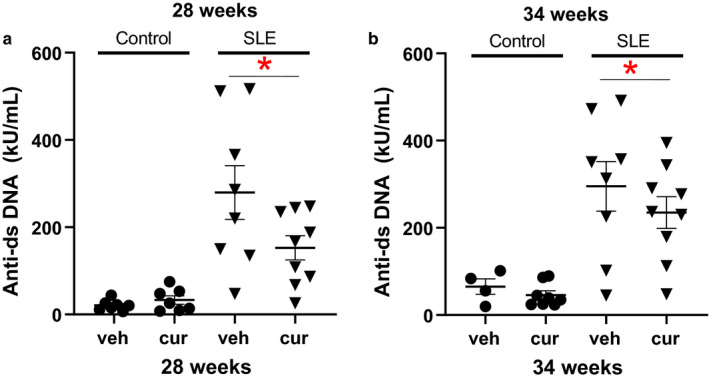
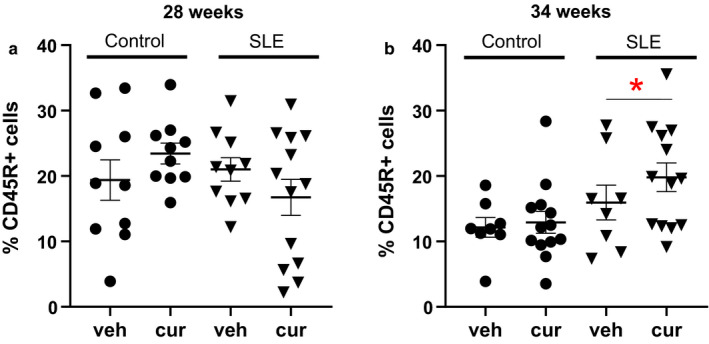
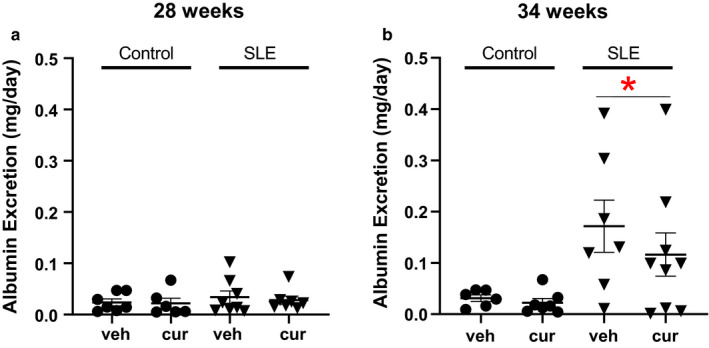
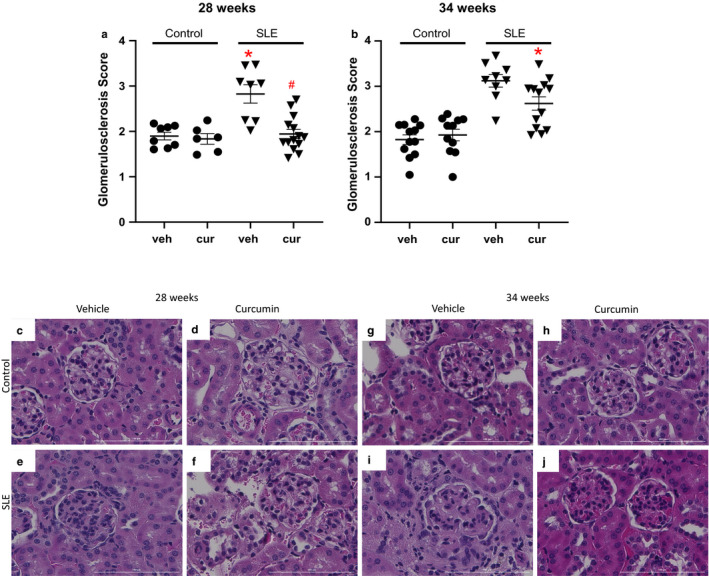
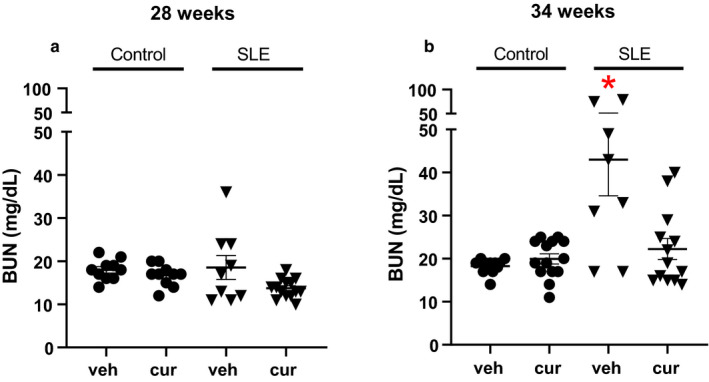
Systemic lupus erythematosus (SLE) is an autoimmune disorder with prevalent hypertension and renal disease. To avoid side effects of immunosuppressive drugs, alternative therapies are needed. Curcumin has been used in Eastern medicine for its anti-inflammatory and antioxidant properties. This study tested whether oral curcumin administration attenuates autoimmunity and renal injury during SLE. Female NZBWF1 (model of SLE) and NZW/LacJ (control) mice were administered curcumin (500 mg kg day , oral gavage) for 14 days in two separate groups beginning at either 26 or 32 weeks of age. Body weight and composition were monitored throughout the study. Immune activity was assessed by spleen weight, circulating dsDNA autoantibodies, and B lymphocytes. Renal injury (albumin excretion, glomerulosclerosis, blood urea nitrogen (BUN)) was measured as a hemodynamic function (glomerular filtration rate (GFR), mean arterial pressure (MAP)) in conscious mice. Body weight and composition were maintained in curcumin-treated SLE mice, but decreased in vehicle-treated SLE mice. Curcumin-treated SLE mice had lower spleen weight and renal injury (glomerulosclerosis) compared to vehicle-treated SLE mice when treatment started at 26 weeks of age. When curcumin treatment started at 32 weeks of age, renal injury (glomerulosclerosis, BUN) was reduced in SLE mice compared to vehicle-treated SLE mice. GFR was reduced, and MAP was increased in vehicle-treated SLE mice compared to controls; however, these were not improved with curcumin. No significant changes were observed in curcumin-treated control mice. These data suggest that curcumin modulates autoimmune activity and may lessen renal injury in female mice with SLE.
系统性红斑狼疮(SLE)是一种自身免疫性疾病,常伴有高血压和肾脏疾病。为了避免免疫抑制剂的副作用,需要替代疗法。姜黄素在东方医学中因其抗炎和抗氧化特性而被使用。本研究测试了口服姜黄素给药是否在 SLE 期间减轻自身免疫和肾脏损伤。雌性 NZBWF1(SLE 模型)和 NZW/LacJ(对照)小鼠在 26 或 32 周龄时开始分别在两组中接受姜黄素(500mgkg-1,口服灌胃)14 天。在整个研究过程中监测体重和组成。免疫活性通过脾脏重量、循环 dsDNA 自身抗体和 B 淋巴细胞来评估。肾脏损伤(白蛋白排泄、肾小球硬化、血尿素氮(BUN))作为清醒小鼠的血液动力学功能(肾小球滤过率(GFR)、平均动脉压(MAP))进行测量。在接受姜黄素治疗的 SLE 小鼠中维持了体重和组成,但在接受载体治疗的 SLE 小鼠中减少了。当姜黄素治疗在 26 周龄时开始时,与接受载体治疗的 SLE 小鼠相比,接受姜黄素治疗的 SLE 小鼠的脾脏重量和肾脏损伤(肾小球硬化)较低。当姜黄素治疗在 32 周龄时开始时,与接受载体治疗的 SLE 小鼠相比,SLE 小鼠的肾脏损伤(肾小球硬化、BUN)减少。与对照组相比,接受载体治疗的 SLE 小鼠的 GFR 降低,MAP 升高;然而,这些并没有通过姜黄素得到改善。在接受姜黄素治疗的对照小鼠中未观察到明显变化。这些数据表明,姜黄素调节自身免疫活性,并可能减轻患有 SLE 的雌性小鼠的肾脏损伤。