Yu Runze, Brillante Luca, Martínez-Lüscher Johann, Kurtural Sahap Kaan
Department of Viticulture and Enology, University of California, Davis, Davis, CA, United States.
Front Plant Sci. 2020 Jun 23;11:790. doi: 10.3389/fpls.2020.00790. eCollection 2020.
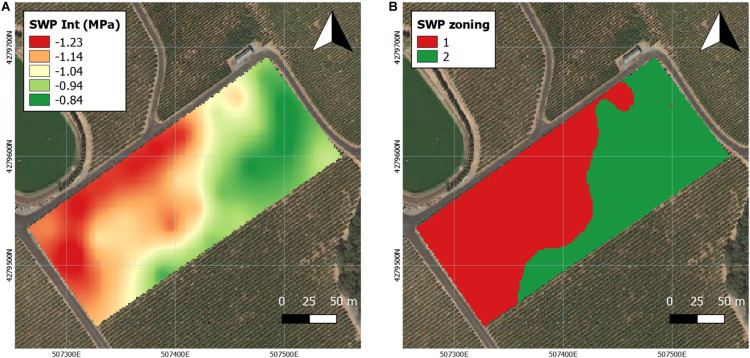
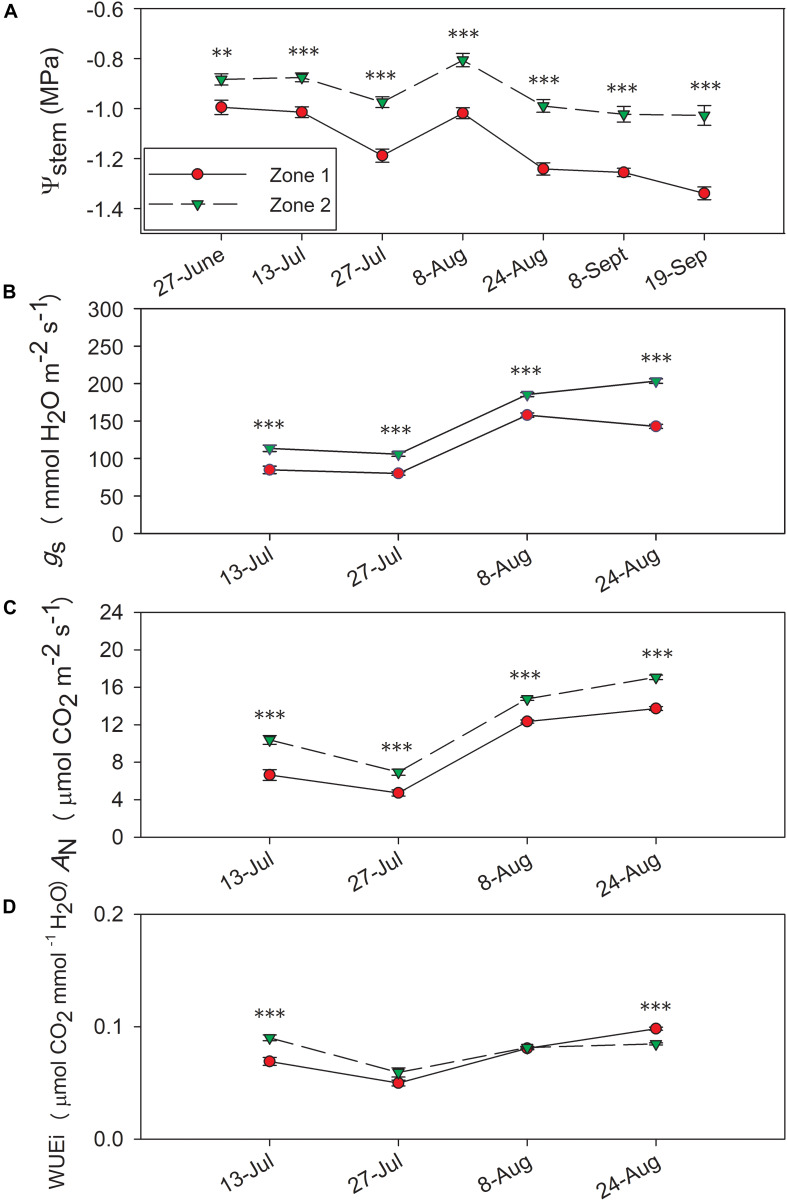
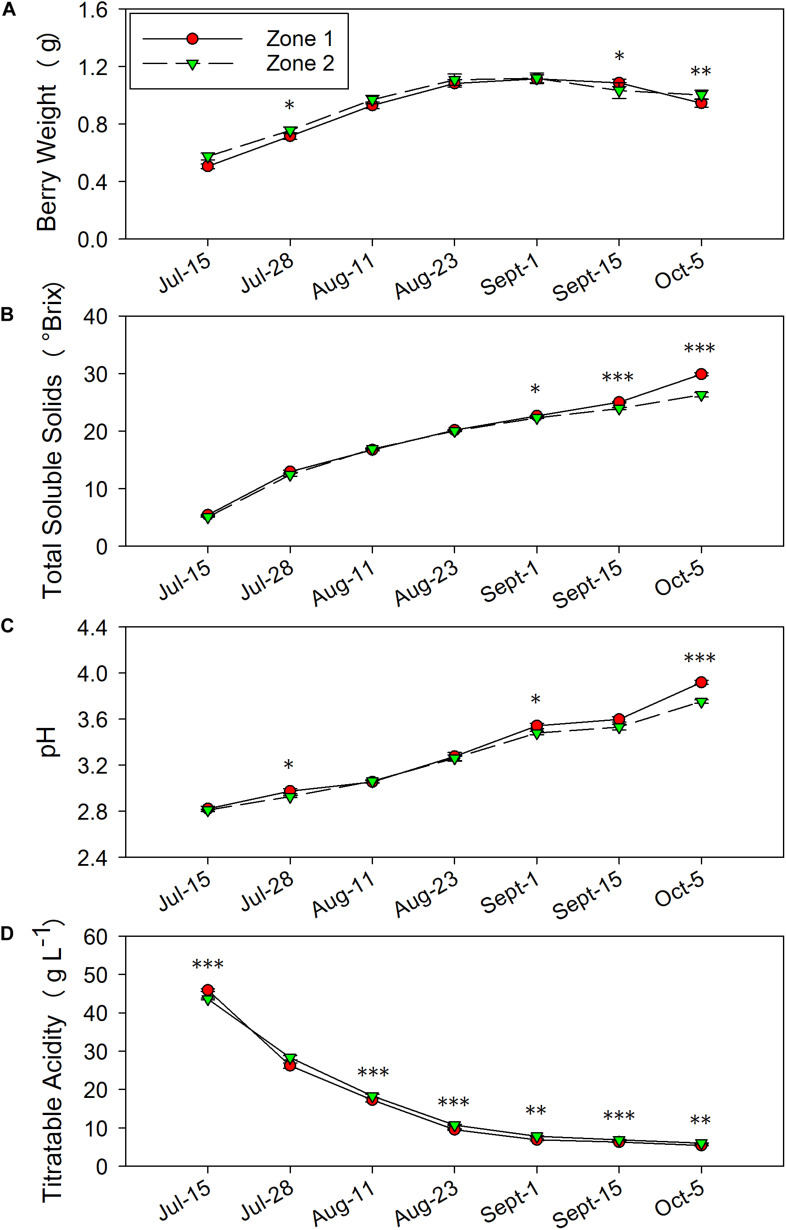
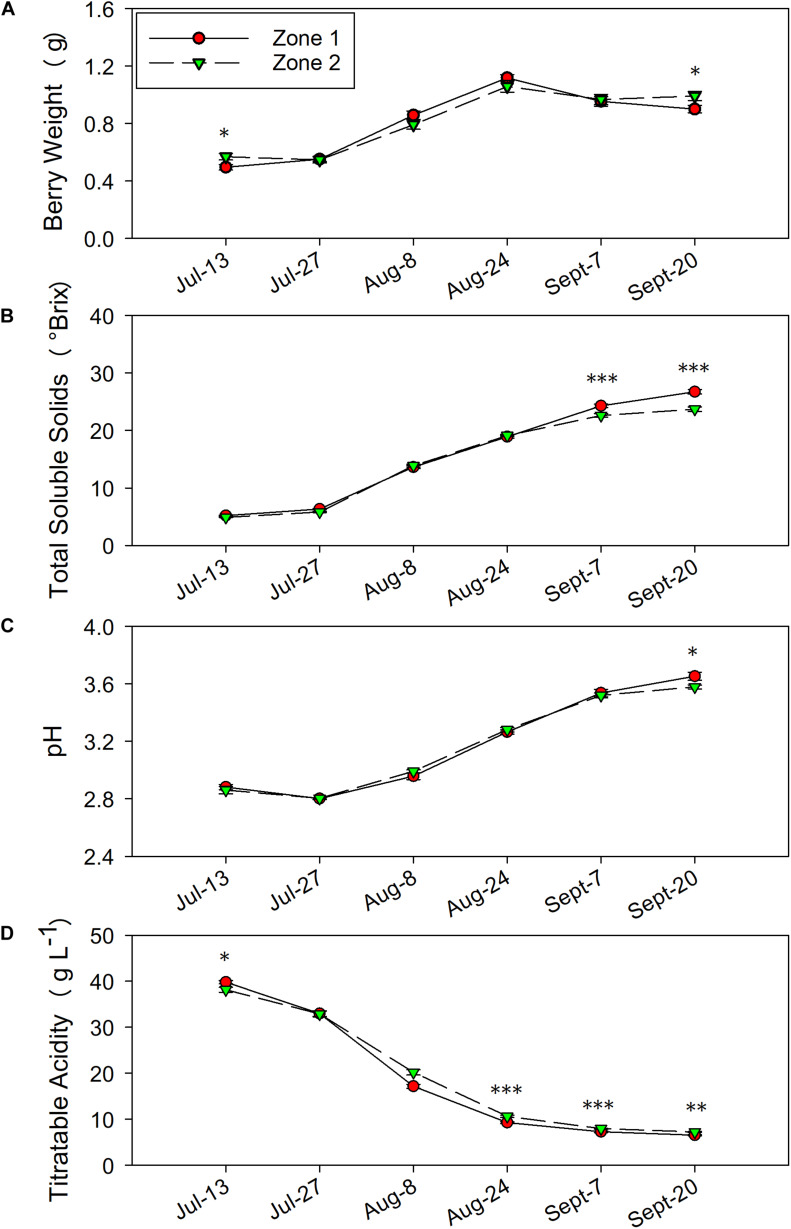
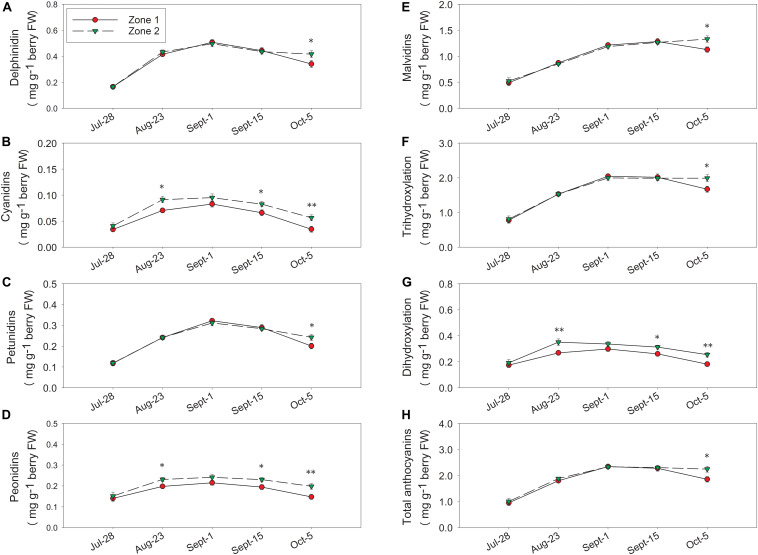
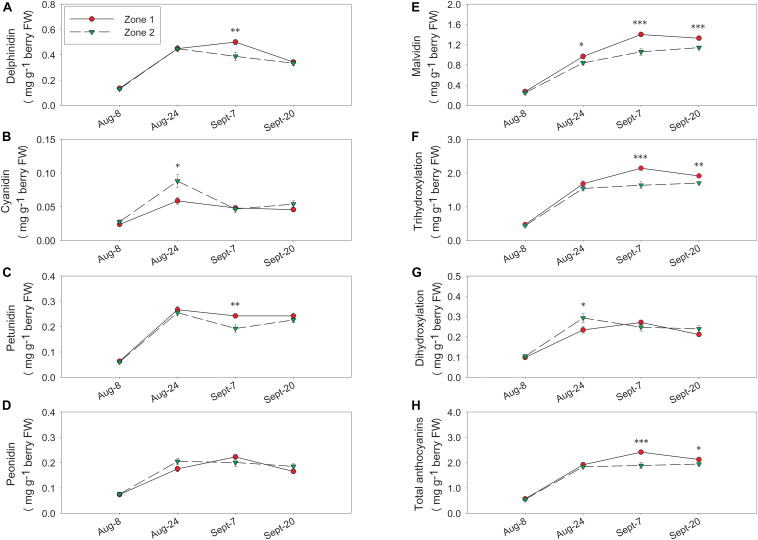
The relationships between differences in plant water status, induced by spatial variability in soil texture, and the changes in berry and wine composition were investigated in an irrigated Cabernet Sauvignon ( L.) vineyard for 2 years. A stratified and an equidistant grid were overlaid on the vineyard to characterize the soil texture by proximal sensing, soil sampling, and grapevine physiological and berry chemical development. Based on the mid-day stem water potential (Ψ ) integrals, the vineyard was divided into two functional homogenous zones: Zone 1 with higher water stress and Zone 2 with lower water. Zone 1 consistently had lower Ψ , net carbon assimilation, and stomatal conductance in both years. Berry weight and titratable acidity were lower in Zone 1 at harvest. Zone 2 reached 26 and 24°Bx total soluble solids (TSS) at harvest in Years 1 and 2, respectively, with higher TSS values of 30 and 27°Bx in Zone 1. Ravaz index did not vary spatially. Fruits were harvested differentially in both years and vinified separately from the two zones. In Year 1, all berry skin anthocyanin derivatives, tri-, di- hydroxylated, and total anthocyanins concentrations were higher in Zone 2. However, in Year 2, only malvidin, tri-hydroxylated, and total anthocyanins were higher in Zone 1. There were no differences in wine flavonoids in Year 2 when harvest commenced earlier. In both years, Ψ , berry weight, and TSS were directly related to soil bulk electrical conductivity (EC). Our results indicated vineyard variability stemmed from soil texture that affected long-term plant water status which does not affect spatial variability of Ravaz Index. In conclusion, our work provides fundamental knowledge about the applicability of soil bulk EC sensing in the vineyards, and its potential directional utilization by connecting proximal soil sensing to spatial distribution of whole-plant physiological performance together with berry and wine chemistry.
在一个灌溉的赤霞珠葡萄园里,对由土壤质地空间变异性引起的植物水分状况差异与浆果和葡萄酒成分变化之间的关系进行了为期两年的研究。在葡萄园上叠加了一个分层网格和一个等距网格,通过近距离传感、土壤采样以及葡萄生理和浆果化学发育来表征土壤质地。基于中午茎水势(Ψ )积分,葡萄园被划分为两个功能均匀的区域:区域1水分胁迫较高,区域2水分胁迫较低。在这两年中,区域1的Ψ 、净碳同化和气孔导度始终较低。收获时,区域1的浆果重量和可滴定酸度较低。在第1年和第2年收获时,区域2的总可溶性固形物(TSS)分别达到26和24°Bx,区域1的TSS值较高,分别为30和27°Bx。拉瓦兹指数在空间上没有变化。这两年果实分别从两个区域进行差异化采收并单独酿造。在第1年,区域2中所有浆果表皮花青素衍生物、三羟基化、二羟基化和总花青素浓度均较高。然而,在第2年,只有甲基花青素、三羟基化和总花青素在区域1中较高。在第2年采收较早时,葡萄酒类黄酮没有差异。在这两年中,Ψ 、浆果重量和TSS都与土壤体积电导率(EC)直接相关。我们 的结果表明,葡萄园的变异性源于影响长期植物水分状况的土壤质地,而这并不影响拉瓦兹指数的空间变异性。总之,我们的工作提供了关于土壤体积EC传感在葡萄园中适用性的基础知识,以及通过将近距离土壤传感与整株植物生理性能以及浆果和葡萄酒化学的空间分布联系起来,其潜在的定向利用方法。