Ni Zhen, Min Yali, Han Chuan, Yuan Ting, Lu Wenquan, Ashktorab Hassan, Smoot Duane T, Wu Qiong, Wu Jian, Zeng Weizheng, Shi Yongquan
State Key Laboratory of Cancer Biology and Institute of Digestive Diseases, Xijing Hospital, Fourth Military Medical University, Xi'an, Shaanxi 710032 China.
Department of Gastroenterology, General Hospital of Western Theater Command, Chengdu, Sichuan 610083 China.
Cell Death Discov. 2020 Jul 6;6:56. doi: 10.1038/s41420-020-0290-3. eCollection 2020.
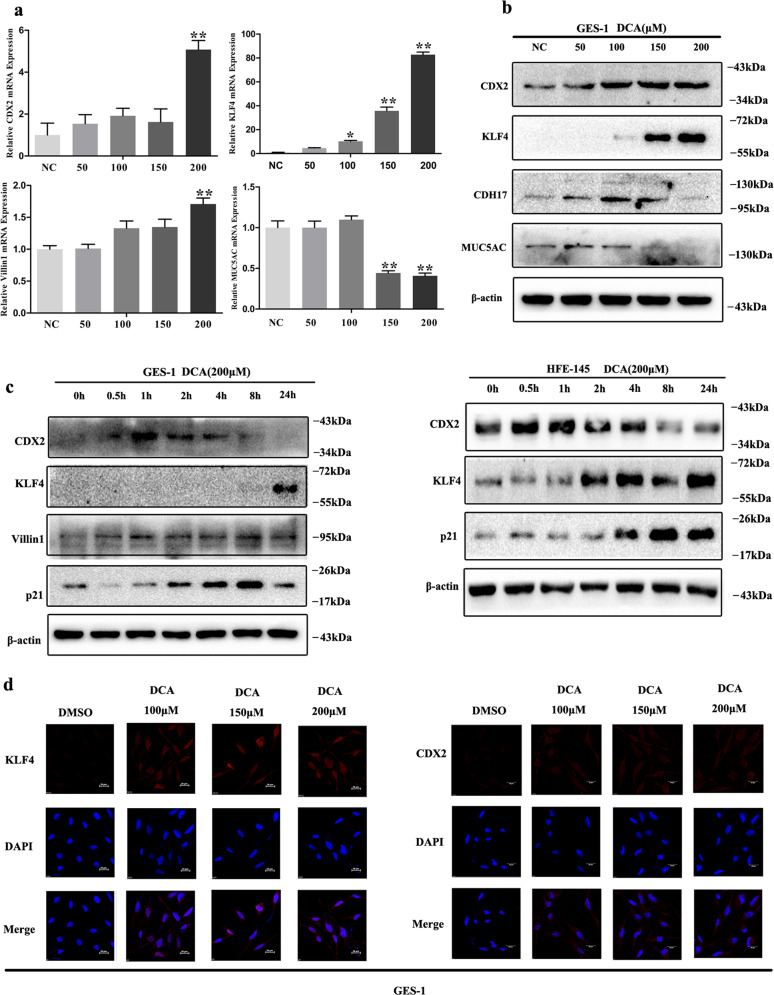
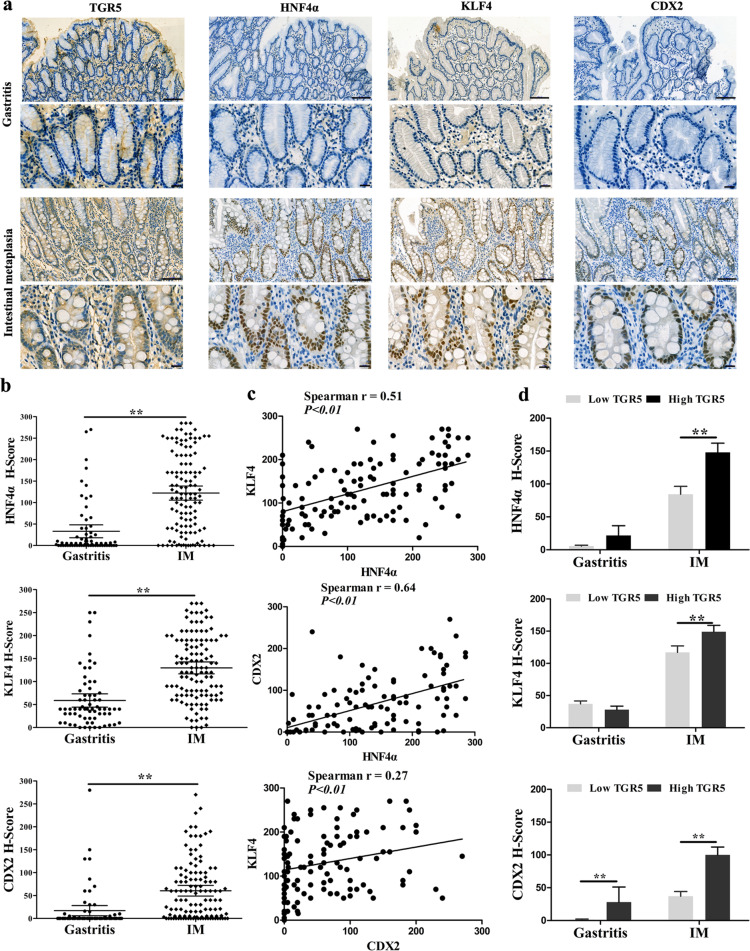
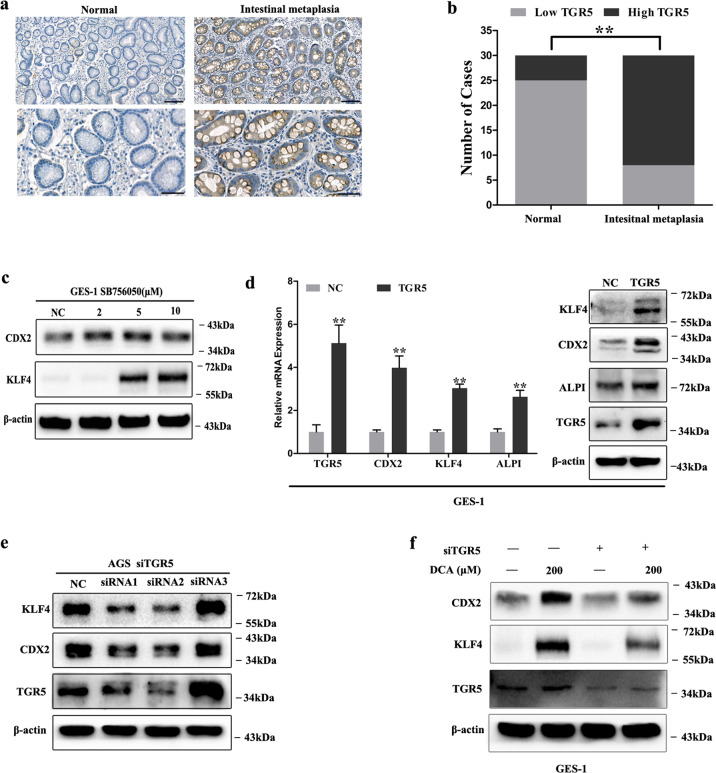
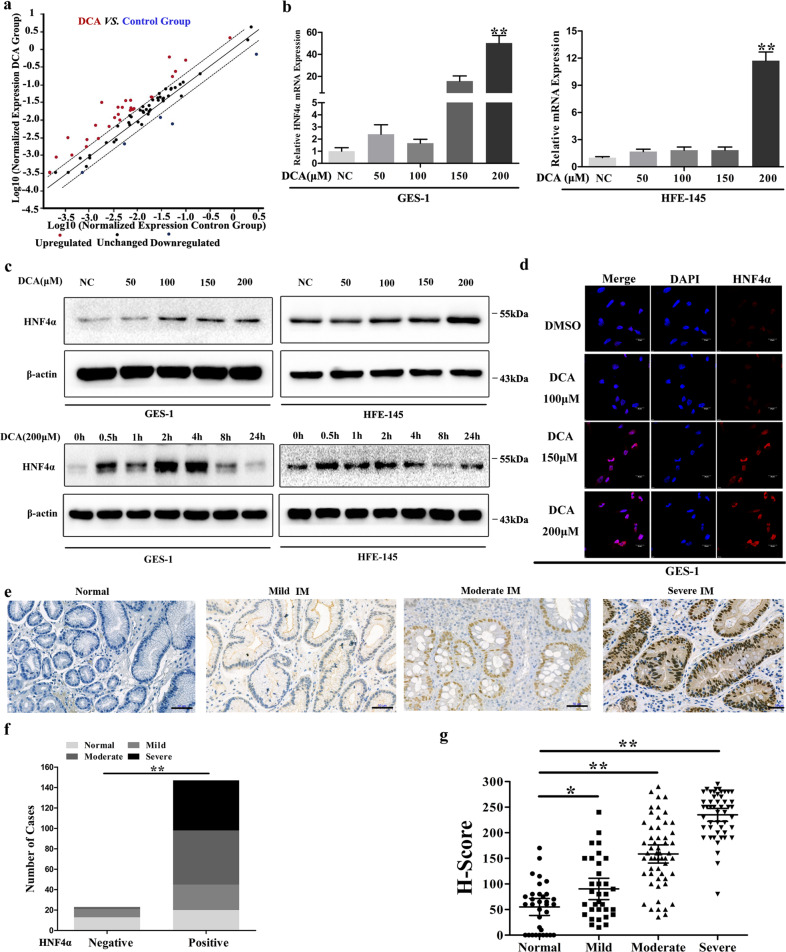
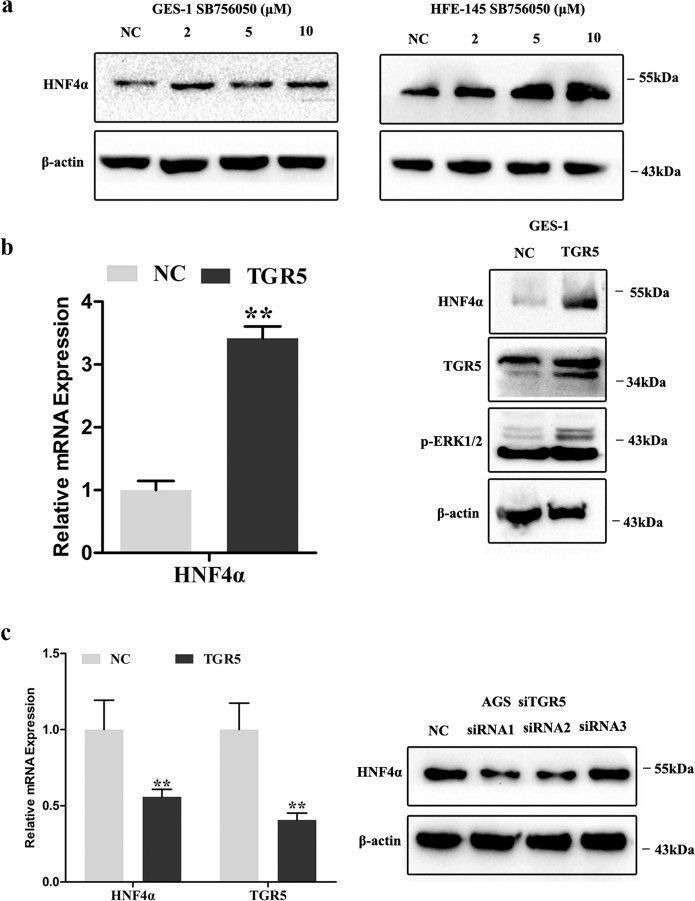
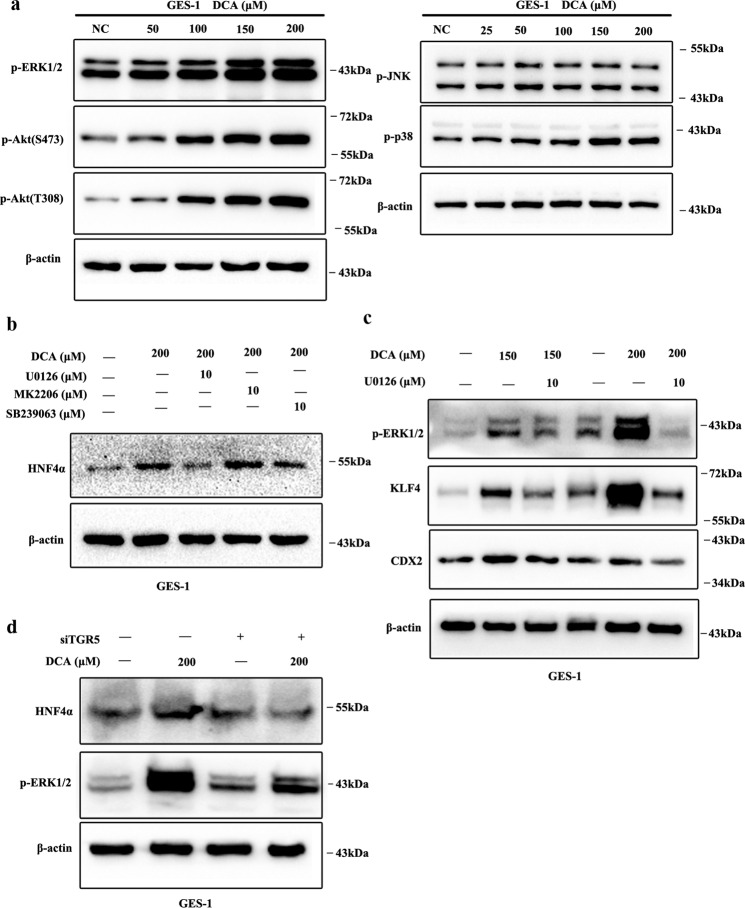
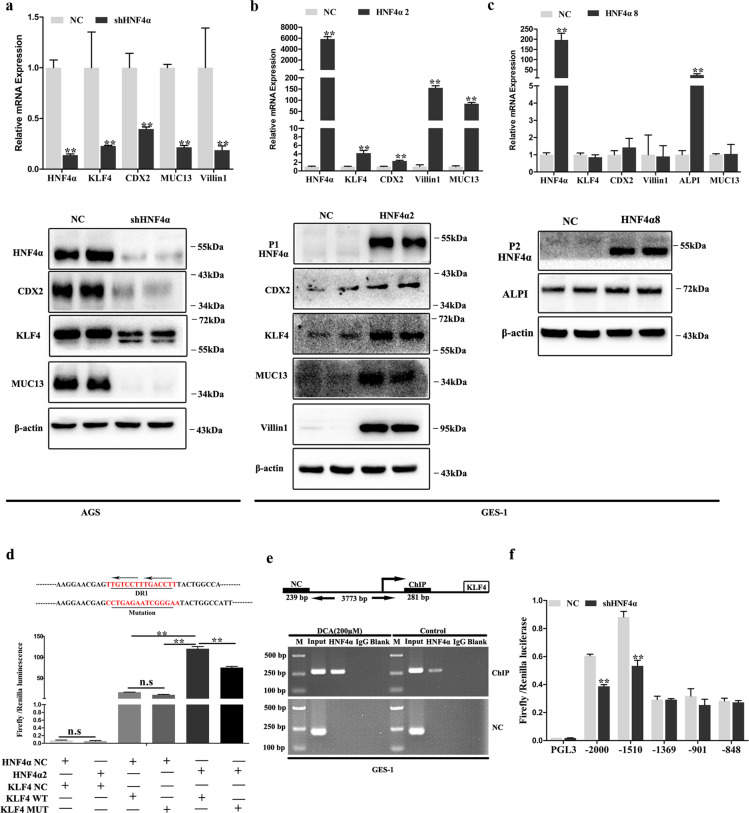
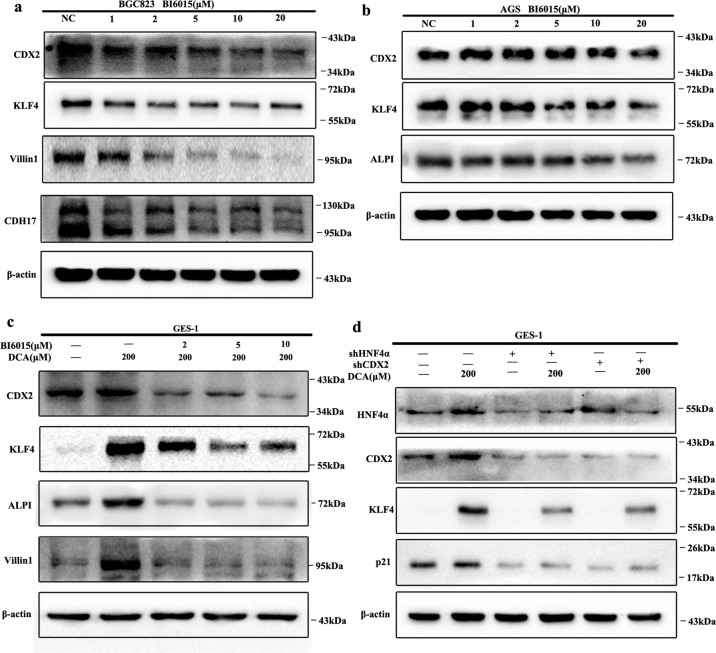
Intestinal metaplasia (IM) increases the risk of gastric cancer. Our previous results indicated that bile acids (BAs) reflux promotes gastric IM development through kruppel-like factor 4 (KLF4) and caudal-type homeobox 2 (CDX2) activation. However, the underlying mechanisms remain largely elusive. Herein, we verified that secondary BAs responsive G-protein-coupled bile acid receptor 1 (GPBAR1, also known as TGR5) was increased significantly in IM specimens. Moreover, TGR5 contributed to deoxycholic acid (DCA)-induced metaplastic phenotype through positively regulating KLF4 and CDX2 at transcriptional level. Then we employed PCR array and identified hepatocyte nuclear factor 4α (HNF4α) as a candidate mediator. Mechanically, DCA treatment could induce HNF4α expression through TGR5 and following ERK1/2 pathway activation. Furthermore, HNF4α mediated the effects of DCA treatment through directly regulating KLF4 and CDX2. Finally, high TGR5 levels were correlated with high HNF4α, KLF4, and CDX2 levels in IM tissues. These findings highlight the TGR5-ERK1/2-HNF4α axis during IM development in patients with BAs reflux, which may help to understand the mechanism underlying IM development and provide prospective strategies for IM treatment.
肠化生(IM)会增加胃癌风险。我们之前的研究结果表明,胆汁酸(BAs)反流通过激活 Kruppel 样因子 4(KLF4)和尾型同源盒 2(CDX2)促进胃 IM 发展。然而,其潜在机制仍 largely 不清楚。在此,我们证实了在 IM 标本中,对次级 BAs 有反应的 G 蛋白偶联胆汁酸受体 1(GPBAR1,也称为 TGR5)显著增加。此外,TGR5 通过在转录水平上正向调节 KLF4 和 CDX2,促进脱氧胆酸(DCA)诱导的化生表型。然后我们采用 PCR 芯片并确定肝细胞核因子 4α(HNF4α)为候选介质。从机制上讲,DCA 处理可通过 TGR5 并随后激活 ERK1/2 途径诱导 HNF4α表达。此外,HNF4α通过直接调节 KLF4 和 CDX2 介导 DCA 处理的作用。最后,在 IM 组织中,高 TGR5 水平与高 HNF4α、KLF4 和 CDX2 水平相关。这些发现突出了 BAs 反流患者 IM 发展过程中的 TGR5-ERK1/2-HNF4α轴,这可能有助于理解 IM 发展的潜在机制,并为 IM 治疗提供前瞻性策略。