Calvo-Rodriguez Maria, Bacskai Brian J
Alzheimer Research Unit, Department of Neurology, Massachusetts General Hospital and Harvard Medical School, 114, 16th St, Charlestown, MA 02129, USA.
Cell Stress. 2020 Jun 18;4(7):187-190. doi: 10.15698/cst2020.07.226.
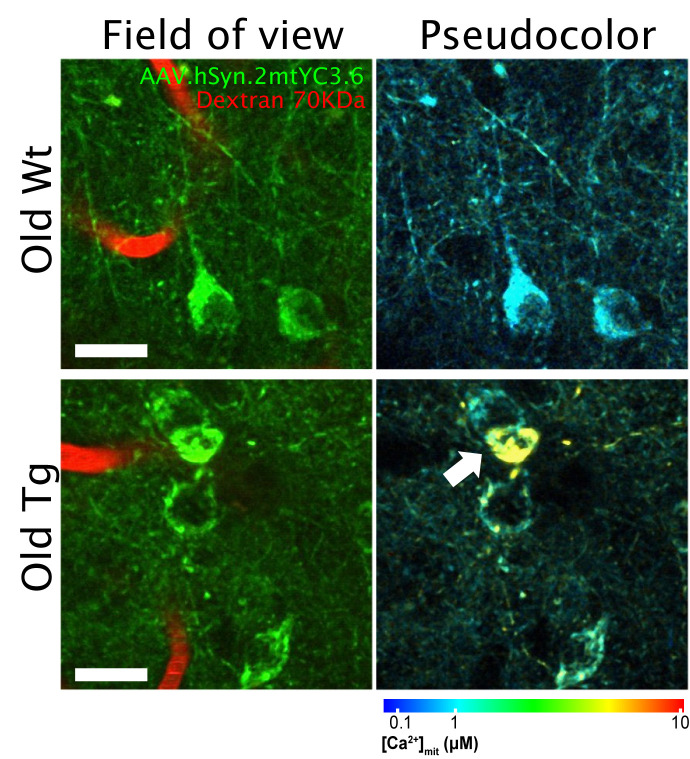
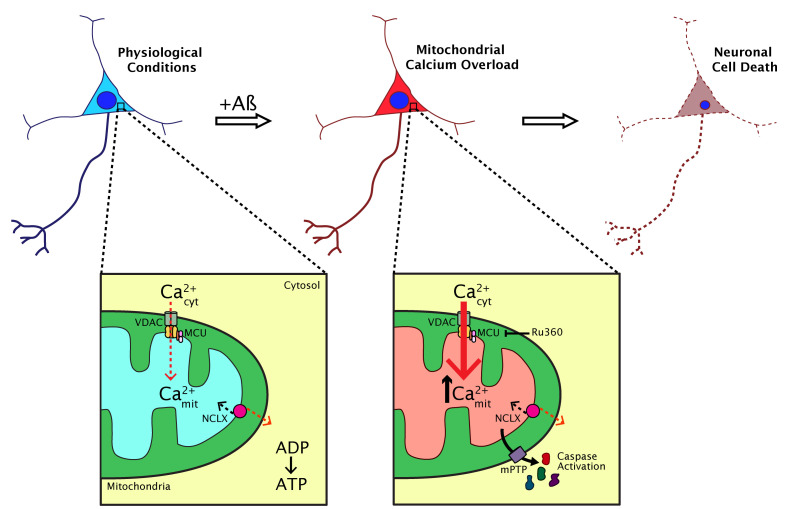
Alzheimer's disease (AD), the most common cause of dementia, affects millions of people worldwide. Suggested mechanisms of neurotoxicity in AD include impaired calcium (Ca) homeostasis and mitochondrial dysfunction, both contributing to neuronal damage. Little was known about the exact mitochondrial Ca homeostasis in the living brain, particularly in AD. Only now, with the development of intravital imaging techniques and transgenic mouse models of the disease, we are able to directly observe Ca levels in specific regions or particular subcellular compartments of cells, such as mitochondria. Using multiphoton microscopy, a Ca reporter targeted to mitochondria and a mouse model of cerebral β amyloidosis (APP/PS1), our recent study (Nat Comms 2020, 11:2146) found elevated mitochondrial Ca concentration in the transgenic mouse after plaque deposition, and after topical application of natural soluble amyloid beta (Aβ) oligomers to the healthy mouse brain at concentrations similar to those found in the human brain. Elevated Ca in mitochondria preceded neuronal death and could be targeted for neuroprotective therapies in AD. Here, we describe our main findings and pose new questions for future studies aimed at better understanding mitochondrial Ca dyshomeostasis in AD.
阿尔茨海默病(AD)是痴呆最常见的病因,影响着全球数百万人。AD中神经毒性的潜在机制包括钙(Ca)稳态受损和线粒体功能障碍,二者均会导致神经元损伤。对于活体大脑中确切的线粒体钙稳态,尤其是AD中的情况,此前了解甚少。直到现在,随着活体成像技术和该疾病转基因小鼠模型的发展,我们才能够直接观察细胞特定区域或特定亚细胞区室(如线粒体)中的钙水平。利用多光子显微镜、靶向线粒体的钙报告基因以及脑β淀粉样变性(APP/PS1)小鼠模型,我们最近的研究(《自然·通讯》2020年,11:2146)发现,在斑块沉积后,转基因小鼠以及在向健康小鼠脑局部应用与人脑浓度相似的天然可溶性β淀粉样蛋白(Aβ)寡聚体后,线粒体钙浓度升高。线粒体中钙升高先于神经元死亡,可作为AD神经保护疗法的靶点。在此,我们描述主要研究发现,并针对旨在更好理解AD中线粒体钙稳态失衡的未来研究提出新问题。