Department of Neurology, Laboratory of Neuro-system and Multimorbidity and State Key Laboratory of Biotherapy and Cancer Center, West China Hospital, Sichuan University, Chengdu, 610041, Sichuan, China.
Department of Pharmaceutical Sciences, College of Pharmacy, University of Tennessee Health Science Center, Memphis, 38163, TN, USA.
Signal Transduct Target Ther. 2024 Aug 23;9(1):211. doi: 10.1038/s41392-024-01911-3.
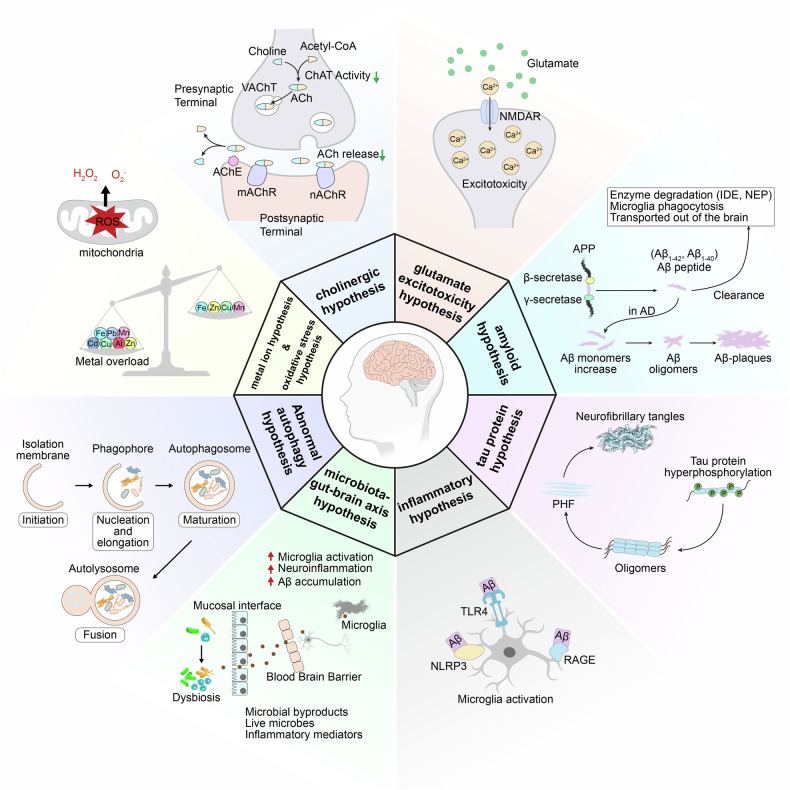
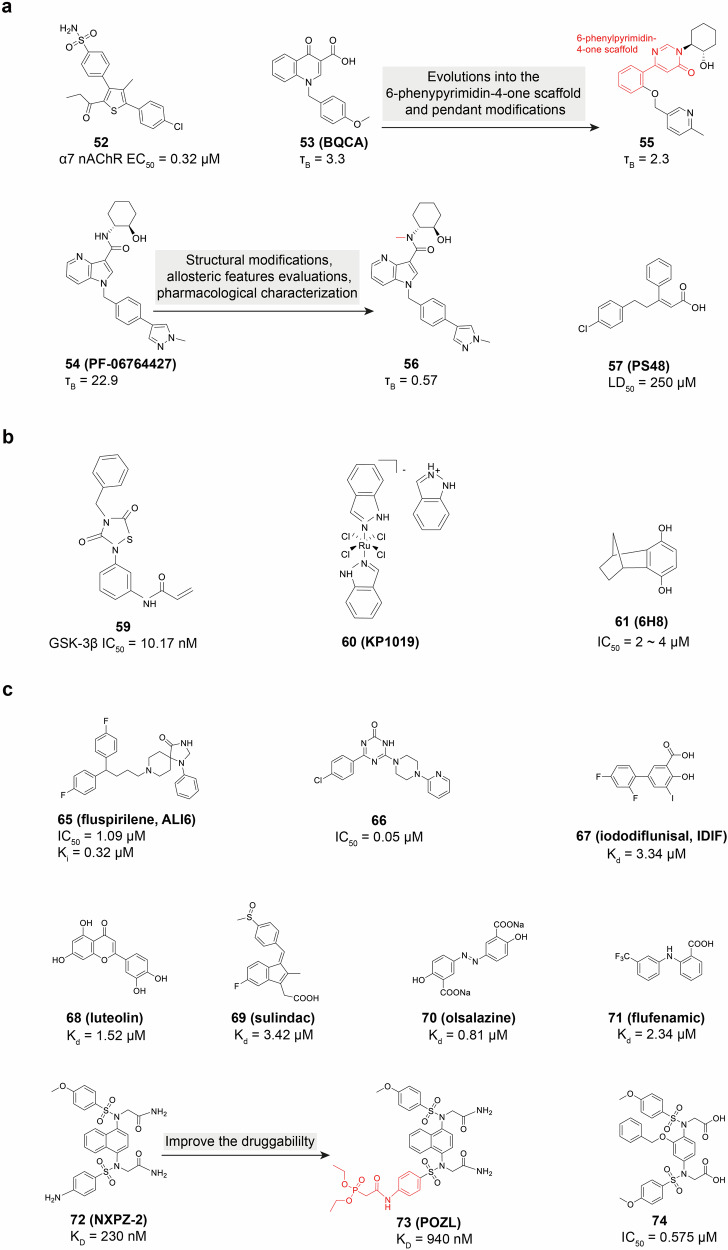
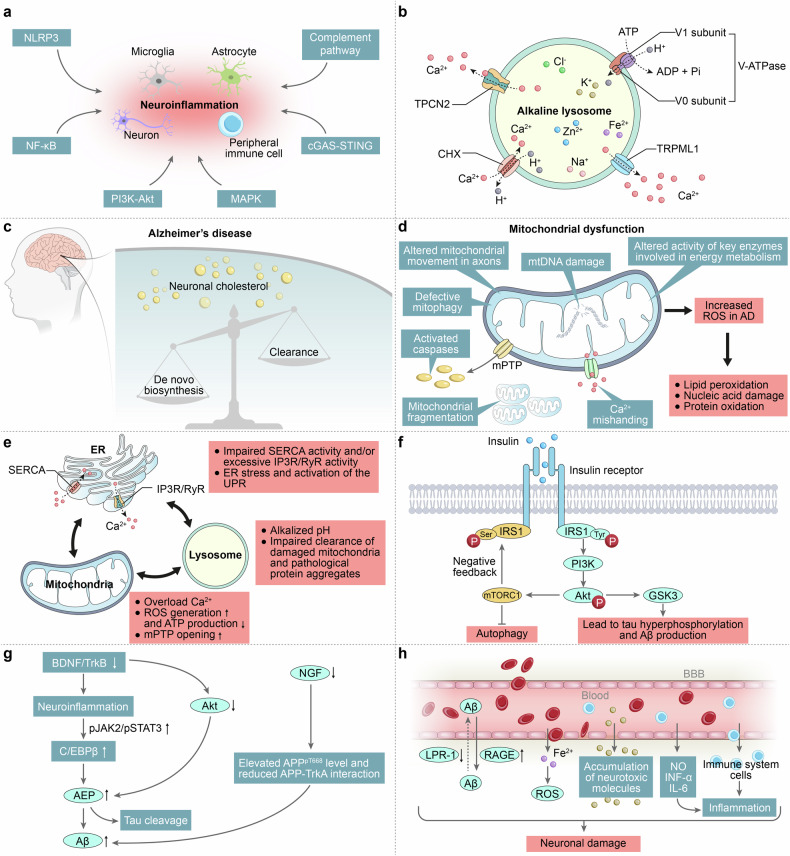
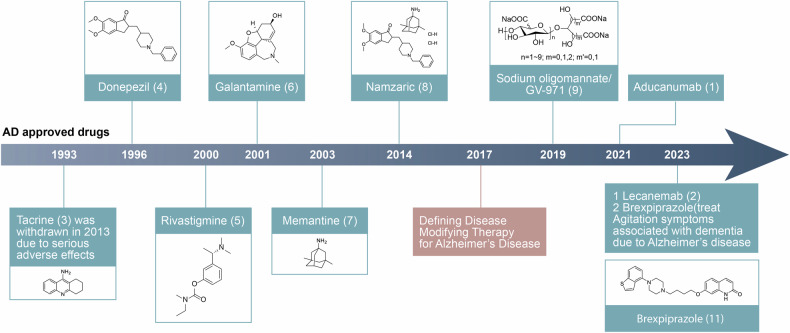
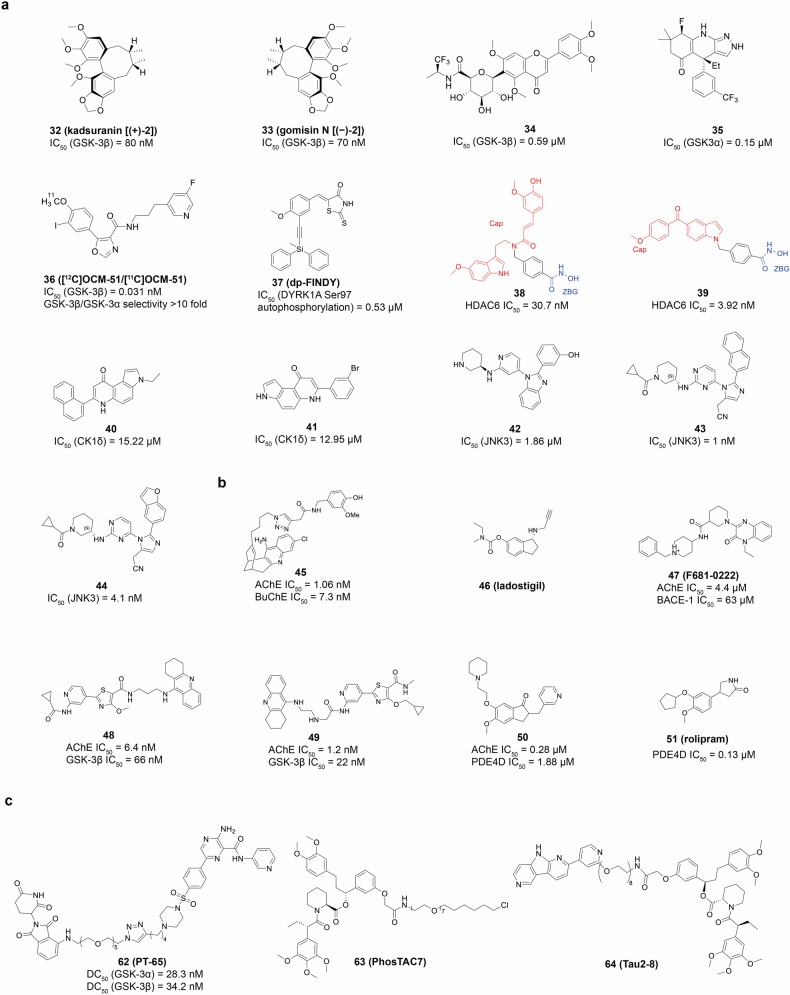
Alzheimer's disease (AD) stands as the predominant form of dementia, presenting significant and escalating global challenges. Its etiology is intricate and diverse, stemming from a combination of factors such as aging, genetics, and environment. Our current understanding of AD pathologies involves various hypotheses, such as the cholinergic, amyloid, tau protein, inflammatory, oxidative stress, metal ion, glutamate excitotoxicity, microbiota-gut-brain axis, and abnormal autophagy. Nonetheless, unraveling the interplay among these pathological aspects and pinpointing the primary initiators of AD require further elucidation and validation. In the past decades, most clinical drugs have been discontinued due to limited effectiveness or adverse effects. Presently, available drugs primarily offer symptomatic relief and often accompanied by undesirable side effects. However, recent approvals of aducanumab (1) and lecanemab (2) by the Food and Drug Administration (FDA) present the potential in disrease-modifying effects. Nevertheless, the long-term efficacy and safety of these drugs need further validation. Consequently, the quest for safer and more effective AD drugs persists as a formidable and pressing task. This review discusses the current understanding of AD pathogenesis, advances in diagnostic biomarkers, the latest updates of clinical trials, and emerging technologies for AD drug development. We highlight recent progress in the discovery of selective inhibitors, dual-target inhibitors, allosteric modulators, covalent inhibitors, proteolysis-targeting chimeras (PROTACs), and protein-protein interaction (PPI) modulators. Our goal is to provide insights into the prospective development and clinical application of novel AD drugs.
阿尔茨海默病(AD)是痴呆症的主要形式,在全球范围内带来了重大且日益严峻的挑战。其病因复杂多样,源自衰老、遗传和环境等多种因素的综合作用。目前,我们对 AD 病理的认识涉及多种假说,如胆碱能、淀粉样蛋白、tau 蛋白、炎症、氧化应激、金属离子、谷氨酸兴奋毒性、微生物群-肠-脑轴和异常自噬。然而,要阐明这些病理方面的相互作用,并确定 AD 的主要启动因素,还需要进一步阐明和验证。在过去的几十年中,由于疗效有限或不良反应,大多数临床药物已被停用。目前,可用的药物主要提供症状缓解,且常伴有不良副作用。然而,最近食品和药物管理局(FDA)批准了 aducanumab(1)和 lecanemab(2),这为疾病修饰作用带来了潜力。然而,这些药物的长期疗效和安全性仍需进一步验证。因此,寻找更安全、更有效的 AD 药物仍然是一项艰巨而紧迫的任务。本综述讨论了 AD 发病机制的当前认识、诊断生物标志物的进展、临床试验的最新更新以及 AD 药物开发的新兴技术。我们强调了选择性抑制剂、双靶抑制剂、变构调节剂、共价抑制剂、蛋白水解靶向嵌合体(PROTACs)和蛋白质-蛋白质相互作用(PPI)调节剂的发现方面的最新进展。我们的目标是为新型 AD 药物的开发和临床应用提供思路。