Mursaleen Leah, Noble Brendon, Chan Stefanie Ho Yi, Somavarapu Satyanarayana, Zariwala Mohammed Gulrez
School of Life Sciences, University of Westminster, 115 New Cavendish Street, London W1W 6UW, UK.
Department of Pharmaceutics, UCL School of Pharmacy, 29-39 Brunswick Square, London WC1N 1AX, UK.
Antioxidants (Basel). 2020 Jul 9;9(7):600. doi: 10.3390/antiox9070600.
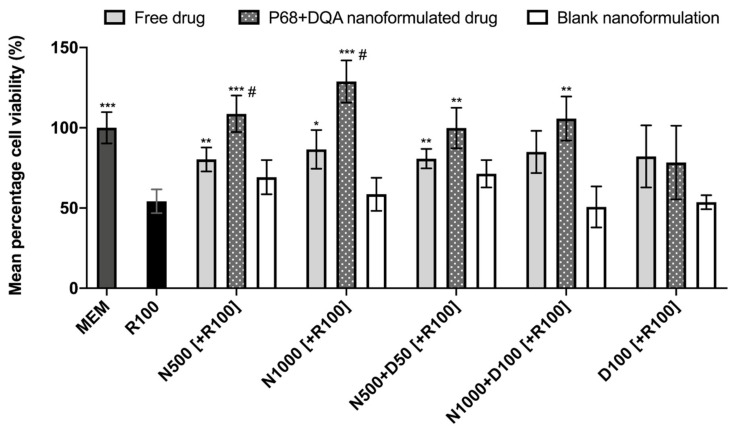
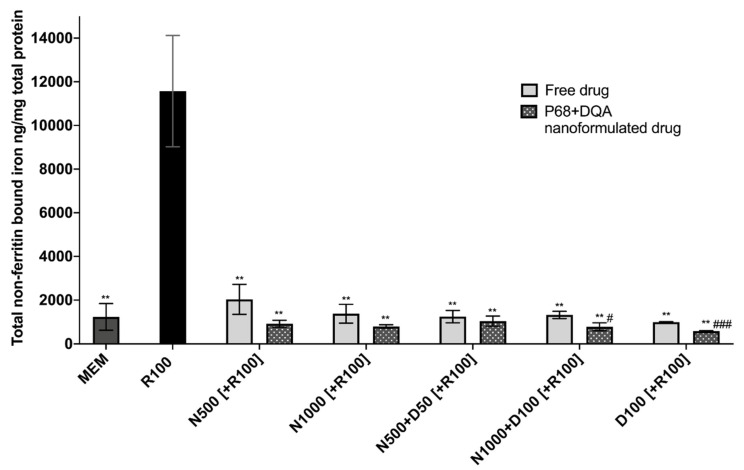
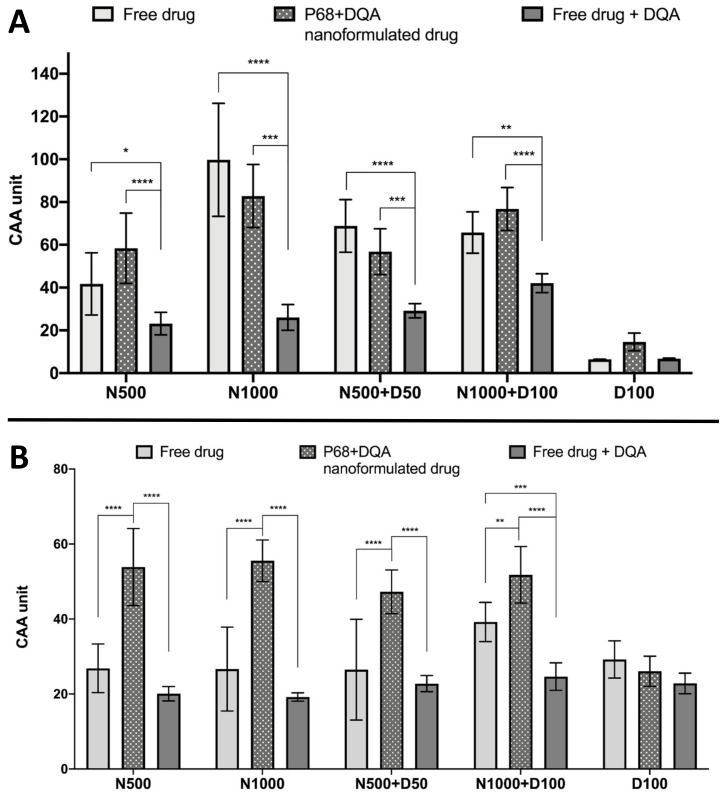
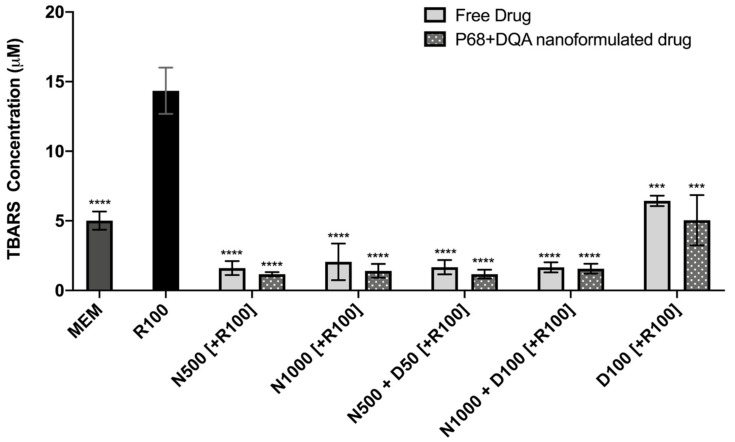
Oxidative stress is a key mediator in the development and progression of Parkinson's disease (PD). The antioxidant n-acetylcysteine (NAC) has generated interest as a disease-modifying therapy for PD but is limited due to poor bioavailability, a short half-life, and limited access to the brain. The aim of this study was to formulate and utilise mitochondria-targeted nanocarriers for delivery of NAC alone and in combination with the iron chelator deferoxamine (DFO), and assess their ability to protect against oxidative stress in a cellular rotenone PD model. Pluronic F68 (P68) and dequalinium (DQA) nanocarriers were prepared by a modified thin-film hydration method. An MTT assay assessed cell viability and iron status was measured using a ferrozine assay and ferritin immunoassay. For oxidative stress, a modified cellular antioxidant activity assay and the thiobarbituric acid-reactive substances assay and mitochondrial hydroxyl assay were utilised. Overall, this study demonstrates, for the first time, successful formulation of NAC and NAC + DFO into P68 + DQA nanocarriers for neuronal delivery. The results indicate that NAC and NAC + DFO nanocarriers have the potential characteristics to access the brain and that 1000 μM P68 + DQA NAC exhibited the strongest ability to protect against reduced cell viability ( = 0.0001), increased iron ( = 0.0033) and oxidative stress ( ≤ 0.0003). These NAC nanocarriers therefore demonstrate significant potential to be transitioned for further preclinical testing for PD.
氧化应激是帕金森病(PD)发生和发展的关键介质。抗氧化剂N-乙酰半胱氨酸(NAC)作为一种可改变疾病进程的PD治疗方法引起了人们的关注,但由于其生物利用度低、半衰期短以及进入大脑的途径有限,其应用受到限制。本研究的目的是制备并利用线粒体靶向纳米载体单独递送NAC以及将其与铁螯合剂去铁胺(DFO)联合递送,并评估它们在细胞鱼藤酮PD模型中对抗氧化应激的能力。通过改良的薄膜水化法制备了普朗尼克F68(P68)和地喹氯铵(DQA)纳米载体。采用MTT法评估细胞活力,使用亚铁嗪测定法和铁蛋白免疫测定法测量铁状态。对于氧化应激,采用改良的细胞抗氧化活性测定法、硫代巴比妥酸反应性物质测定法和线粒体羟基测定法。总体而言,本研究首次证明成功将NAC和NAC + DFO制成P68 + DQA纳米载体用于神经元递送。结果表明,NAC和NAC + DFO纳米载体具有进入大脑的潜在特性,并且1000 μM P68 + DQA NAC表现出最强的保护能力,可防止细胞活力降低( = 0.0001)、铁增加( = 0.0033)和氧化应激( ≤ 0.0003)。因此,这些NAC纳米载体显示出显著的潜力,可转向进一步的PD临床前测试。