Heimesaat Markus M, Genger Claudia, Biesemeier Nina, Klove Sigri, Weschka Dennis, Mousavi Soraya, Bereswill Stefan
Institute of Microbiology, Infectious Diseases and Immunology, Charité-University Medicine Berlin, Corporate Member of Freie Universität Berlin, Humboldt-Universität zu Berlin, and Berlin Institute of Health, 12203 Berlin, Germany.
Pathogens. 2020 Jul 11;9(7):560. doi: 10.3390/pathogens9070560.
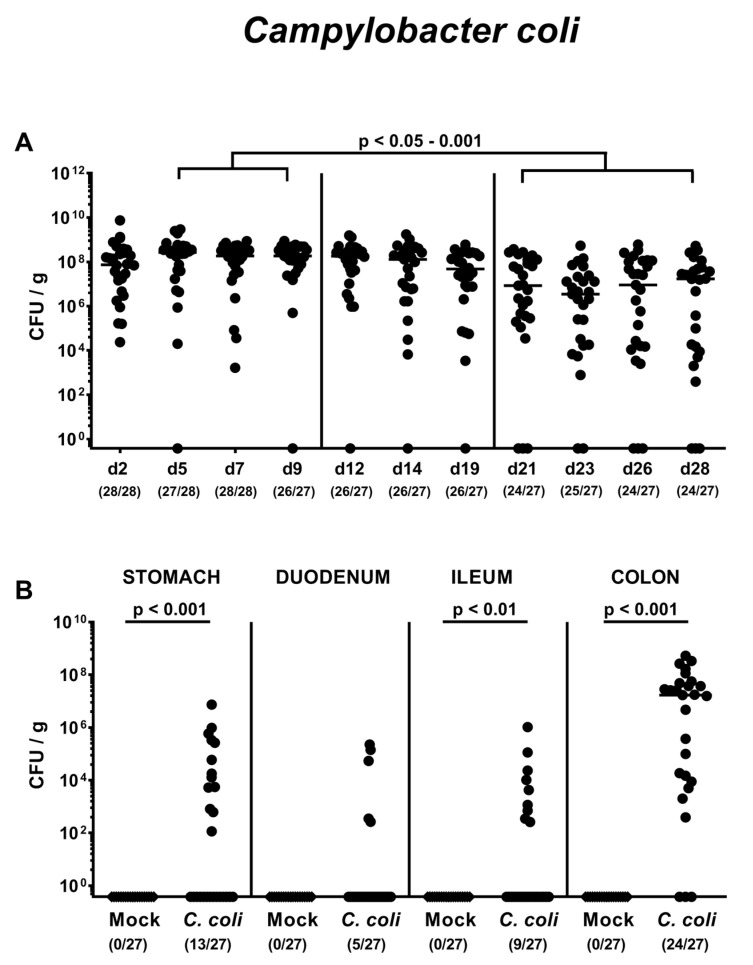
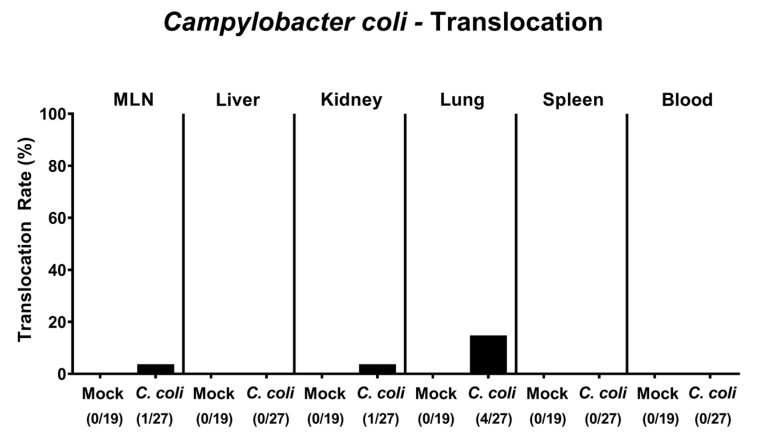
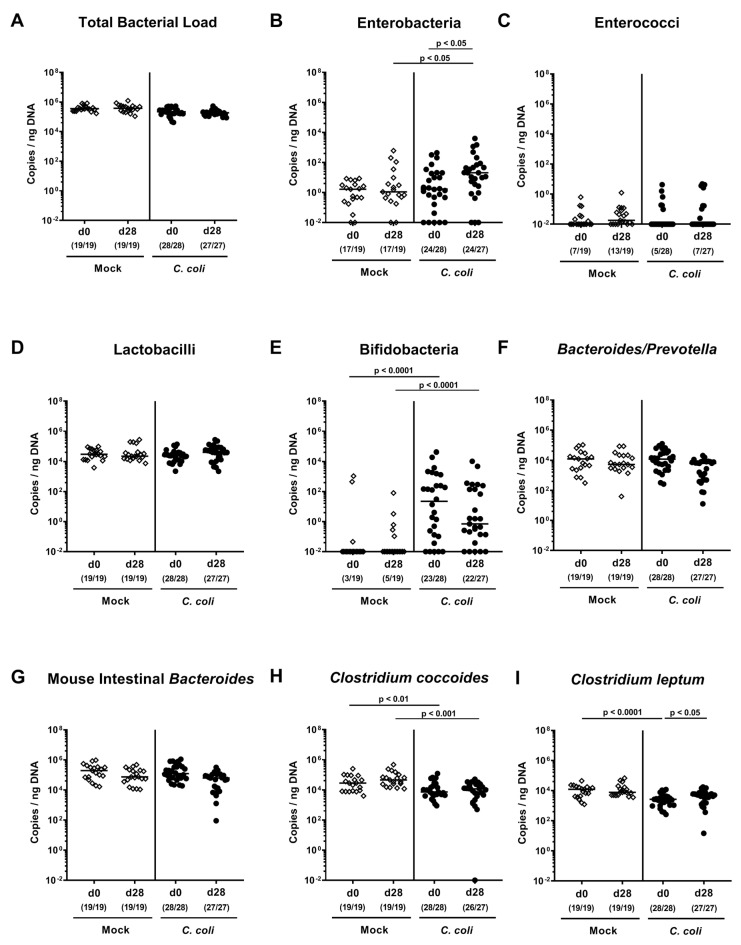
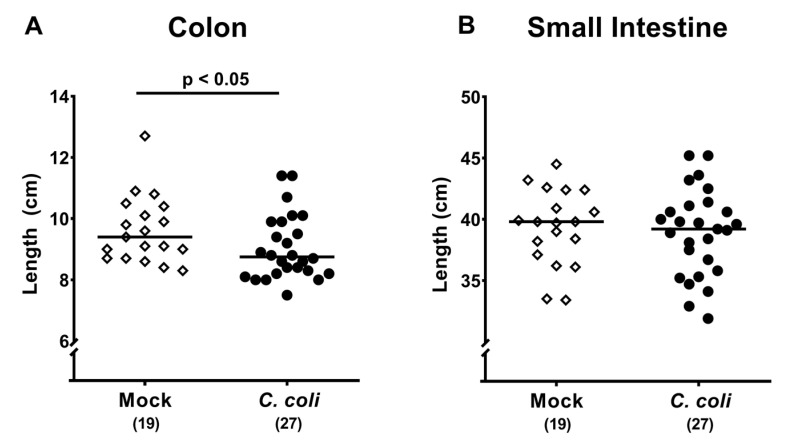
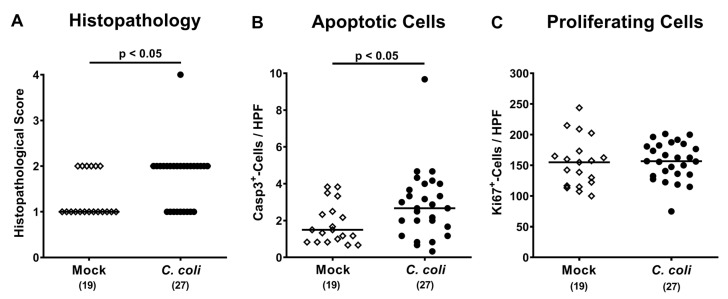
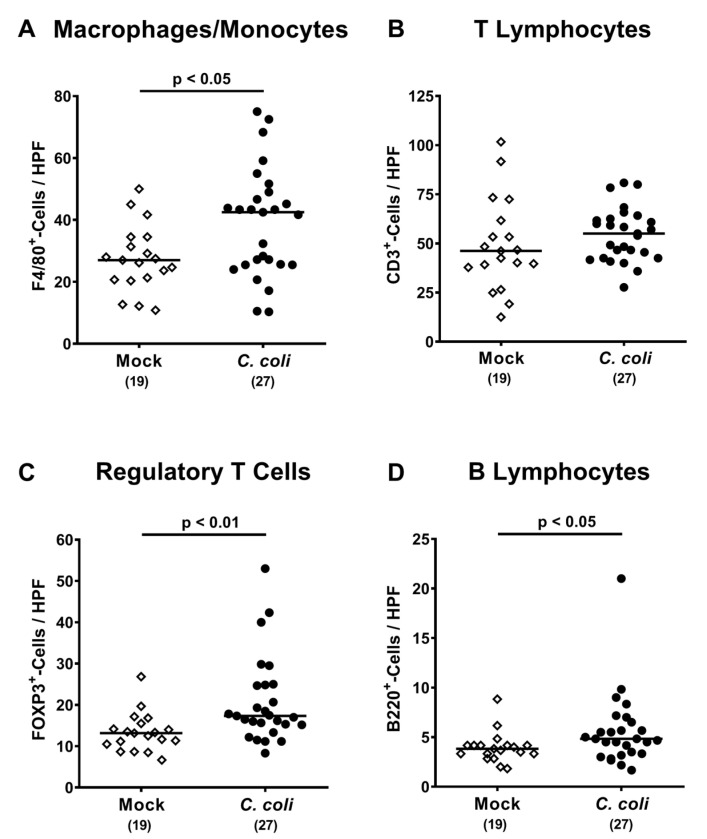
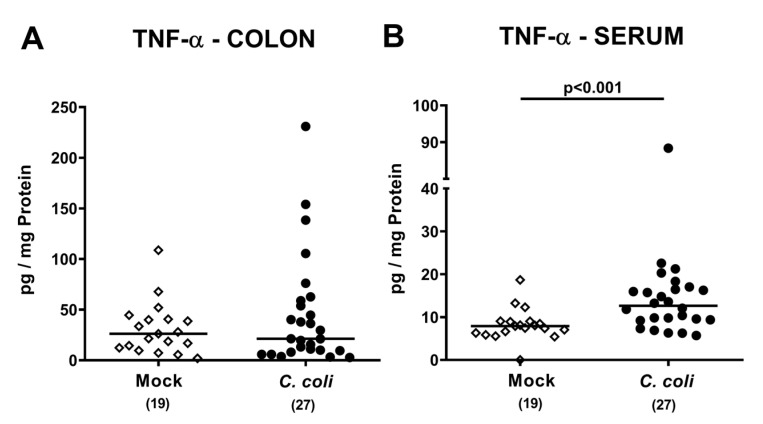
Human infections with the food-borne enteropathogens are progressively rising. Recent evidence revealed that pre-existing intestinal inflammation facilitates enteropathogenic infection subsequently exacerbating the underlying disease. Given that only little is known about -host interactions and particularly during intestinal inflammation, the aim of the present study was to survey gastrointestinal colonization properties, gut microbiota changes and pro-inflammatory sequelae upon peroral -infection of IL-10 mice with chronic colitis. colonized the gastrointestinal tract of mice with varying efficiencies until day 28 post-infection and induced macroscopic and microscopic inflammatory changes as indicated by shorter colonic lengths, more distinct histopathological changes in the colonic mucosa and higher numbers of apoptotic colonic epithelial cells when compared to mock-infected controls. Furthermore, not only colonic innate and adaptive immune cell responses, but also enhanced systemic TNF-α secretion could be observed following as opposed to mock challenge. Notably, induced intestinal inflammatory sequelae were accompanied with gut microbiota shifts towards higher commensal enterobacterial loads in the infected gut lumen. Moreover, the pathogen translocated from the intestinal tract to extra-intestinal tissue sites in some cases, but never to systemic compartments. Hence, accelerates inflammatory immune responses in IL-10 mice with chronic colitis.
食源性肠道病原体引起的人类感染正在逐渐增加。最近的证据表明,先前存在的肠道炎症会促进肠道病原体感染,进而加重潜在疾病。鉴于目前对宿主相互作用,尤其是肠道炎症期间的宿主相互作用了解甚少,本研究的目的是调查白细胞介素-10基因敲除(IL-10)慢性结肠炎小鼠经口感染后胃肠道定植特性、肠道微生物群变化及促炎后遗症。[病原体名称]以不同效率定植于小鼠胃肠道,直至感染后第28天,并诱导宏观和微观炎症变化,与模拟感染对照组相比,表现为结肠长度缩短、结肠黏膜组织病理学变化更明显以及凋亡结肠上皮细胞数量增加。此外,与模拟攻击相比,感染[病原体名称]后不仅可观察到结肠固有免疫和适应性免疫细胞反应增强,还可观察到全身肿瘤坏死因子-α(TNF-α)分泌增加。值得注意的是,[病原体名称]诱导的肠道炎症后遗症伴随着感染肠腔内肠道微生物群向共生肠杆菌负荷增加的方向转变。此外,病原体在某些情况下从肠道转移到肠外组织部位,但从未转移到全身各部位。因此,[病原体名称]会加速IL-10慢性结肠炎小鼠的炎症免疫反应。