College of Nursing, Chungnam National University, 266 Minhwa-ro, Jung-gu, Daejeon, 35015, South Korea.
School of Nursing, University of Michigan, 400 N. Ingalls St, Ann Arbor, MI, 48109, USA.
Health Qual Life Outcomes. 2020 Jul 14;18(1):230. doi: 10.1186/s12955-020-01485-y.
Few studies have assessed pre-surgery cognitive impairment or the impact of pre-surgery cognitive impairment on quality of life. The purpose of this study was to assess changes in perceived cognitive function from pre-surgery to 1 month post-surgery and to determine whether cognitive function predicted health-related quality of life in women who awaited adjuvant treatment for breast cancer.
This study used a descriptive pre-post design to assess women newly diagnosed with breast cancer prior to any treatment (N = 132). Cognition was assessed using the Attentional Function Index (AFI) and health-related quality of life was assessed using the Functional Assessment of Cancer Therapy-General (FACT-G). Statistical methods included descriptive, comparative and regression analyses. Covariates assessed and controlled for in analyses included depressed mood, fatigue, disturbed sleep, surgery-related symptoms (lymphedema/decreased mobility), and cultural tendency.
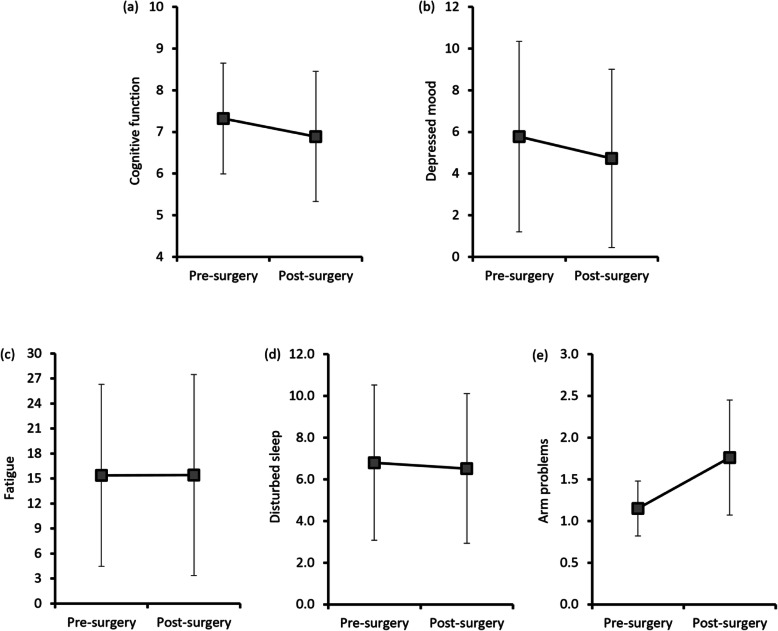
Perceived attention and memory function decreased from pre-surgery to 1 month post-surgery alongside alterations in arm function and a decrease in depressed mood (p < 0.05). Regression analysis indicated that, after controlling for covariates, poorer perceived attention and memory function, surgery-specific symptoms, and a greater tendency toward collectivism predicted poorer quality of life.
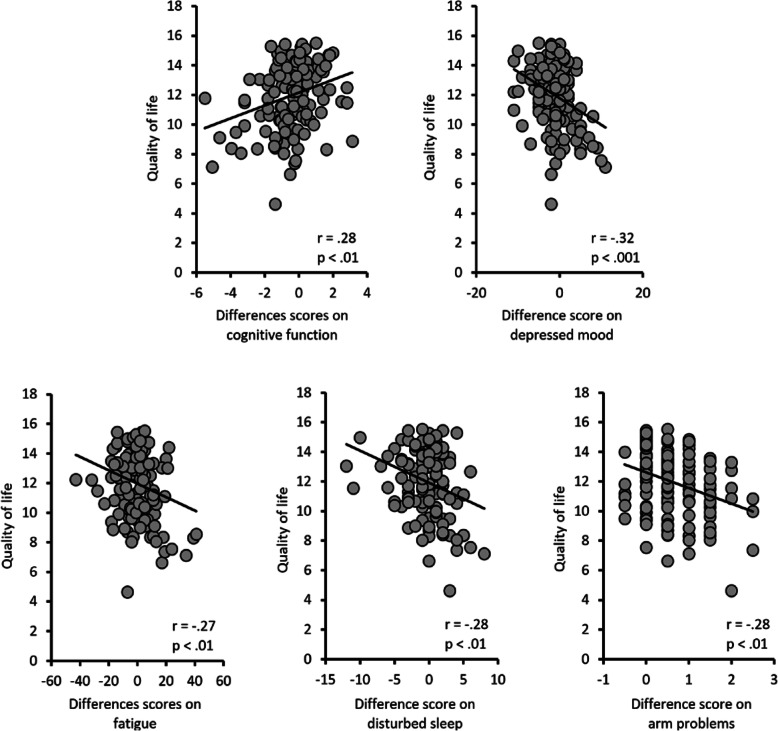
Perceived function on tasks requiring attention and working memory 1 month post-surgery was poorer compared to pre-surgery suggesting that the mental and physical demands of a new diagnosis of breast cancer and surgery may effect cognitive function. Additionally, changes in perceived cognitive function significantly predicted perceived quality of life in women awaiting adjuvant treatment for breast cancer. Findings suggest that breast cancer patients are at risk for an early decline in cognitive function and that interventions aimed at supporting and optimizing function may improve quality of life early in the disease trajectory.
很少有研究评估术前认知障碍或术前认知障碍对生活质量的影响。本研究的目的是评估从术前到术后 1 个月感知认知功能的变化,并确定认知功能是否预测等待乳腺癌辅助治疗的女性的健康相关生活质量。
本研究使用描述性术前-术后设计评估新诊断为乳腺癌的女性(n=132)在任何治疗前。使用注意力功能指数(AFI)评估认知功能,使用癌症治疗功能评估-一般(FACT-G)评估健康相关生活质量。统计方法包括描述性、比较性和回归分析。分析中评估和控制的协变量包括抑郁情绪、疲劳、睡眠障碍、与手术相关的症状(淋巴水肿/活动能力下降)和文化倾向。
从术前到术后 1 个月,注意力和记忆功能感知下降,手臂功能改变,抑郁情绪降低(p<0.05)。回归分析表明,在控制协变量后,较差的感知注意力和记忆功能、手术特异性症状和更强的集体主义倾向预测生活质量较差。
与术前相比,术后 1 个月对需要注意力和工作记忆的任务的感知功能较差,这表明新诊断的乳腺癌和手术的身心需求可能会影响认知功能。此外,感知认知功能的变化显著预测了等待乳腺癌辅助治疗的女性的感知生活质量。研究结果表明,乳腺癌患者有认知功能早期下降的风险,旨在支持和优化功能的干预措施可能会在疾病轨迹的早期改善生活质量。