International Clinical Research Center (ICRC), St. Ann's University Hospital Brno | FNUSA-ICRC, Brno, Czech Republic.
Department of Public Health, Faculty of Medicine, Masaryk University, Brno, Czech Republic.
Lipids Health Dis. 2020 Jul 15;19(1):170. doi: 10.1186/s12944-020-01345-0.
The term arterial stiffness (ArSt) describes structural changes in arterial wall related to the loss of elasticity and is known as an independent predictor of cardiovascular diseases (CVD). The evidence relating to ArSt and triglycerides (TG) shows contradictory results. This paper means to survey the association between high TG and ArSt, utilizing the cardio-ankle vascular index (CAVI).
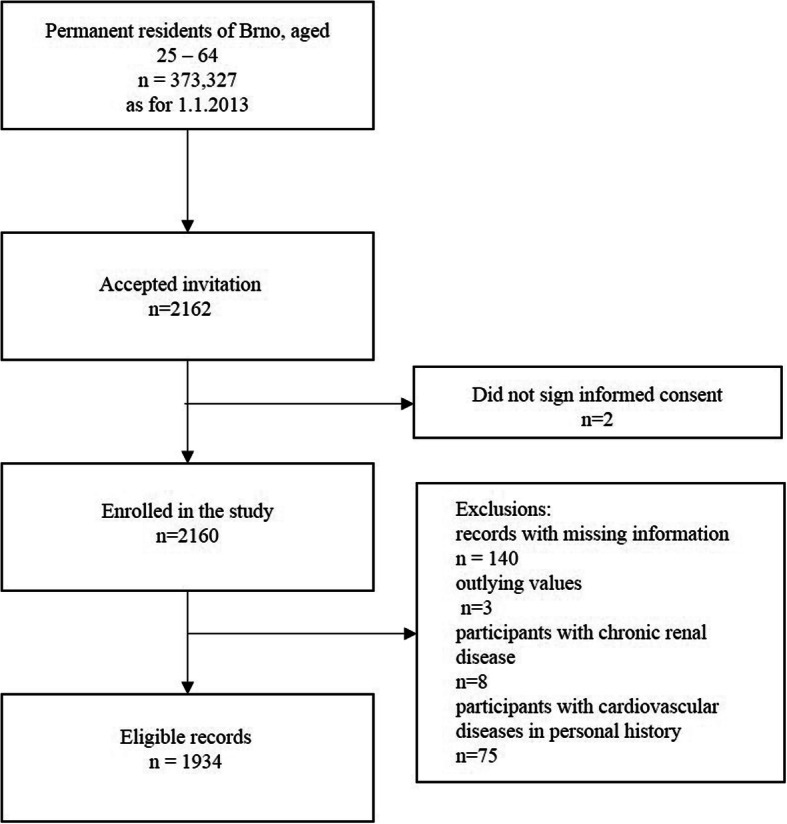
Subjects aged between 25 and 64 years from a random population-based sample were evaluated between 2013 and 2016. Data from questionnaires, blood pressure, anthropometric measures, and blood samples were collected and analyzed. CAVI was measured using VaSera VS-1500 N devise. Subjects with a history of CVD or chronic renal disease were excluded.
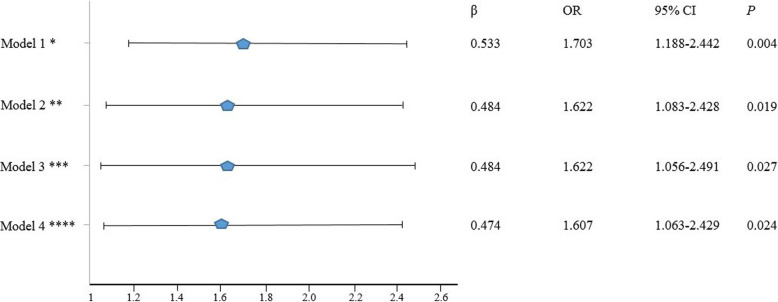
One thousand nine hundred thirty-four participants, 44.7% of males, were included. The median age was 48 (Interquartile Range [IQR] 19) years, TG levels were 1.05 (0.793) mmol/L, and CAVI 7.24 (1.43) points. Prevalence of high CAVI was 10.0% (14.5% in males and 6.4% in females; P < 0.001) and prevalence of hypertriglyceridemia was 20.2% (29.2% in males and 13% in females, P < 0.001). The correlation between TG and CAVI was 0.136 (P < 0.001). High CAVI values were more prevalent among participants with metabolic syndrome (MetS), high blood pressure, dysglycemia, abdominal obesity, high LDL-cholesterol (LDL-c), and high total cholesterol. Using binary regression analysis, high TG were associated with high CAVI, even after adjustment for other MetS components, age, gender, smoking status, LDL-c, and statin treatment (β = 0.474, OR = 1.607, 95% CI = 1.063-2.429, P = 0.024).
TG levels were correlated with ArSt, measured as CAVI. High TG was associated with high CAVI independent of multiple cardiometabolic risk factors. Awareness of the risks and targeted treatment of hypertriglyceridemia could further benefit in reducing the prevalence of CVD and events.
动脉僵硬度(ArSt)描述了与弹性丧失相关的动脉壁结构变化,是心血管疾病(CVD)的独立预测因子。与 ArSt 和甘油三酯(TG)相关的证据显示出相互矛盾的结果。本文旨在利用心血管踝血管指数(CAVI)调查高 TG 与 ArSt 之间的关联。
在 2013 年至 2016 年期间,从一个随机的基于人群的样本中评估了年龄在 25 至 64 岁之间的受试者。收集并分析了来自问卷、血压、人体测量和血液样本的数据。使用 VaSera VS-1500N 设备测量 CAVI。排除有 CVD 或慢性肾病病史的患者。
纳入了 1934 名参与者,其中 44.7%为男性。中位年龄为 48(四分位间距[IQR]19)岁,TG 水平为 1.05(0.793)mmol/L,CAVI 为 7.24(1.43)点。高 CAVI 的患病率为 10.0%(男性为 14.5%,女性为 6.4%;P<0.001),高甘油三酯血症的患病率为 20.2%(男性为 29.2%,女性为 13%;P<0.001)。TG 与 CAVI 之间的相关性为 0.136(P<0.001)。代谢综合征(MetS)、高血压、血糖异常、腹型肥胖、高 LDL-胆固醇(LDL-c)和高总胆固醇的参与者中,高 CAVI 值更为常见。使用二元回归分析,即使在调整了其他 MetS 成分、年龄、性别、吸烟状况、LDL-c 和他汀类药物治疗后,高 TG 仍与高 CAVI 相关(β=0.474,OR=1.607,95%CI=1.063-2.429,P=0.024)。
TG 水平与 ArSt 相关,ArSt 以 CAVI 来衡量。高 TG 与 CAVI 升高相关,独立于多种心血管代谢危险因素。提高对高甘油三酯血症风险的认识并进行针对性治疗,可能有助于进一步降低 CVD 及事件的发生率。