College of Tropical Crops, Hainan University, Haikou, People's Republic of China.
National Engineering Research Center of Coconut/Coconut Research Institute, Chinese Academy of Tropical Agricultural Sciences, Wenchang, People's Republic of China.
Sci Rep. 2020 Jul 15;10(1):11640. doi: 10.1038/s41598-020-68431-2.
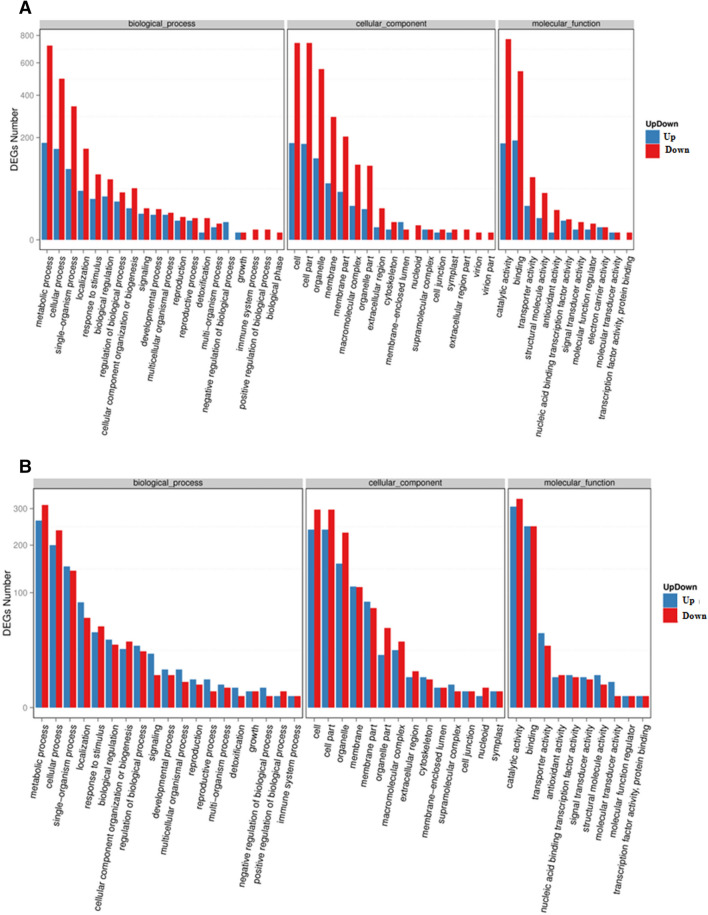
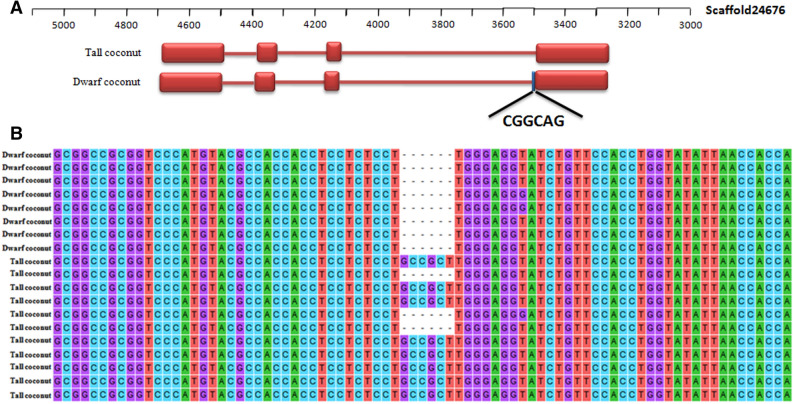
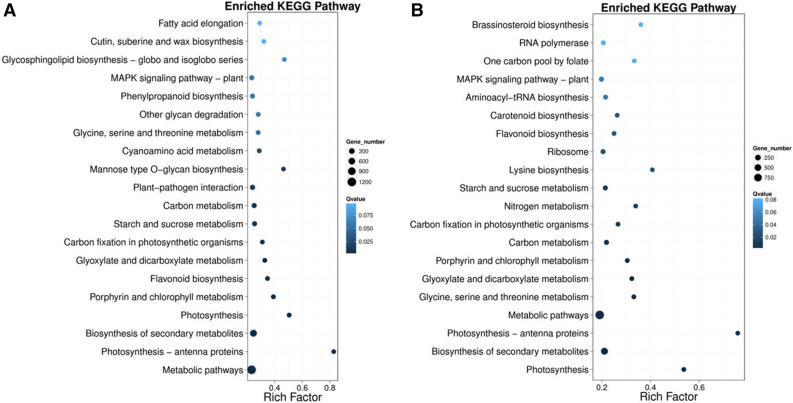
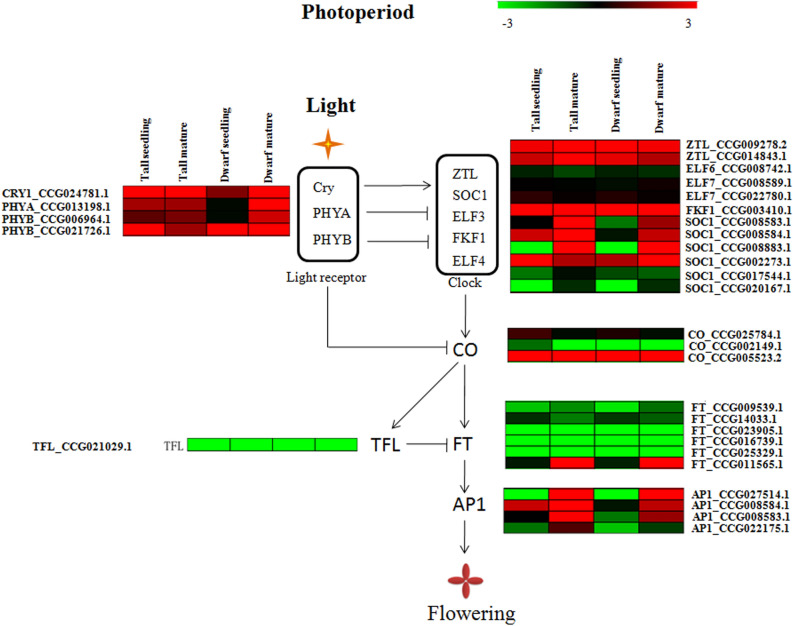
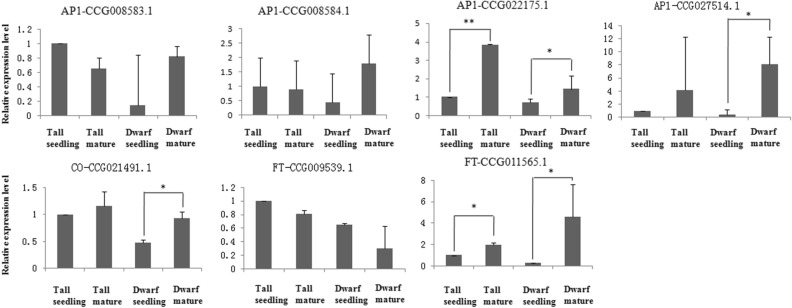
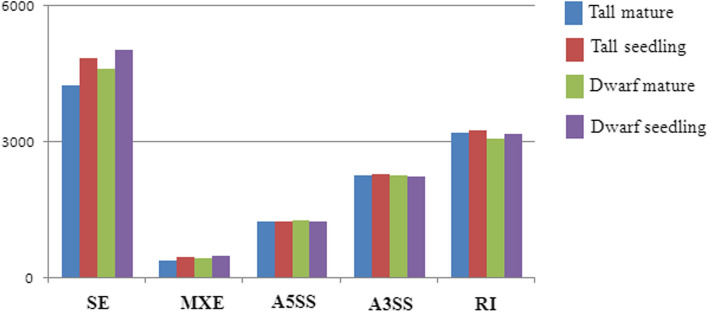
Coconut palm has two distinct types-"tall" and "dwarf"-which differ morphologically. Tall coconut varieties need 8-10 years to start flowering, while dwarf coconut varieties only require 3-5 years. We compared seedling and reproductive stage transcriptomes for both coconut types to determine potential molecular mechanisms underlying control of flowering time in coconut. Several key genes in the photoperiod pathway were differentially expressed between seedling and reproductive leaf samples in both tall and dwarf coconut. These genes included suppressor of overexpression of constans (SOC1), flowering locus T (FT), and Apetala 1 (AP1). Alternative splicing analysis of genes in the photoperiod pathway further revealed that the FT gene produces different transcripts in tall compared to dwarf coconut. The shorter alternative splice variant of FT [which included a 6 bp deletion, alternative 3' splicing sites (A3SS)] was found to be exclusively present in dwarf coconut varieties but absent in most tall coconut varieties. Our results provide a valuable information resource as well as suggesting a probable mechanism for differentiation of flowering time onset in coconut, providing a target for future breeding work in accelerating time to flowering in this crop species.
椰子树有两种明显的类型——“高”和“矮”——它们在形态上有所不同。高椰子品种需要 8-10 年才能开始开花,而矮椰子品种只需要 3-5 年。我们比较了两种椰子的幼苗和生殖阶段的转录组,以确定椰子开花时间控制的潜在分子机制。在高椰子和矮椰子的幼苗和生殖叶样本中,光周期途径中的几个关键基因的表达存在差异。这些基因包括抑制光周期过量表达的 CONSTANS (SOC1)、开花 locus T (FT)和 APETALA 1 (AP1)。光周期途径中基因的选择性剪接分析进一步表明,FT 基因在高椰子中产生的转录本与矮椰子不同。在矮椰子中发现了 FT 的较短的选择性剪接变体[其中包括 6 个碱基对缺失、替代 3'剪接位点 (A3SS)],而在大多数高椰子品种中则不存在。我们的研究结果不仅为椰子开花时间启动的分化提供了有价值的信息资源,还提出了一个可能的机制,为未来在这个作物物种中加速开花时间的育种工作提供了一个目标。