Kwok Man Long, Chan King Ming
School of Life Sciences, The Chinese University of Hong Kong, Sha Tin, N.T., Hong Kong.
Toxicol Rep. 2020 Jul 4;7:822-835. doi: 10.1016/j.toxrep.2020.06.012. eCollection 2020.
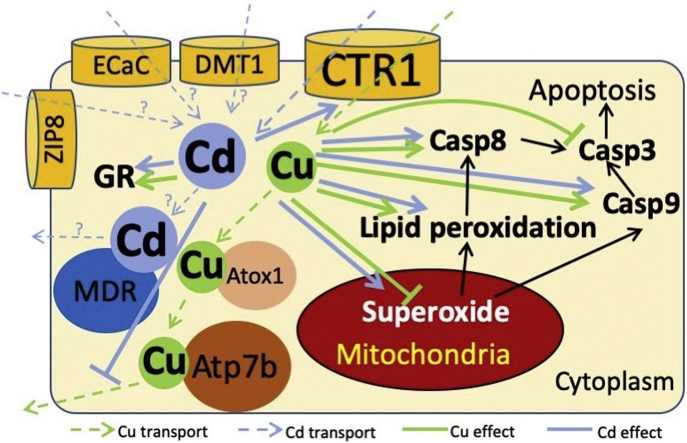
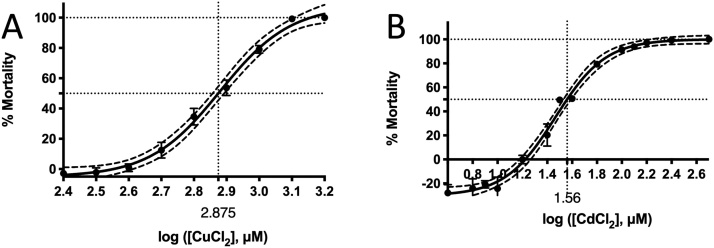
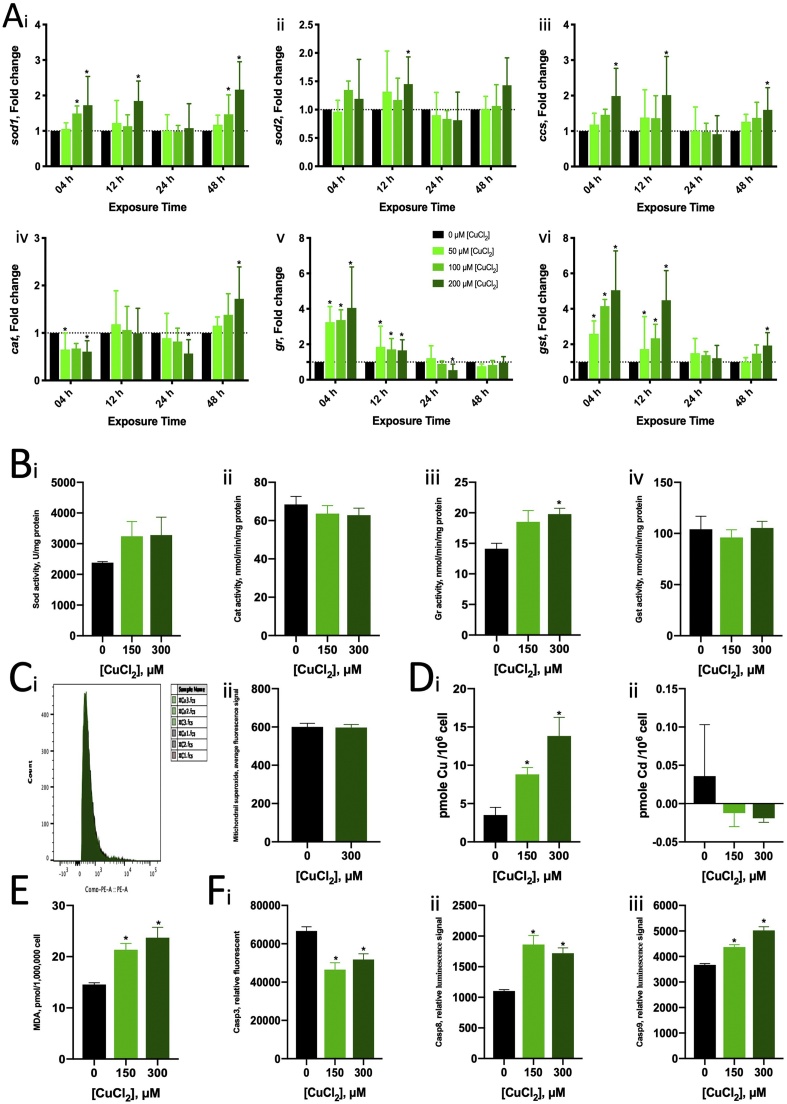
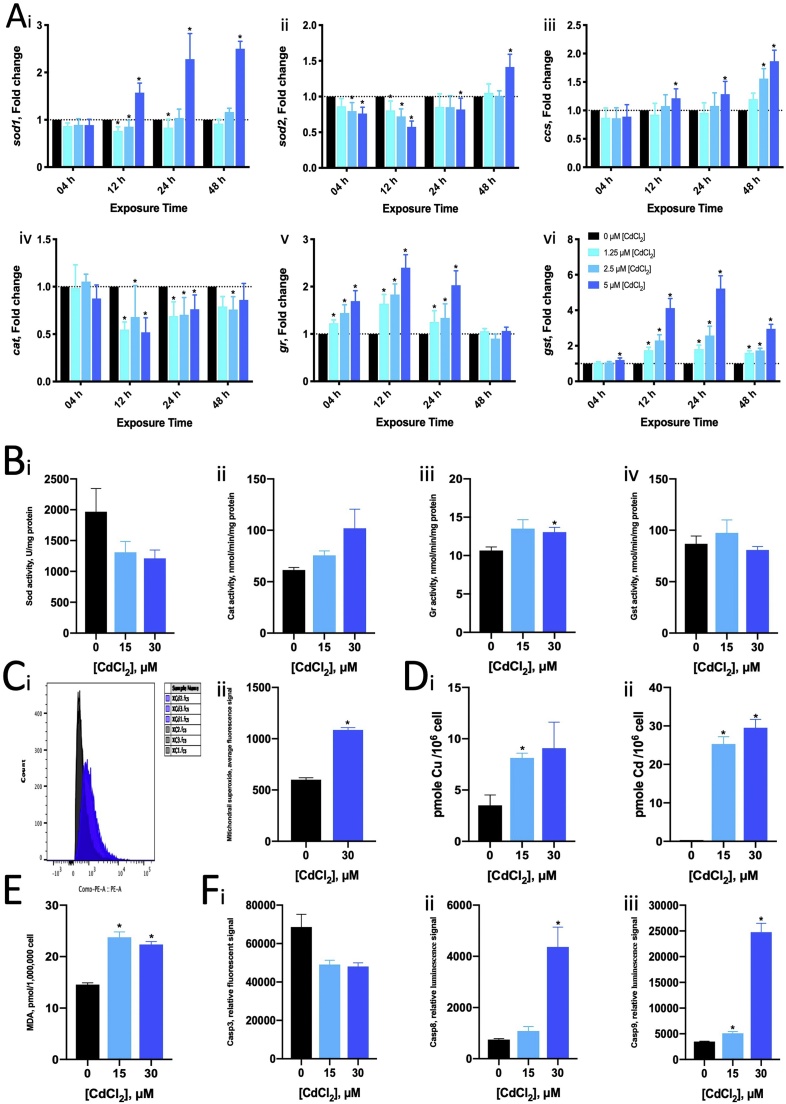
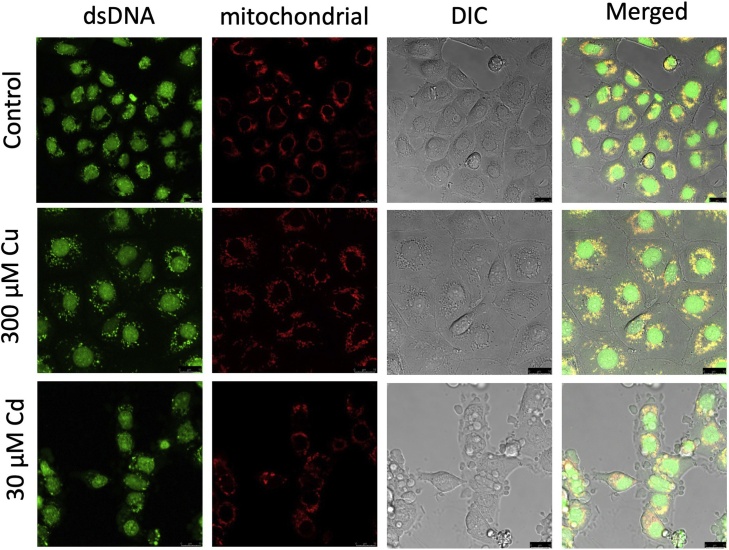
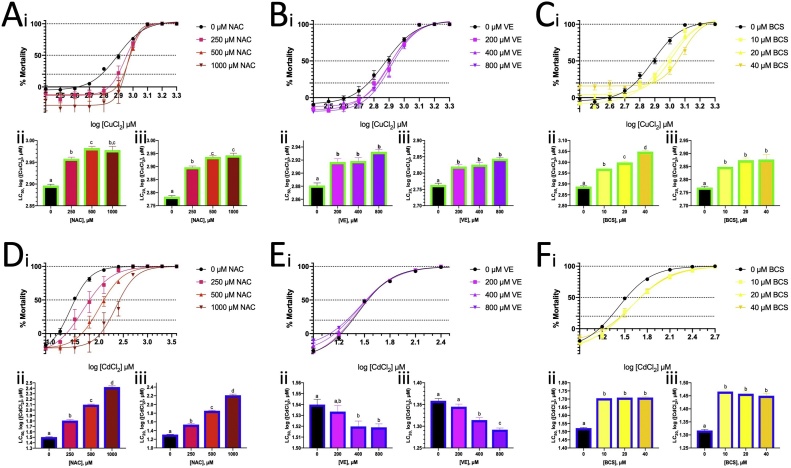
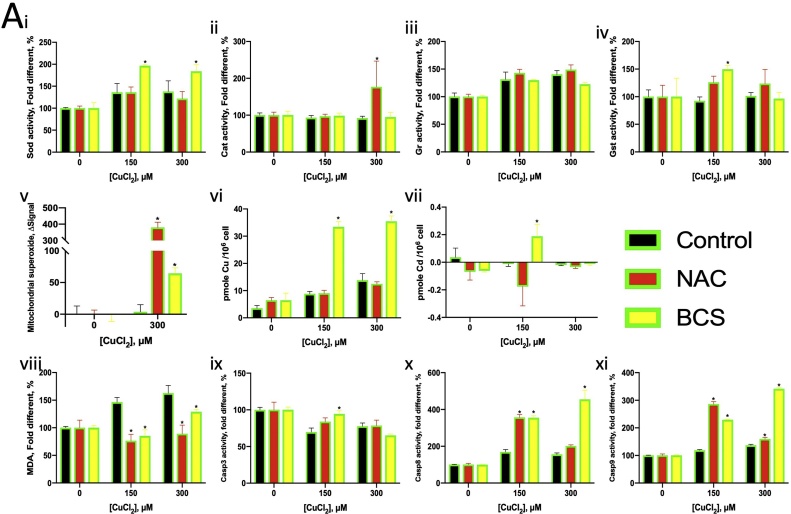
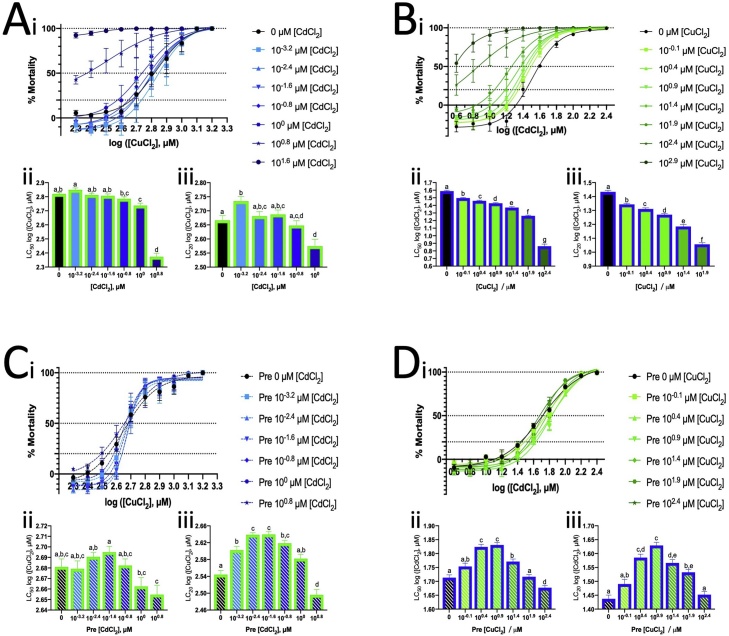
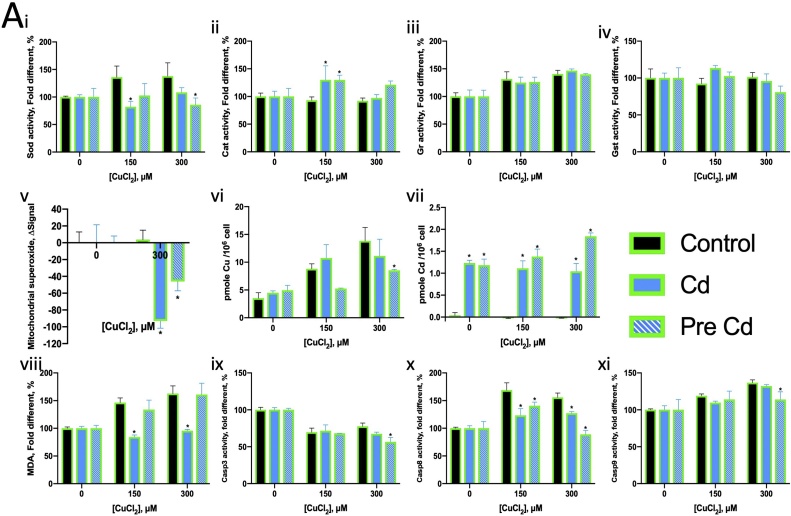
Copper (Cu) and cadmium (Cd) are widely used in industrial activities, resulting in Cu and Cd contamination in aquatic systems worldwide. Although Cu plays an essential role in many biological functions, an excessive amount of the metal causes cytotoxicity. In contrast, Cd is a non-essential metal that usually co-exists with Cu. Together, they cause oxidative stress in cells, leading to cell damage. These metal ions are also believed to cause cell apoptosis. In this study, we used a zebrafish liver cell line, ZFL, to study combined Cu and Cd cytotoxicity. Although Cd is more toxic than Cu, both were found to regulate the expression of oxidative stress related genes, and neither significantly altered the activity of oxidative stress related enzymes. Co-exposure tests with the antioxidant -acetyl-l-cysteine and the Cu chelator bathocuproinedisulfonic acid disodium salt demonstrated that Cd toxicity was due to the oxidative stress caused by Cu, and that Cu at a low concentration could in fact exert an antioxidant effect against the oxidative stress in ZFL. Excessive Cu concentration triggered the expression of initiator caspases (caspase 8 and caspase 9) but suppressed that of an executioner caspase (caspase 3), halting apoptosis. Cd could only trigger the expression of initiator caspases; it could not halt apoptosis. However, a low concentration of Cu reduced the mitochondrial superoxide level, suppressing the Cd-induced apoptotic effects in ZFL.
铜(Cu)和镉(Cd)在工业活动中被广泛使用,导致全球水生系统中出现铜和镉污染。尽管铜在许多生物学功能中发挥着重要作用,但过量的这种金属会导致细胞毒性。相比之下,镉是一种非必需金属,通常与铜共存。它们共同作用会在细胞中引起氧化应激,导致细胞损伤。这些金属离子还被认为会导致细胞凋亡。在本研究中,我们使用斑马鱼肝细胞系ZFL来研究铜和镉的联合细胞毒性。尽管镉比铜毒性更强,但两者均被发现可调节氧化应激相关基因的表达,且两者均未显著改变氧化应激相关酶的活性。与抗氧化剂——乙酰半胱氨酸和铜螯合剂 bathocuproinedisulfonic acid disodium salt 的联合暴露试验表明,镉的毒性是由铜引起的氧化应激所致,并且低浓度的铜实际上可以对ZFL中的氧化应激发挥抗氧化作用。过量的铜浓度会触发起始半胱天冬酶(半胱天冬酶8和半胱天冬酶9)的表达,但会抑制执行半胱天冬酶(半胱天冬酶3)的表达,从而阻止细胞凋亡。镉只能触发起始半胱天冬酶的表达;它无法阻止细胞凋亡。然而,低浓度的铜会降低线粒体超氧化物水平,抑制镉诱导的ZFL细胞凋亡效应。