North Frederick, Luhman Kristine E, Mallmann Eric A, Mallmann Toby J, Tulledge-Scheitel Sidna M, North Emily J, Pecina Jennifer L
Division of Community Internal Medicine, Department of Medicine, Mayo Clinic, Rochester, MN, United States.
Mayo Clinic, Rochester, MN, United States.
JMIR Med Inform. 2020 Jul 8;8(7):e16521. doi: 10.2196/16521.
Patient portal registration and the use of secure messaging are increasing. However, little is known about how the work of responding to and initiating patient messages is distributed among care team members and how these messages may affect work after hours.
This study aimed to examine the growth of secure messages and determine how the work of provider responses to patient-initiated secure messages and provider-initiated secure messages is distributed across care teams and across work and after-work hours.
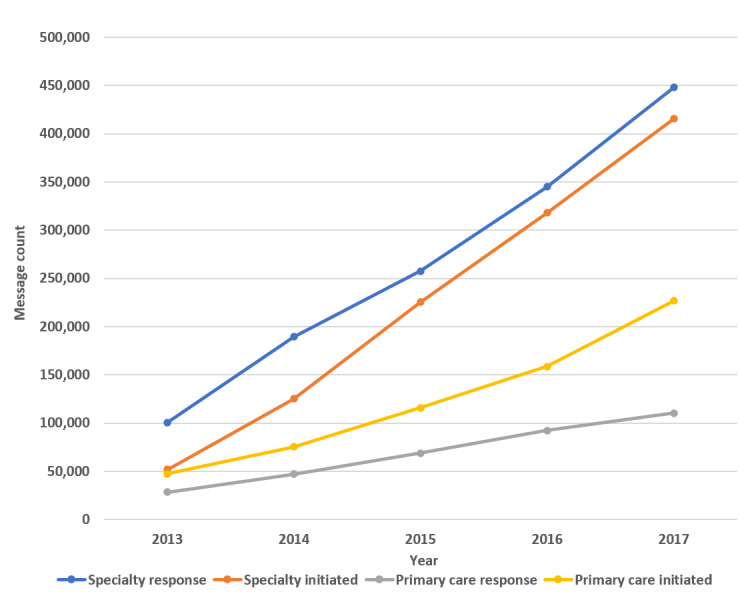
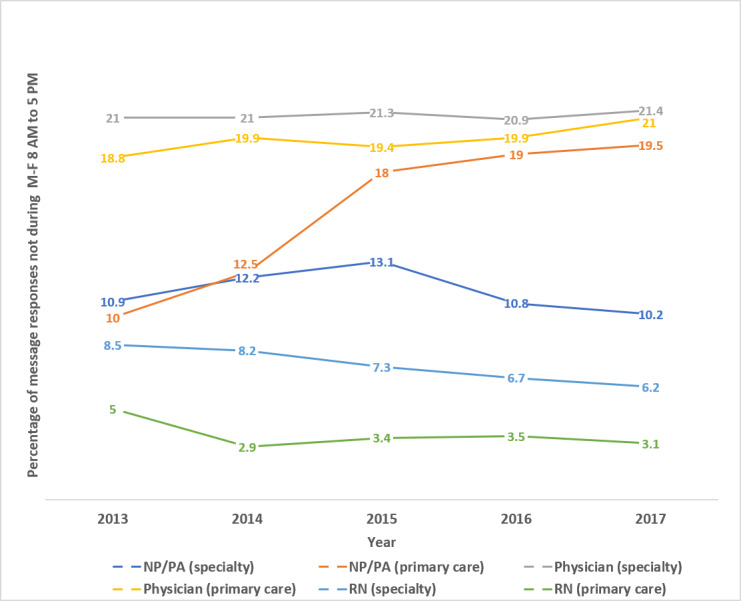
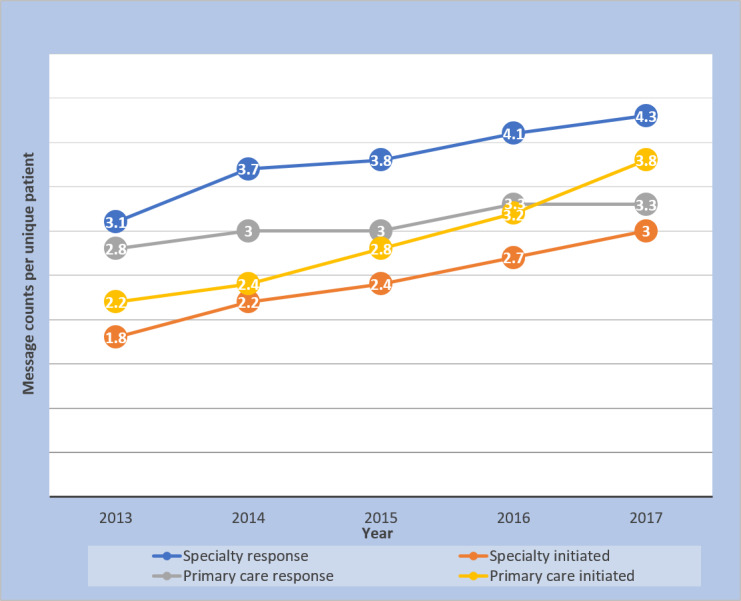
We collected secure messages sent from providers from January 1, 2013, to March 15, 2018, at Mayo Clinic, Rochester, Minnesota, both in response to patient secure messages and provider-initiated secure messages. We examined counts of messages over time, how the work of responding to messages and initiating messages was distributed among health care workers, messages sent per provider, messages per unique patient, and when the work was completed (proportion of messages sent after standard work hours).
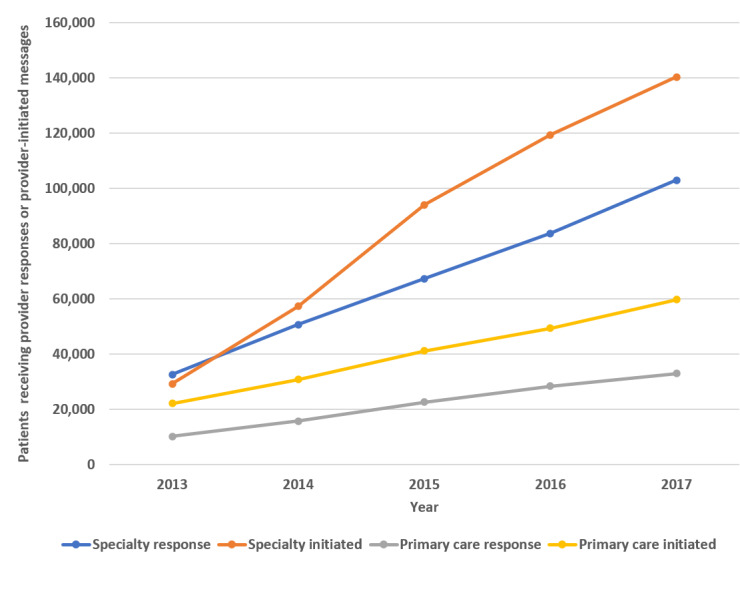
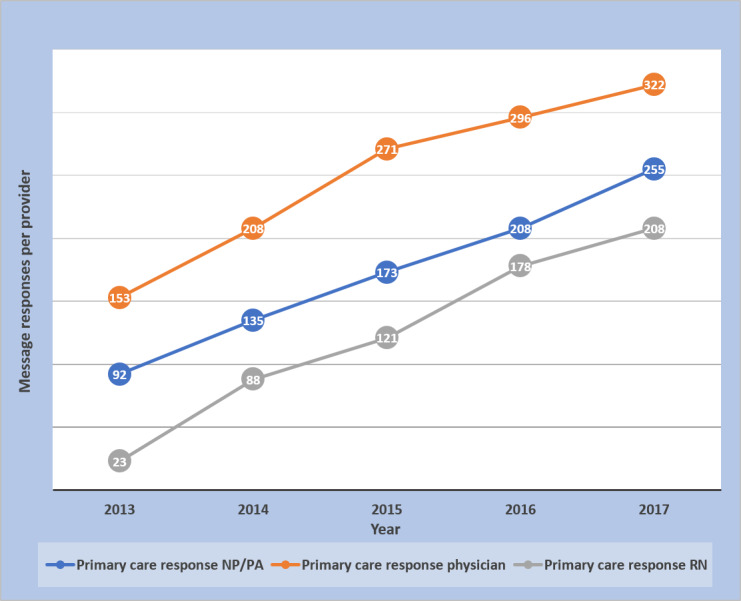
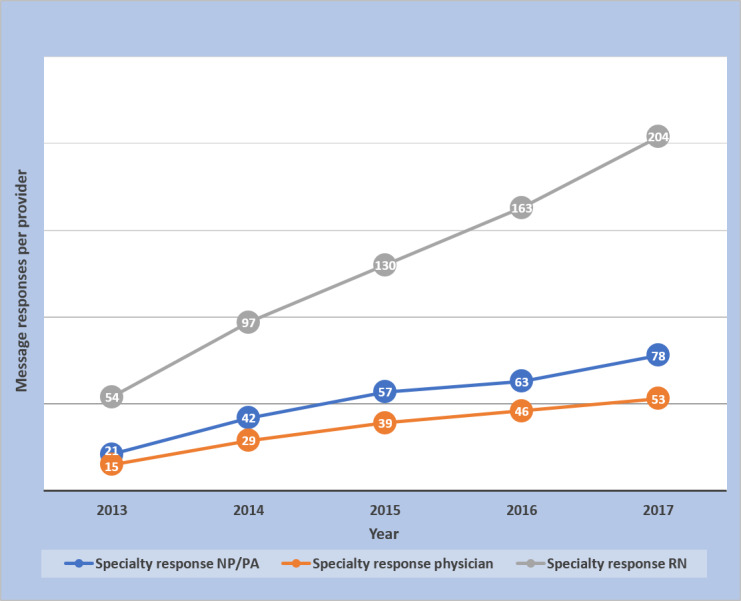
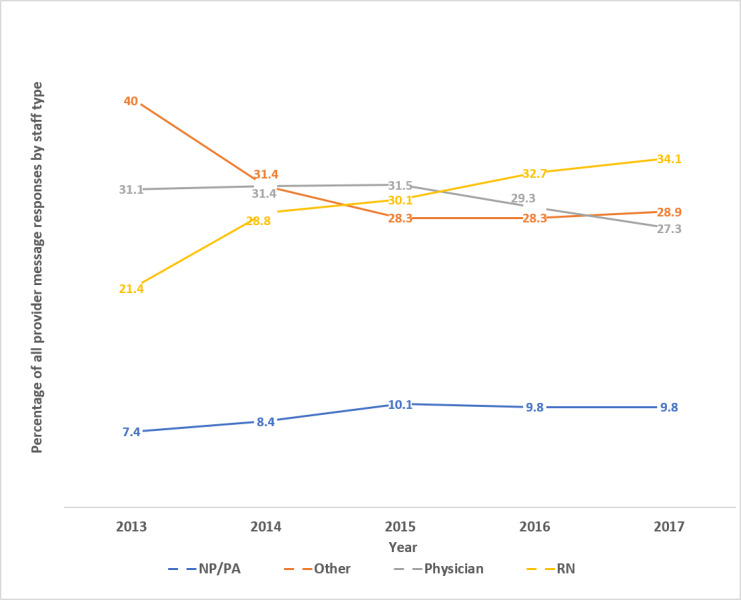
Portal registration for patients having clinic visits increased from 33% to 62%, and increasingly more patients and providers were engaged in messaging. Provider message responses to individual patients increased significantly in both primary care and specialty practices. Message responses per specialty physician provider increased from 15 responses per provider per year to 53 responses per provider per year from 2013 to 2018, resulting in a 253% increase. Primary care physician message responses increased from 153 per provider per year to 322 from 2013 to 2018, resulting in a 110% increase. Physicians, nurse practitioners, physician assistants, and registered nurses, all contributed to the substantial increases in the number of messages sent.
Provider-sent secure messages at a large health care institution have increased substantially since implementation of secure messaging between patients and providers. The effort of responding to and initiating messages to patients was distributed across multiple provider categories. The percentage of message responses occurring after hours showed little substantial change over time compared with the overall increase in message volume.
患者门户注册和安全消息的使用正在增加。然而,对于回复和发起患者消息的工作如何在护理团队成员之间分配,以及这些消息在工作时间之外可能如何影响工作,我们知之甚少。
本研究旨在检查安全消息的增长情况,并确定提供者对患者发起的安全消息和提供者发起的安全消息的回复工作是如何在护理团队、工作时间和工作时间之外进行分配的。
我们收集了2013年1月1日至2018年3月15日期间明尼苏达州罗切斯特市梅奥诊所提供者发送的安全消息,包括对患者安全消息的回复和提供者发起的安全消息。我们研究了消息数量随时间的变化、回复消息和发起消息的工作在医护人员中的分配情况、每个提供者发送的消息数量、每个独特患者的消息数量,以及工作完成的时间(标准工作时间后发送的消息比例)。
门诊患者的门户注册率从33%提高到了62%,越来越多的患者和提供者参与了消息传递。在初级保健和专科实践中,提供者对个体患者的消息回复都显著增加。从2013年到2018年,每个专科医生提供者的消息回复从每年每个提供者15次增加到53次,增长了253%。初级保健医生的消息回复从2013年的每年每个提供者153次增加到322次,增长了110%。医生、执业护士、医师助理和注册护士都促成了发送消息数量的大幅增加。
自患者与提供者之间实施安全消息传递以来,大型医疗机构中提供者发送的安全消息大幅增加。回复和发起患者消息的工作分布在多个提供者类别中。与消息量的总体增加相比,工作时间后消息回复的百分比随时间变化不大。