Yang Mengjiao, Hassan Muhammad Adeel, Xu Kaijie, Zheng Chengyan, Rasheed Awais, Zhang Yong, Jin Xiuliang, Xia Xianchun, Xiao Yonggui, He Zhonghu
Institute of Crop Sciences, National Wheat Improvement Centre, Chinese Academy of Agricultural Sciences (CAAS), Beijing, China.
Institute of Cotton Research, CAAS, Anyang, China.
Front Plant Sci. 2020 Jun 26;11:927. doi: 10.3389/fpls.2020.00927. eCollection 2020.
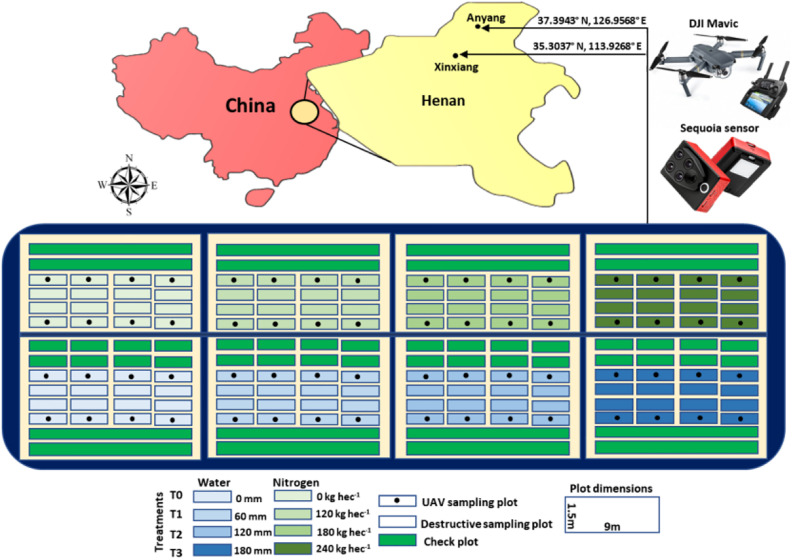
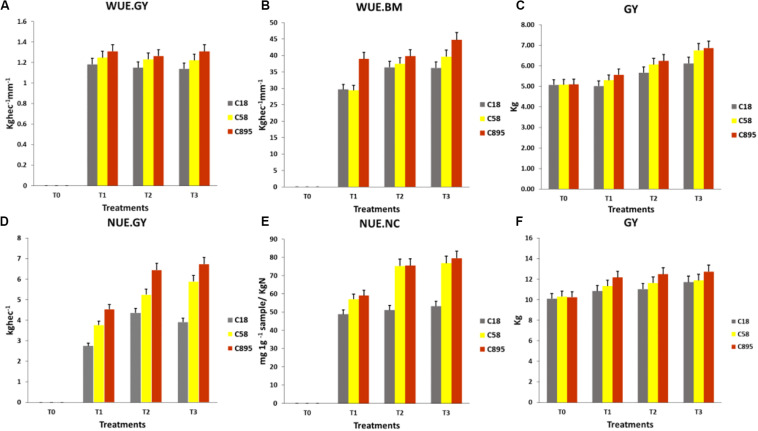
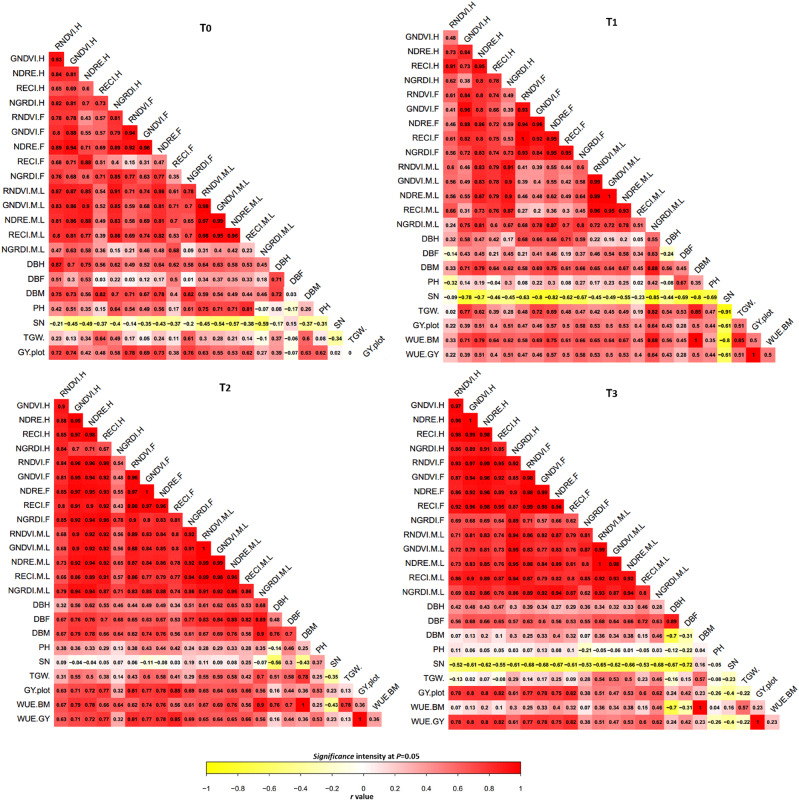
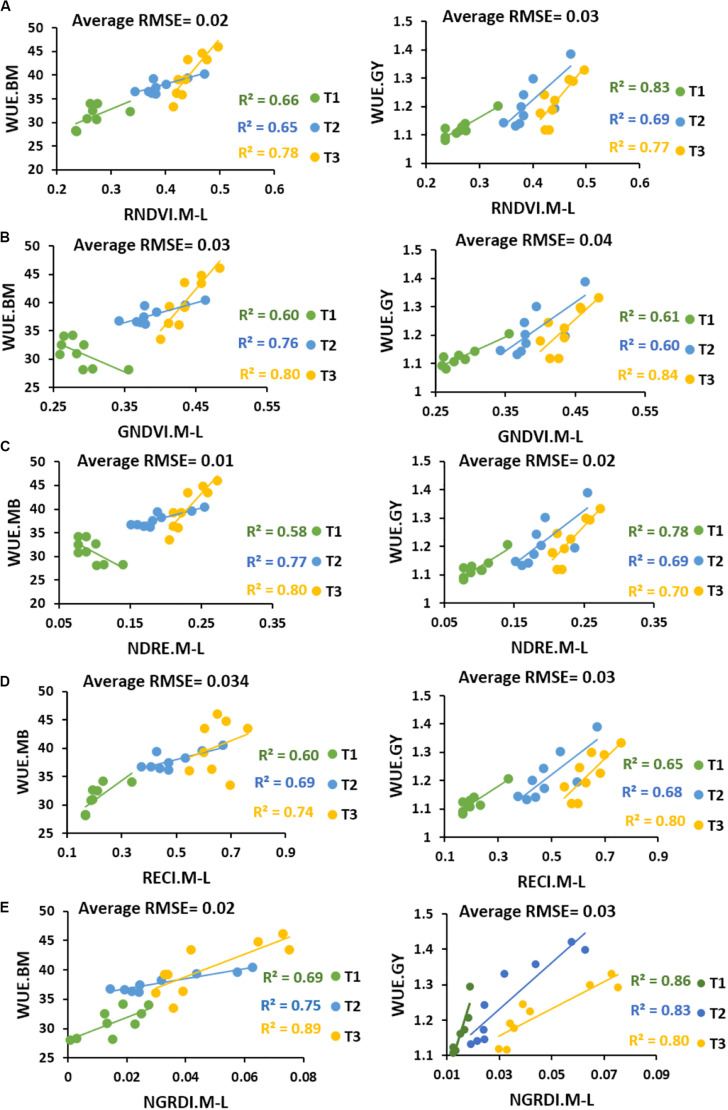
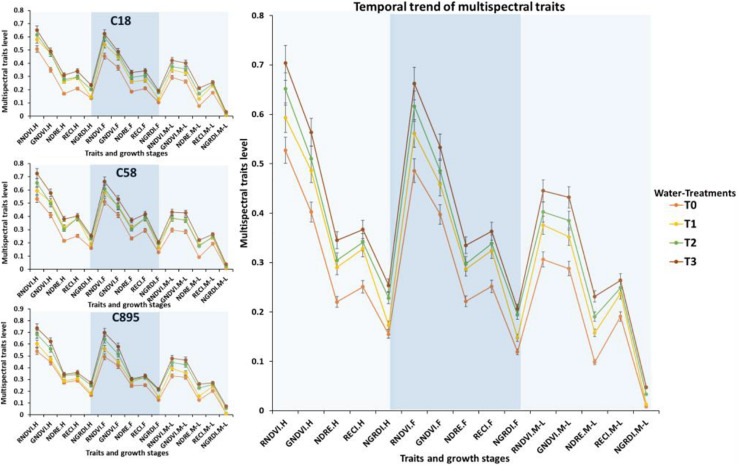
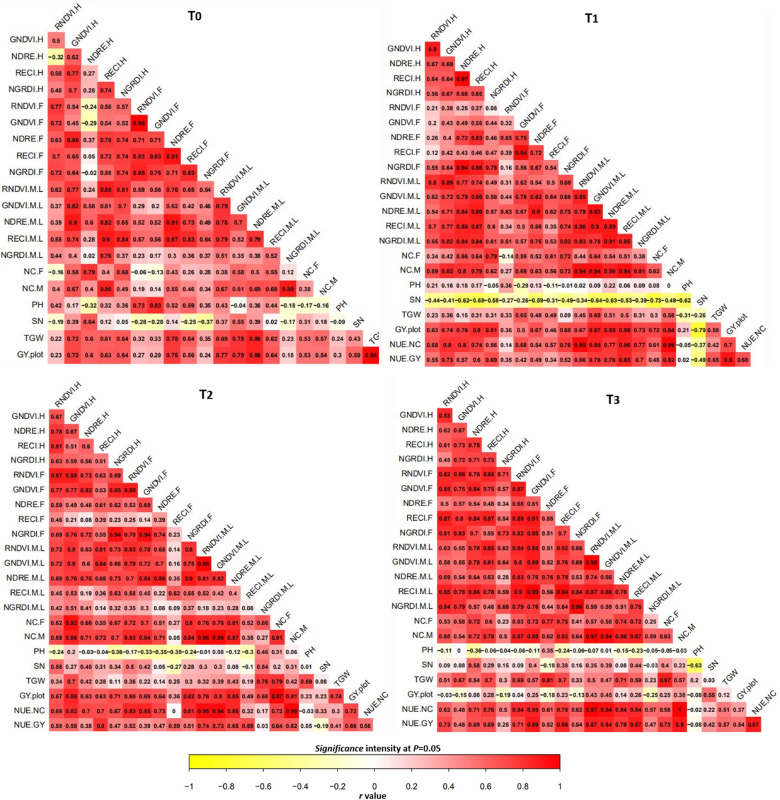
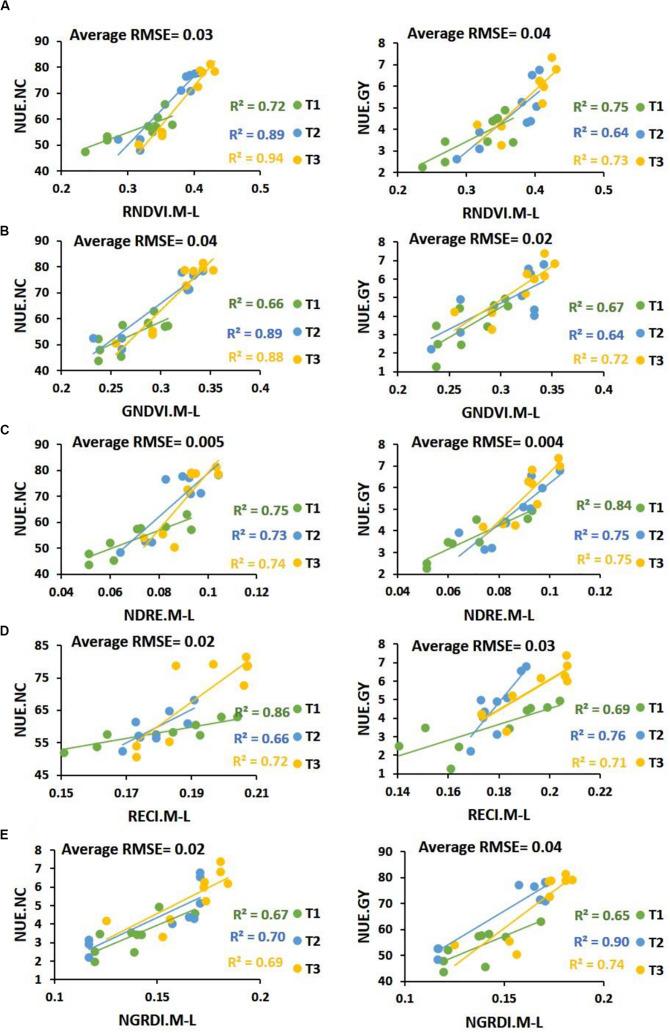
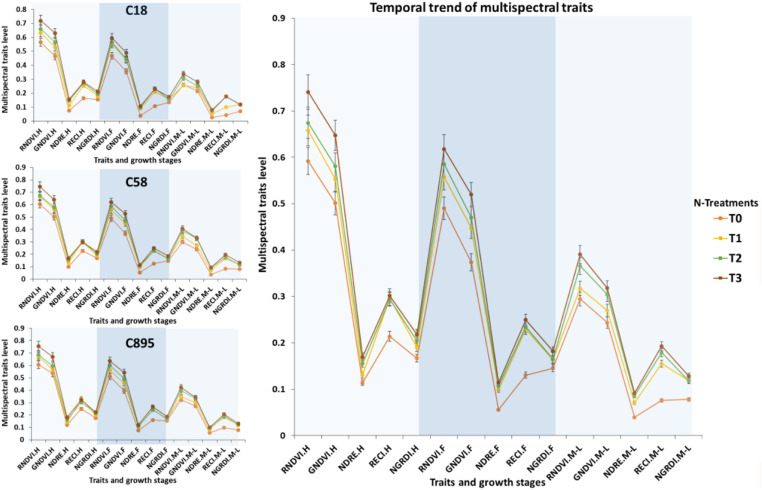
Unmanned aerial vehicle (UAV) based remote sensing is a promising approach for non-destructive and high-throughput assessment of crop water and nitrogen (N) efficiencies. In this study, UAV was used to evaluate two field trials using four water (T0 = 0 mm, T1 = 80 mm, T2 = 120 mm, and T3 = 160 mm), and four N (T0 = 0, T1 = 120 kg ha, T2 = 180 kg ha, and T3 = 240 kg ha) treatments, respectively, conducted on three wheat genotypes at two locations. Ground-based destructive data of water and N indictors such as biomass and N contents were also measured to validate the aerial surveillance results. Multispectral traits including red normalized difference vegetation index (RNDVI), green normalized difference vegetation index (GNDVI), normalized difference red-edge index (NDRE), red-edge chlorophyll index (RECI) and normalized green red difference index (NGRDI) were recorded using UAV as reliable replacement of destructive measurements by showing high r values up to 0.90. NGRDI was identified as the most efficient non-destructive indicator through strong prediction values ranged from = 0.69 to 0.89 for water use efficiencies (WUE) calculated from biomass (WUE.BM), and = 0.80 to 0.86 from grain yield (WUE.GY). RNDVI was better in predicting the phenotypic variations for N use efficiency calculated from nitrogen contents of plant samples (NUE.NC) with high values ranging from 0.72 to 0.94, while NDRE was consistent in predicting both NUE.NC and NUE.GY by 0.73 to 0.84 with low root mean square errors. UAV-based remote sensing demonstrates that treatment T2 in both water 120 mm and N 180 kg ha supply trials was most appropriate dosages for optimum uptake of water and N with high GY. Among three cultivars, Zhongmai 895 was highly efficient in WUE and NUE across the water and N treatments. Conclusively, UAV can be used to predict time-series WUE and NUE across the season for selection of elite genotypes, and to monitor crop efficiency under varying N and water dosages.
基于无人机(UAV)的遥感技术是一种很有前景的方法,可用于对作物水分和氮素利用效率进行无损且高通量的评估。在本研究中,利用无人机对两项田间试验进行评估,这两项试验分别在两个地点对三种小麦基因型进行,采用了四种水分处理(T0 = 0毫米,T1 = 80毫米,T2 = 120毫米,T3 = 160毫米)和四种氮素处理(T0 = 0,T1 = 120千克/公顷,T2 = 180千克/公顷,T3 = 240千克/公顷)。还测量了诸如生物量和氮含量等水分和氮素指标的地面破坏性数据,以验证航空监测结果。利用无人机记录了包括红边归一化植被指数(RNDVI)、绿边归一化植被指数(GNDVI)、归一化红边指数(NDRE)、红边叶绿素指数(RECI)和归一化绿红差值指数(NGRDI)在内的多光谱特征,这些特征通过高达0.90的高r值显示出可作为破坏性测量的可靠替代方法。通过从生物量计算的水分利用效率(WUE.BM)的强预测值范围为0.69至0.89,以及从籽粒产量计算的水分利用效率(WUE.GY)的强预测值范围为0.80至0.86,NGRDI被确定为最有效的无损指标。RNDVI在预测根据植物样品氮含量计算的氮素利用效率(NUE.NC)的表型变异方面表现更好,其高r值范围为0.72至0.94,而NDRE在预测NUE.NC和NUE.GY方面表现一致,r值为0.73至0.84,均方根误差较低。基于无人机的遥感表明,在120毫米水分和180千克/公顷氮素供应试验中,处理T2是水分和氮素最佳吸收及高籽粒产量的最合适用量。在三个品种中,中麦895在整个水分和氮素处理中的水分利用效率和氮素利用效率都很高。总之,无人机可用于预测整个季节的时间序列水分利用效率和氮素利用效率,以选择优良基因型,并监测不同氮素和水分用量下的作物效率。