Department of Chemistry, Roy and Diana Vagelos Laboratories, University of Pennsylvania, 231 S. 34th Street, Philadelphia, PA, 19104-6323, USA.
Angew Chem Int Ed Engl. 2021 Jan 25;60(4):1714-1726. doi: 10.1002/anie.202007668. Epub 2020 Sep 1.
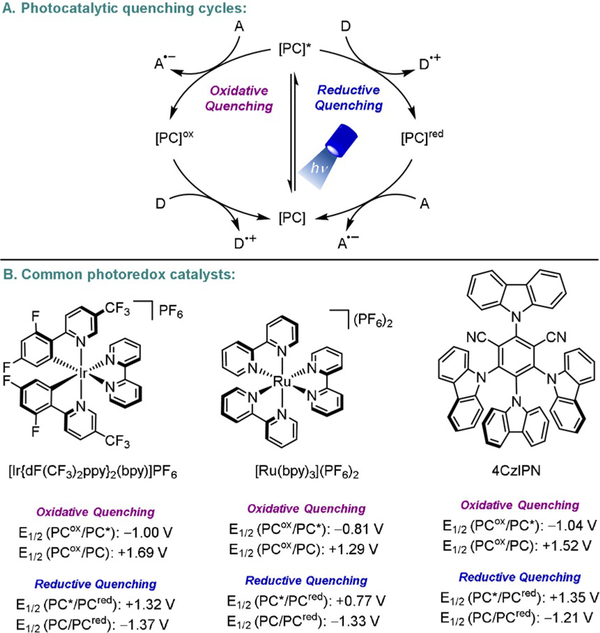
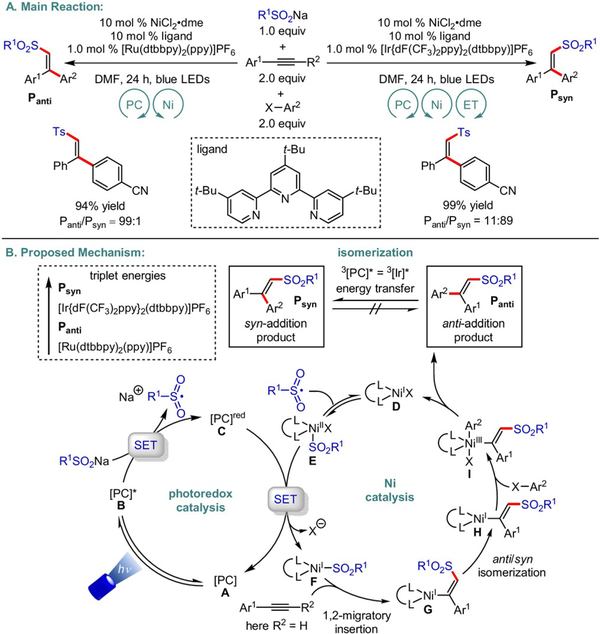
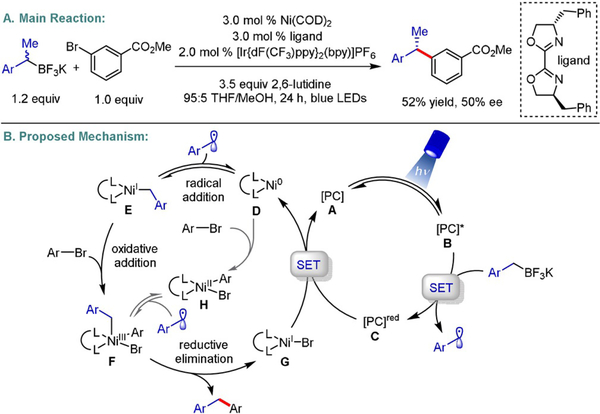
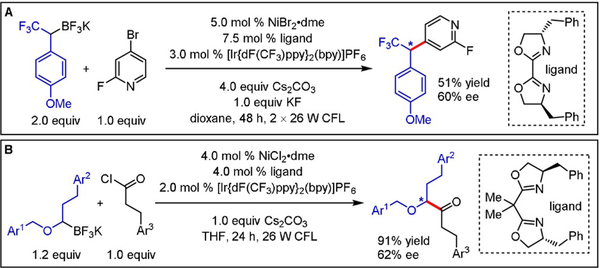
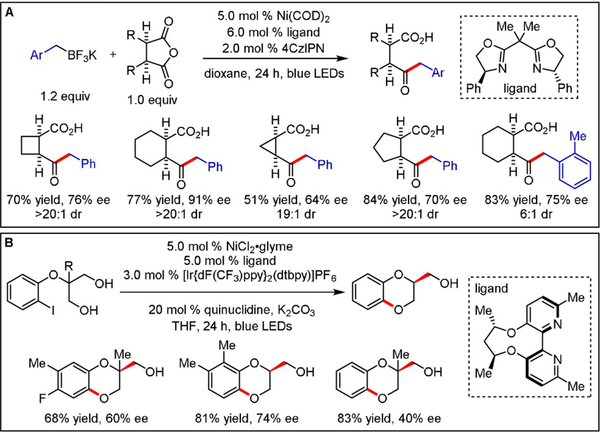
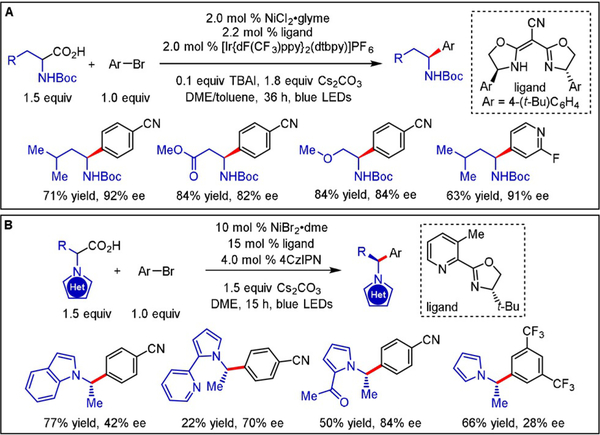
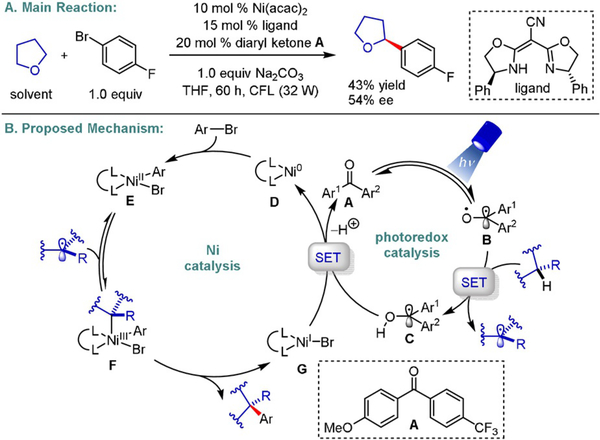
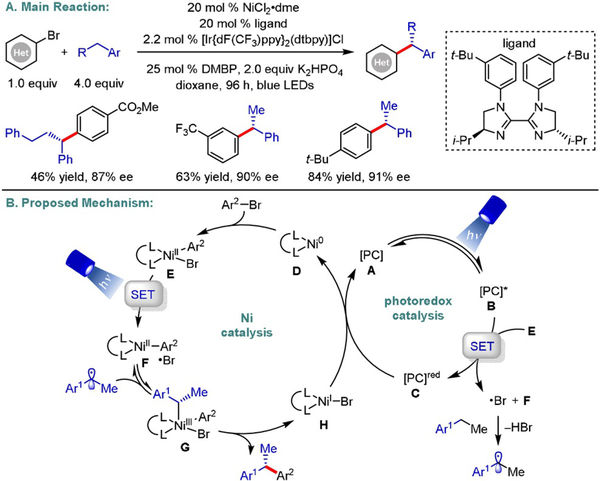
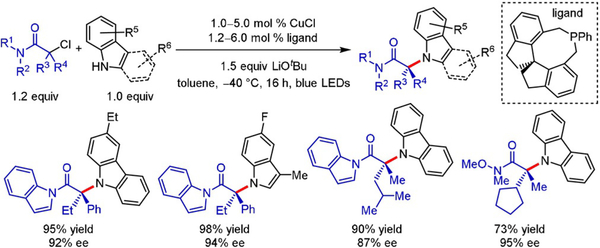
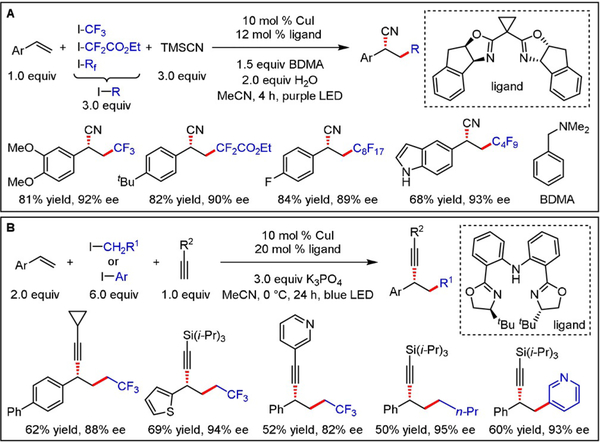
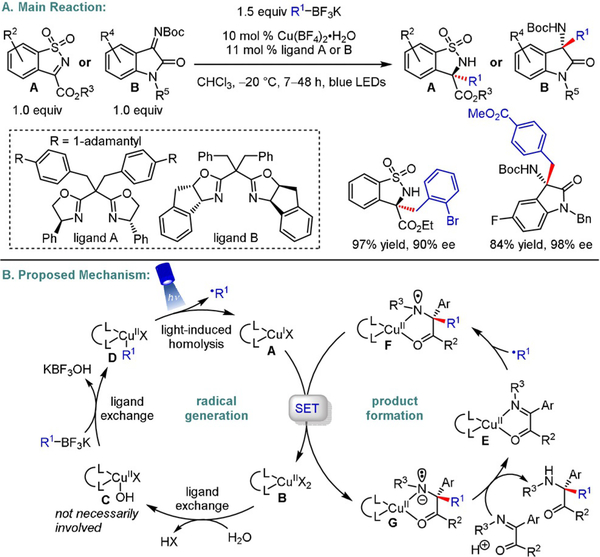
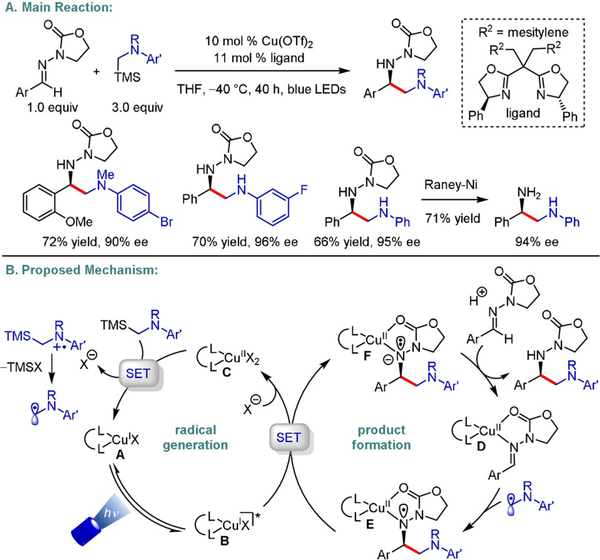
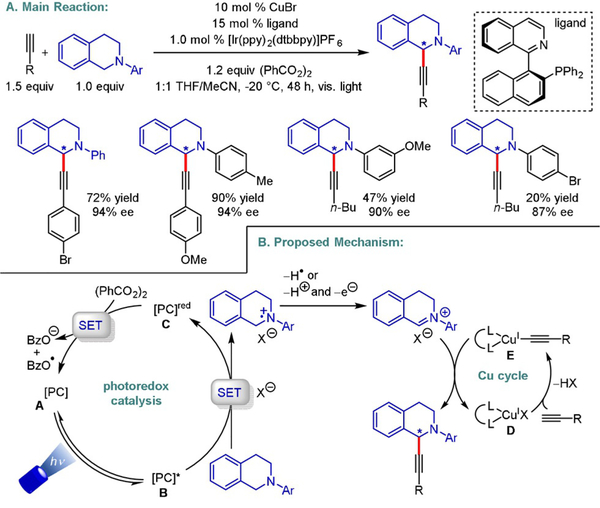
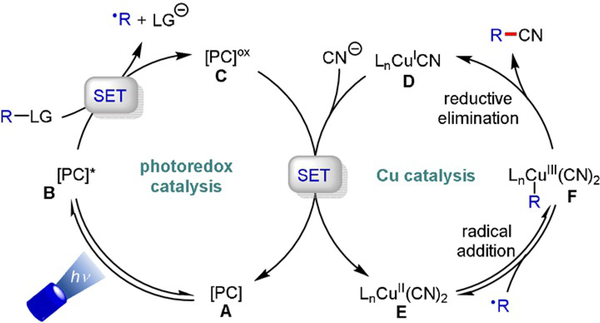
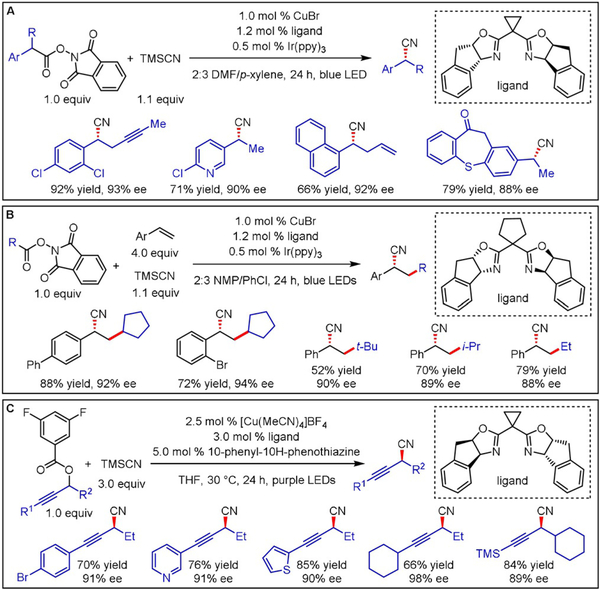
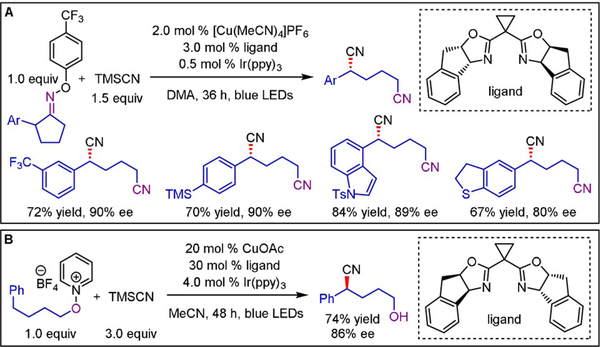
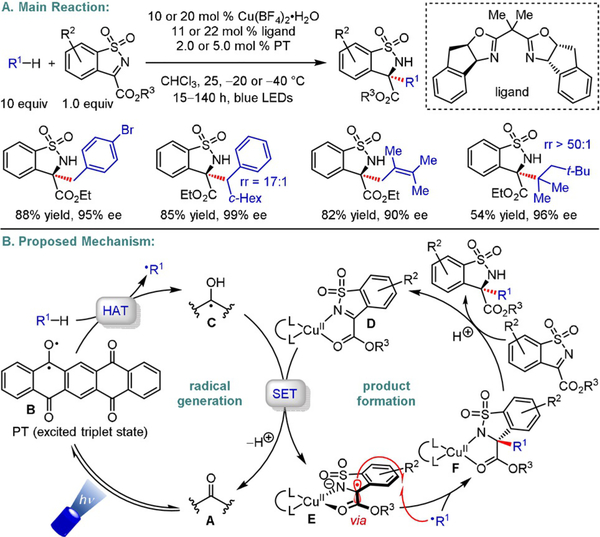
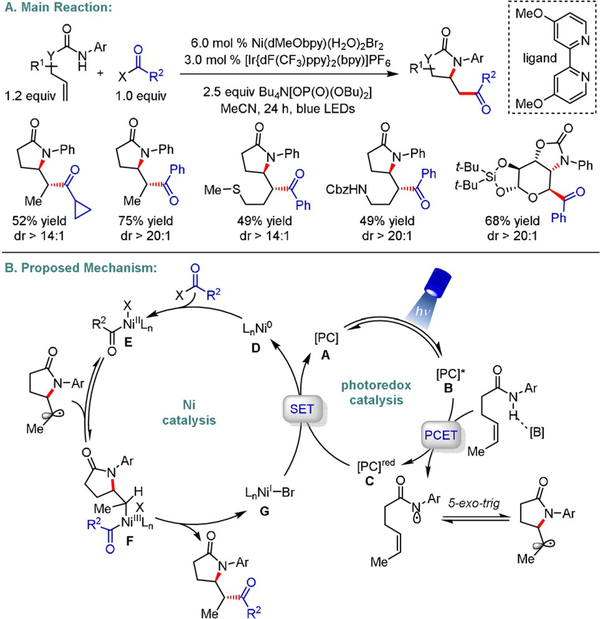
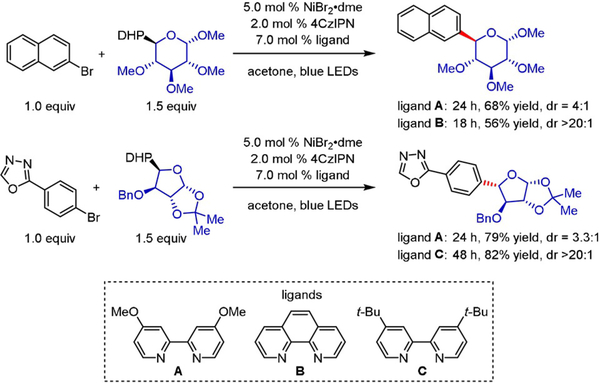
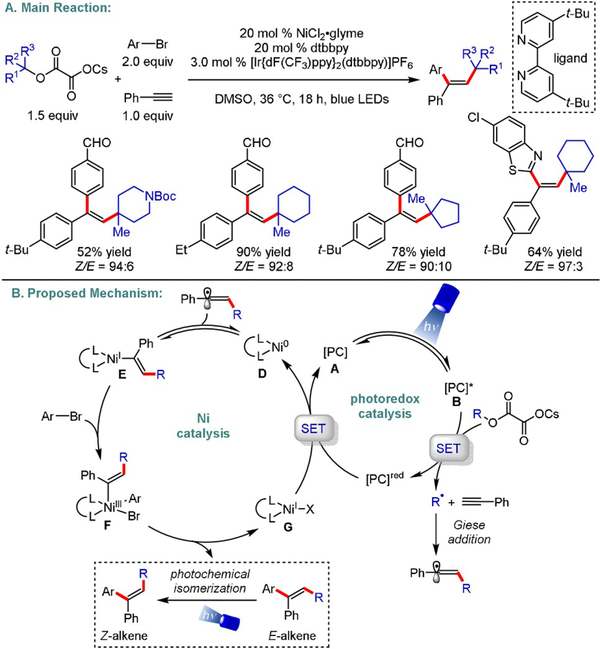
Metallaphotoredox catalysis has evolved into an enabling platform to construct C(sp )-hybridized centers under remarkably mild reaction conditions. The cultivation of abundant radical precursor feedstocks has significantly increased the scope of transition-metal-catalyzed cross-couplings, especially with respect to C(sp )-C(sp ) linkages. In recent years, considerable effort has been devoted to understanding the origin of stereoinduction in dual catalytic processes. In this context, Ni- and Cu-catalyzed transformations have played a predominant role exploiting this mode of catalysis. Herein, we provide a critical overview on recent progress in enantioselective bond formations enabled by Ni- and Cu-catalyzed manifolds. Furthermore, selected stereochemical control elements within the realm of diastereoselective transformations are discussed.
金属光氧化还原催化已发展成为一种在非常温和的反应条件下构建 C(sp )-杂化中心的有效平台。大量自由基前体原料的培育显著扩大了过渡金属催化交叉偶联的范围,特别是在 C(sp )-C(sp )键合方面。近年来,人们致力于理解双催化过程中立体诱导的起源。在这种情况下,镍和铜催化的转化利用这种催化模式发挥了主导作用。本文综述了镍和铜催化多相反应实现对映选择性键形成的最新进展。此外,还讨论了非对映选择性转化领域中的一些立体化学控制因素。