Translational Research Institute, Academic Health System, Hamad Medical Corporation, Doha 3050, Qatar.
Chicago College of Osteopathic Medicine, Midwestern University, Downers Grove, IL 60515, USA.
Int J Mol Sci. 2020 Jul 15;21(14):5002. doi: 10.3390/ijms21145002.
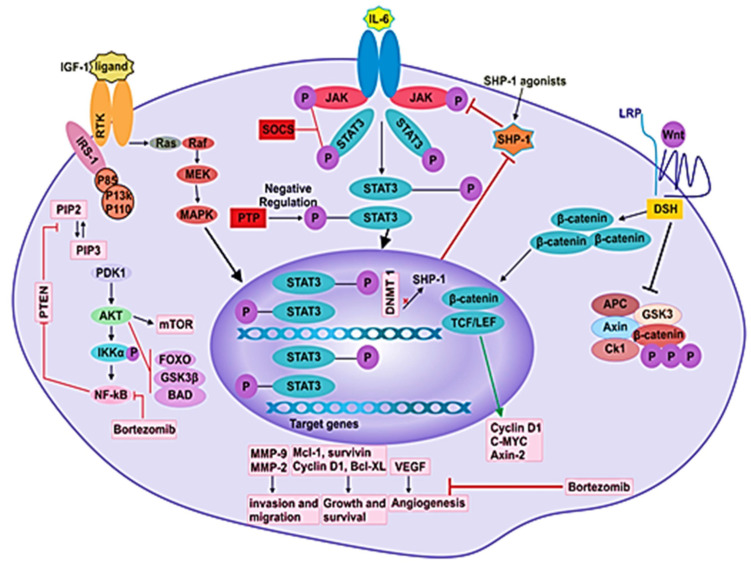
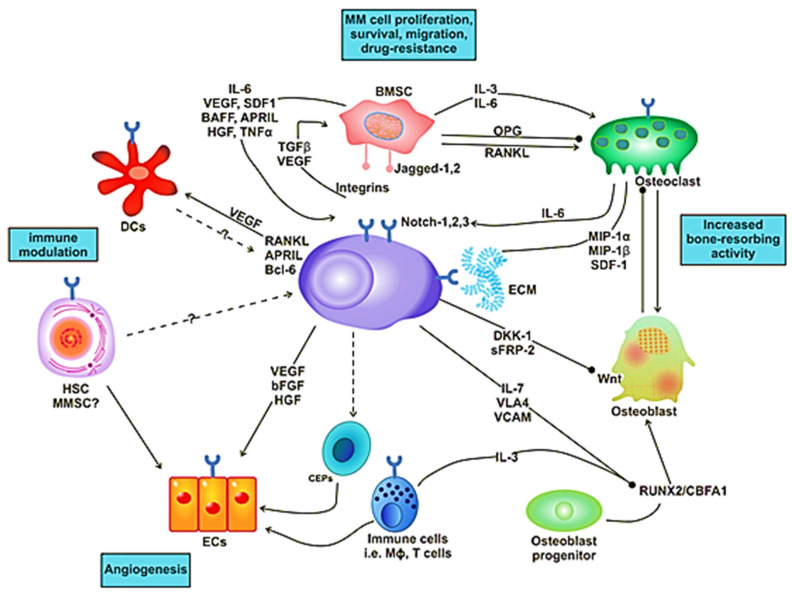
Multiple myeloma (MM) is a hematologic disorder of B lymphocytes characterized by the accumulation of malignant plasma cells (PCs) in the bone marrow. The altered plasma cells overproduce abnormal monoclonal immunoglobulins and also stimulate osteoclasts. The host's immune system and microenvironment are of paramount importance in the growth of PCs and, thus, in the pathogenesis of the disease. The interaction of MM cells with the bone marrow (BM) microenvironment through soluble factors and cell adhesion molecules causes pathogenesis of the disease through activation of multiple signaling pathways, including NF-κβ, PI3K/AKT and JAK/STAT. These activated pathways play a critical role in the inhibition of apoptosis, sustained proliferation, survival and migration of MM cells. Besides, these pathways also participate in developing resistance against the chemotherapeutic drugs in MM. The imbalance between inflammatory and anti-inflammatory cytokines in MM leads to an increased level of pro-inflammatory cytokines, which in turn play a significant role in dysregulation of signaling pathways and proliferation of MM cells; however, the association appears to be inadequate and needs more research. In this review, we are highlighting the recent findings on the roles of various cytokines and growth factors in the pathogenesis of MM and the potential therapeutic utility of aberrantly activated signaling pathways to manage the MM disease.
多发性骨髓瘤(MM)是一种 B 淋巴细胞血液系统疾病,其特征是骨髓中恶性浆细胞(PC)的积累。异常浆细胞过度产生异常单克隆免疫球蛋白,还刺激破骨细胞。宿主的免疫系统和微环境对 PC 的生长至关重要,因此对疾病的发病机制也至关重要。MM 细胞通过可溶性因子和细胞黏附分子与骨髓(BM)微环境相互作用,通过激活包括 NF-κβ、PI3K/AKT 和 JAK/STAT 在内的多种信号通路,导致疾病的发病机制。这些被激活的通路在抑制 MM 细胞凋亡、持续增殖、存活和迁移方面发挥着关键作用。此外,这些通路还参与了 MM 对抗肿瘤药物的耐药性的产生。MM 中促炎细胞因子和抗炎细胞因子之间的失衡导致促炎细胞因子水平升高,反过来又在信号通路失调和 MM 细胞增殖中发挥重要作用;然而,这种关联似乎还不够充分,需要更多的研究。在这篇综述中,我们强调了各种细胞因子和生长因子在 MM 发病机制中的作用的最新发现,以及异常激活的信号通路在管理 MM 疾病方面的潜在治疗用途。