Inflammatory Bowel Disease Unit. Department of Digestive Diseases, Hospital of Sagunto, Av. Ramón y Cajal s/n, 46520 Sagunto, Valencia, Spain.
Genomics Laboratory. ADM-Lifesequencing. Parque Científico Universidad de Valencia. Catedrático Agustín Escardino Benlloch, 9. Edificio 2, 46980 Paterna, Valencia, Spain.
Int J Environ Res Public Health. 2020 Jul 15;17(14):5120. doi: 10.3390/ijerph17145120.
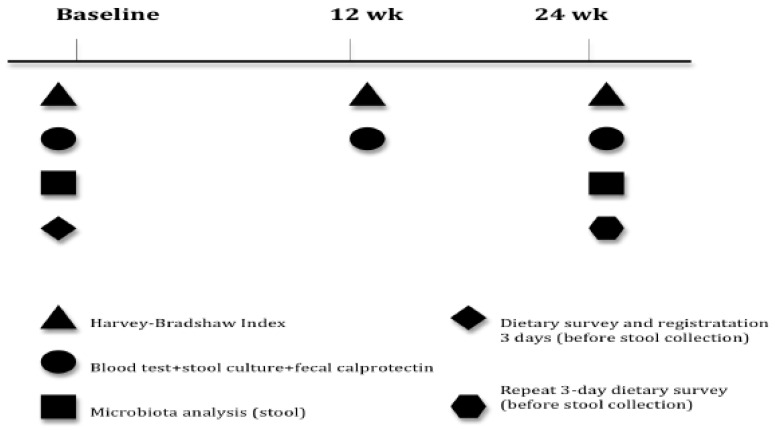
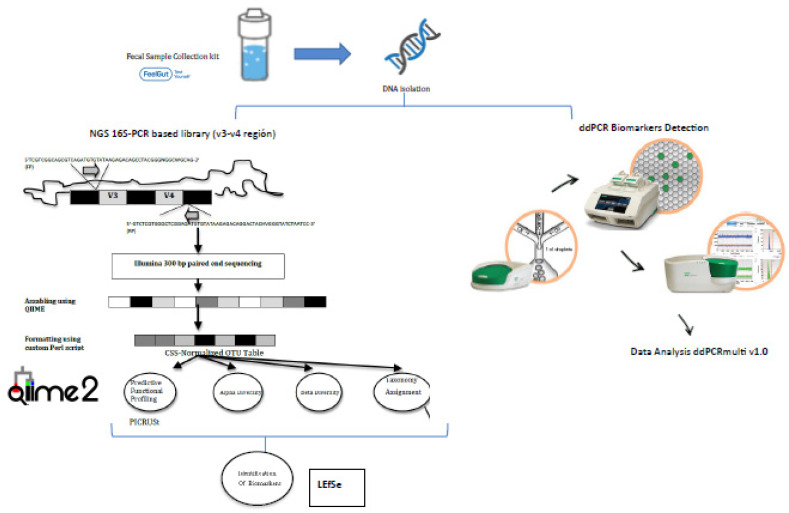
Crohn's disease is believed to result from the interaction between genetic susceptibility, environmental factors and gut microbiota, leading to an aberrant immune response. The objectives of this study are to evaluate the qualitative and quantitative changes in the microbiota of patients with Crohn's disease after six months of anti-tumor-necrosis factor (anti-TNFα) (infliximab or adalimumab) treatment and to determine whether these changes lead to the recovery of normal microbiota when compared to a control group of healthy subjects. In addition, we will evaluate the potential role of the and ratios as indicators of therapeutic response to anti-TNFα drugs. This prospective multicenter observational study will comprise a total of 88 subjects: 44 patients with Crohn's disease scheduled to start anti-TNFα treatment as described in the drug specifications to control the disease and 44 healthy individuals who share the same lifestyle and eating habits. The presence of inflammatory activity will be determined by the Harvey-Bradshaw index, analytical parameters in blood, including C-reactive protein, and fecal calprotectin levels at commencement of the study, at three months and at six months, allowing the classification of patients into responders and non-responders. Microbiota composition and the quantitative relationship between and and between and as indicators of dysbiosis will be studied at inclusion and six months after initiation of treatment using ultra sequencing with Illumina technology and comparative bioinformatics analysis for the former relationship, and digital droplet PCR using stool samples for the latter. Upon inclusion, patients will complete a survey of dietary intake for the three days prior to stool collection, which will be repeated six months later in a second collection to minimize dietary bias. In this study, massive sequencing, a reliable new tool, will be applied to identify early biomarkers of response to anti-TNF treatment in patients with Crohn's disease to improve clinical management of these patients, reduce morbidity rates and improve efficiency.
克罗恩病被认为是遗传易感性、环境因素和肠道微生物群相互作用的结果,导致异常的免疫反应。本研究的目的是评估抗肿瘤坏死因子(anti-TNFα)(英夫利昔单抗或阿达木单抗)治疗 6 个月后克罗恩病患者的微生物群的定性和定量变化,并确定与健康对照组相比,这些变化是否导致正常微生物群的恢复。此外,我们将评估 和 比值作为抗 TNFα 药物治疗反应的潜在指标。
这项前瞻性多中心观察性研究将共纳入 88 名受试者:44 名按药物说明书开始接受抗 TNFα 治疗以控制疾病的克罗恩病患者和 44 名具有相同生活方式和饮食习惯的健康个体。炎症活动的存在将通过 Harvey-Bradshaw 指数、血液分析参数(包括 C 反应蛋白)和粪便钙卫蛋白水平在研究开始时、3 个月和 6 个月时来确定,从而将患者分为应答者和无应答者。在开始治疗时和治疗 6 个月后,使用 Illumina 技术的超序列和比较生物信息学分析研究微生物群组成和 与 之间以及 与 之间的定量关系,作为微生物失调的指标,并使用粪便样本进行数字液滴 PCR 分析后者。纳入时,患者将完成在粪便收集前三天的饮食摄入调查,6 个月后将再次收集以尽量减少饮食偏差。
在这项研究中,将应用可靠的新工具——大规模测序,以确定克罗恩病患者对抗 TNF 治疗反应的早期生物标志物,从而改善这些患者的临床管理,降低发病率并提高效率。