Epigenetics Laboratory, Department of Biological Sciences, University of Cyprus, 2109, Nicosia, Cyprus.
Epigenetics Chromatin. 2020 Jul 17;13(1):29. doi: 10.1186/s13072-020-00352-w.
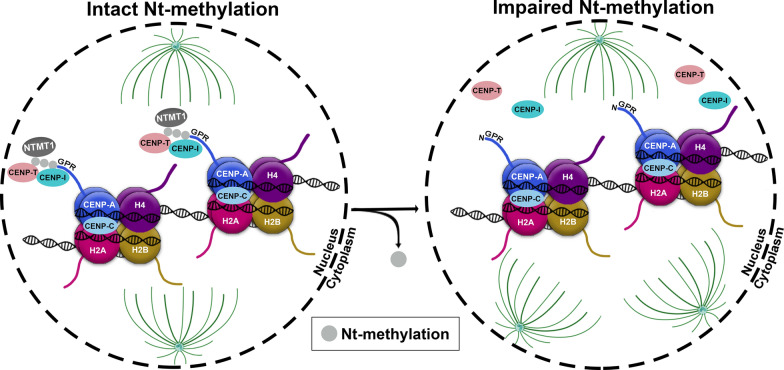
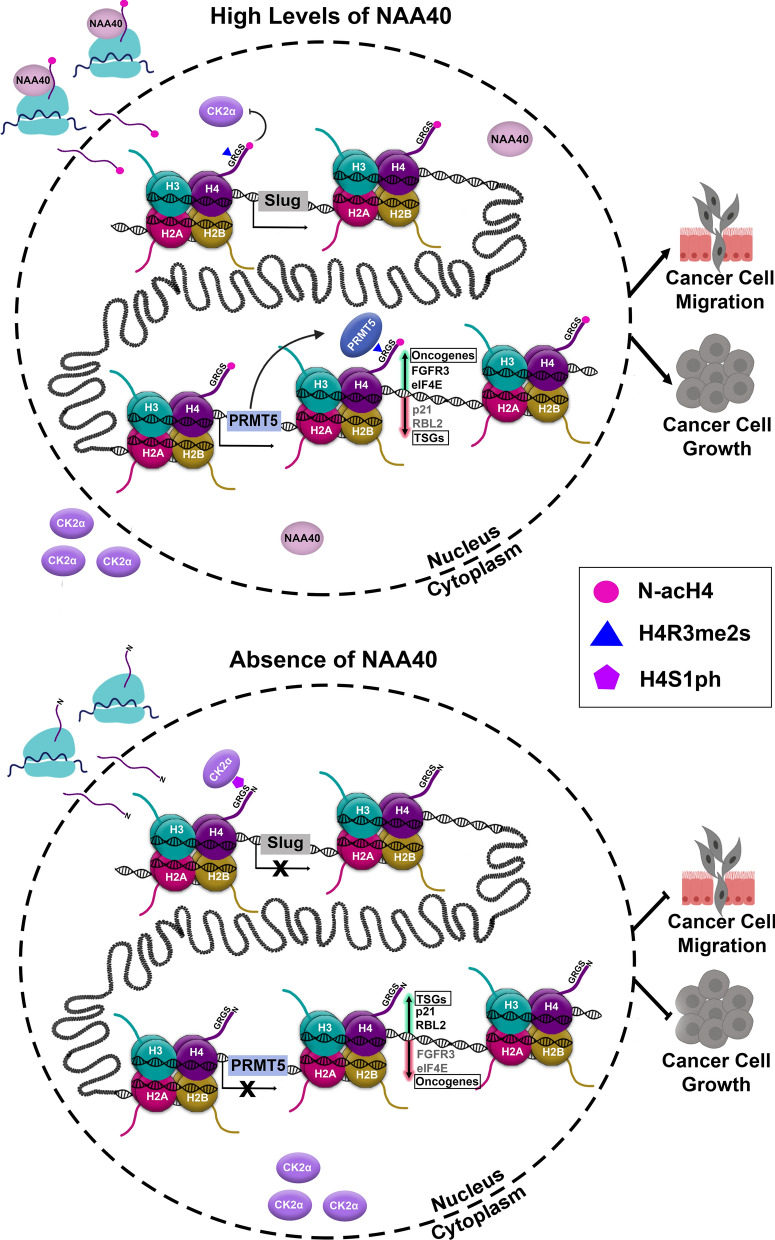
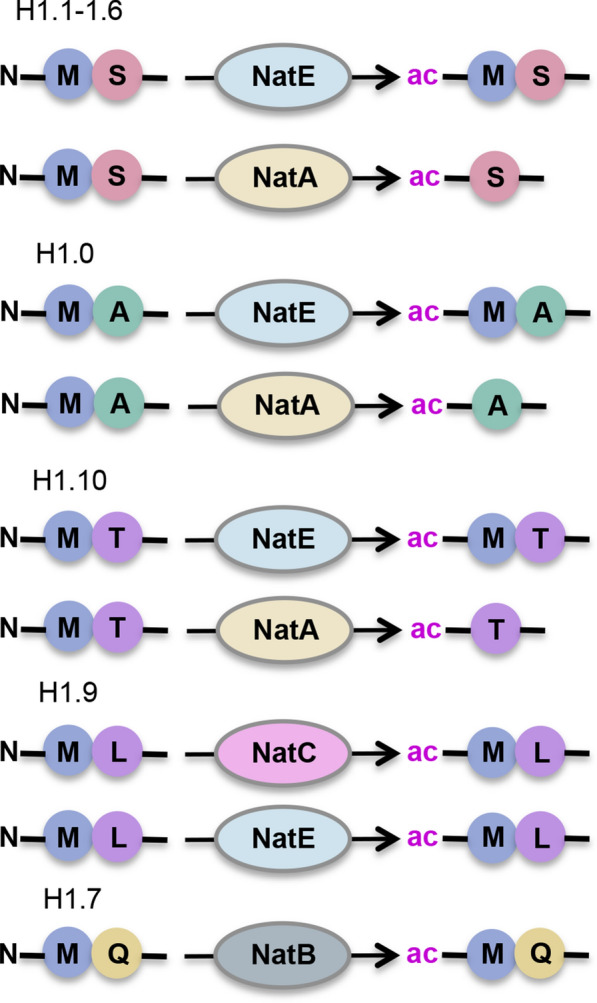
Histone proteins are decorated with numerous post-(PTMs) or co-(CTMs) translational modifications mainly on their unstructured tails, but also on their globular domain. For many decades research on histone modifications has been focused almost solely on the biological role of modifications occurring at the side-chain of internal amino acid residues. In contrast, modifications on the terminal N-alpha amino group of histones-despite being highly abundant and evolutionarily conserved-have been largely overlooked. This oversight has been due to the fact that these marks were being considered inert until recently, serving no regulatory functions. However, during the past few years accumulating evidence has drawn attention towards the importance of chemical marks added at the very N-terminal tip of histones and unveiled their role in key biological processes including aging and carcinogenesis. Further elucidation of the molecular mechanisms through which these modifications are regulated and by which they act to influence chromatin dynamics and DNA-based processes like transcription is expected to enlighten our understanding of their emerging role in controlling cellular physiology and contribution to human disease. In this review, we clarify the difference between N-alpha terminal (Nt) and internal (In) histone modifications; provide an overview of the different types of known histone Nt-marks and the associated histone N-terminal transferases (NTTs); and explore how they function to shape gene expression, chromatin architecture and cellular phenotypes.
组蛋白蛋白被多种翻译后(PTMs)或共翻译(CTMs)修饰物修饰,主要是在其无规卷曲尾部,也在其球状结构域。几十年来,组蛋白修饰的研究几乎完全集中在内部氨基酸残基侧链发生的修饰的生物学作用上。相比之下,尽管组蛋白末端 N-α 氨基基团上的修饰物高度丰富且在进化上保守,但在很大程度上被忽视了。这种忽视是由于这些标记物被认为是惰性的,直到最近才被认为没有调节功能。然而,在过去几年中,越来越多的证据引起了人们对组蛋白 N-末端添加的化学标记物的重要性的关注,并揭示了它们在包括衰老和癌变在内的关键生物学过程中的作用。进一步阐明这些修饰物的调控分子机制以及它们如何影响染色质动力学和基于 DNA 的过程,如转录,有望使我们加深对它们在控制细胞生理学和对人类疾病的贡献方面新兴作用的理解。在这篇综述中,我们澄清了 N-α 末端(Nt)和内部(In)组蛋白修饰之间的区别;概述了已知的不同类型的组蛋白 Nt-标记物及其相关的组蛋白 N-末端转移酶(NTTs);并探讨了它们如何发挥作用以塑造基因表达、染色质结构和细胞表型。