Centre for Trials Research, Cardiff University, Neuadd Meirionnydd, Heath Park, Cardiff, CF14 4YS, UK.
Nuffield Department of Primary Care Health Sciences, University of Oxford, Radcliffe Primary Care Building, Oxford, OX2 6GG, UK.
Trials. 2020 Jul 17;21(1):658. doi: 10.1186/s13063-020-04591-w.
Nocebo effects ('negative placebo' effects) experienced by clinical trial participants can arise from an underlying condition or through communication about side effects in the participant information leaflets (or elsewhere). Misattributing nocebo effects to the medicinal intervention can lead to participants experiencing harmful nocebo effects and may result in distortion of adverse effect reporting. However, little is known about how information on potential side effects is provided to trial participants. There is increasing concern that the way in which potential side effects in clinical trials are described to patients in participant information leaflets (PIL) can in itself cause harm by either increased anxiety, poor adherence or inducing the side effect itself. In this study, we aimed to explore these concerns and identify the way in which potential side effects from investigational medicinal products used in trials are presented in written information to potential participants.
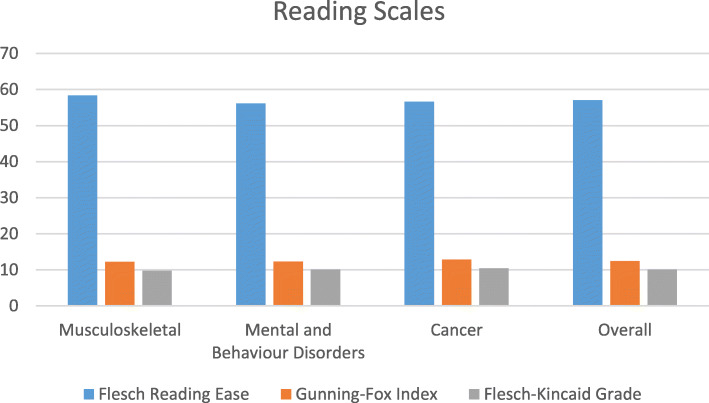
Trials were identified from the International Standard Randomised Controlled Trials Number (ISRCTN) clinical trial registry (a primary registry of the WHO International Clinical Trials Registry Platform (ICTRP)). Eligible studies were placebo-controlled clinical trials of investigational medicinal products (IMP) in adults conducted in the UK. We assessed readability using the Flesch Reading Ease scale, Gunning-Fog Index and Flesch-Kincaid Grade. Data extracted from the PILs were divided into 8 predefined qualitative themes for analysis in NVivo11.
Most of the patient information leaflets were ranked as 'fairly difficult to read' or 'difficult to read' according to the Flesch Reading Ease scale. All studies presented information about adverse events, whereas only a third presented information about intervention benefits. Where intervention or study benefits were presented, they were usually after adverse events (21/33, 64%).
Participant information leaflets scored poorly on ease of readability and had more content relating to adverse effects than any potential beneficial effects. The way in which adverse events were presented was heterogeneous in terms of their likelihood and severity and the amount and level of detail provided. By comparison, potential benefits from the intervention and/or study were described less often, by shorter text, and only after information about harms.
临床试验参与者经历的反安慰剂效应(“负面安慰剂”效应)可能源于潜在疾病,也可能源于参与者信息传单(或其他地方)中关于副作用的沟通。将反安慰剂效应错误归因于药物干预可能导致参与者产生有害的反安慰剂效应,并可能导致不良反应报告失真。然而,人们对向试验参与者提供潜在副作用信息的方式知之甚少。越来越多的人担心,临床试验中向患者描述潜在副作用的方式本身就会造成伤害,要么增加焦虑,要么降低依从性,要么诱发副作用本身。在这项研究中,我们旨在探讨这些担忧,并确定在向潜在参与者提供的书面信息中,用于试验的研究性药物的潜在副作用的呈现方式。
从世界卫生组织国际临床试验注册平台(ICTRP)的国际标准随机对照试验编号(ISRCTN)临床试验注册库中确定了试验。合格的研究是在英国进行的针对成人的研究性药物(IMP)安慰剂对照临床试验。我们使用 Flesch 阅读舒适度、Gunning-Fog 指数和 Flesch-Kincaid 等级来评估可读性。从 PIL 中提取的数据分为 8 个预先确定的定性主题,在 NVivo11 中进行分析。
根据 Flesch 阅读舒适度评分,大多数患者信息传单被评为“相当难读”或“难读”。所有研究都提供了不良事件信息,而只有三分之一的研究提供了干预措施益处的信息。在提供干预或研究益处的情况下,通常是在不良事件之后(21/33,64%)。
参与者信息传单在易读性方面得分较低,与任何潜在的有益效果相比,它们包含更多的不良反应信息。在呈现不良事件方面,其可能性和严重程度、提供的数量和详细程度存在差异。相比之下,干预措施和/或研究的潜在益处描述得较少,文本较短,而且仅在危害信息之后。