School of Medicine and Holistic Integrative Medicine, Nanjing University of Chinese Medicine, Nanjing 210023, China.
Interdisciplinary Institute for Personalized Medicine in Brain Disorders, and Research Center for Formula and Syndromes, Jinan University, Guangzhou 510632, China.
Biomed Res Int. 2020 Jun 24;2020:3903125. doi: 10.1155/2020/3903125. eCollection 2020.
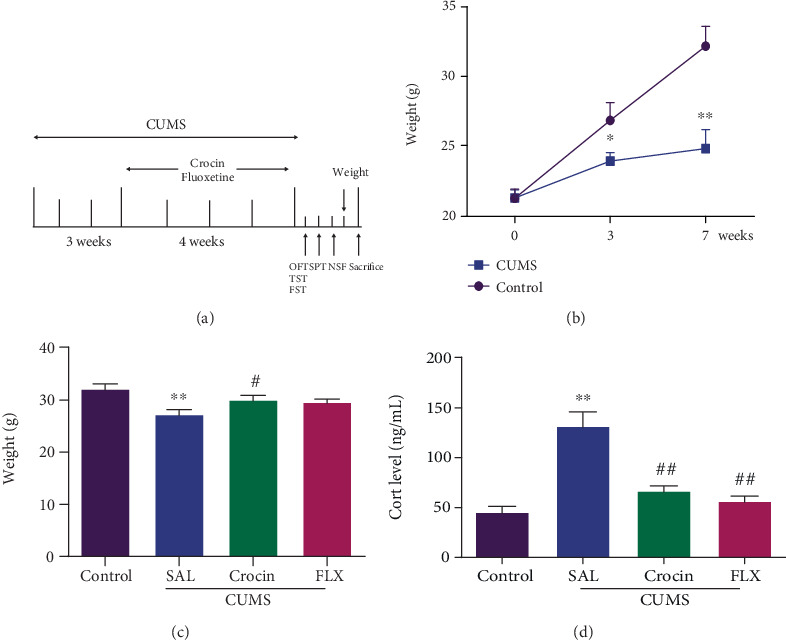
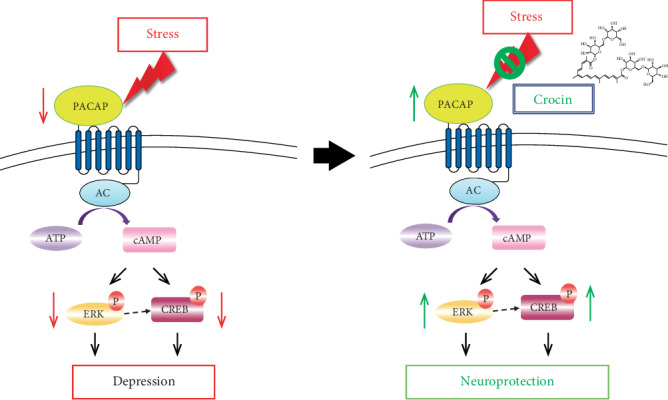
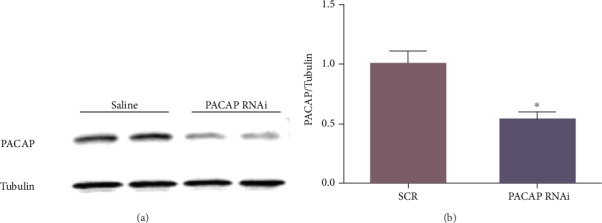
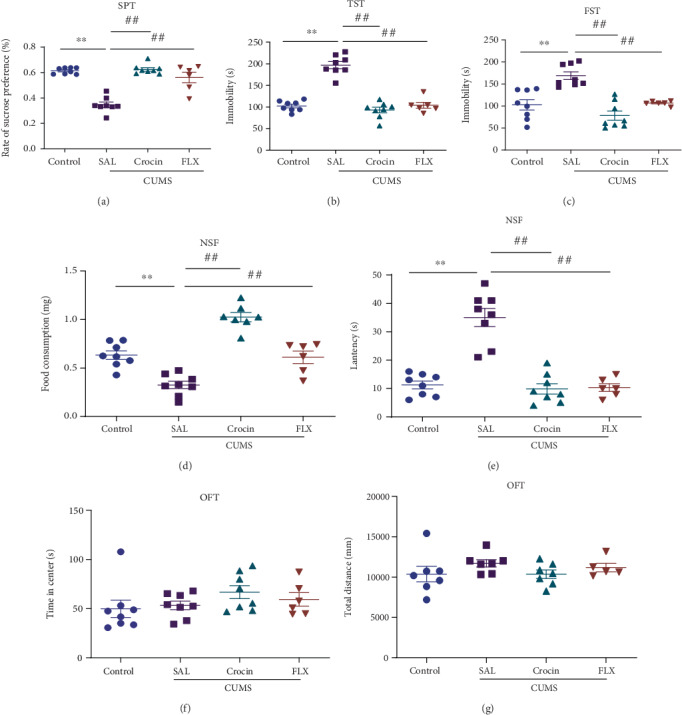
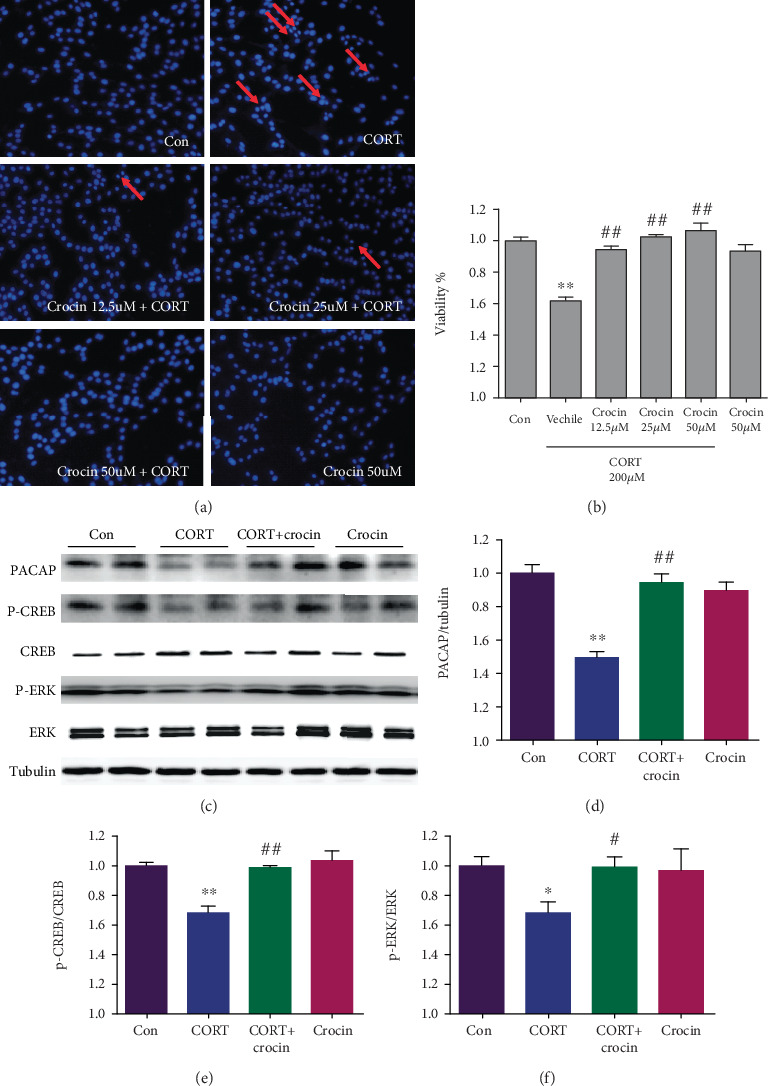
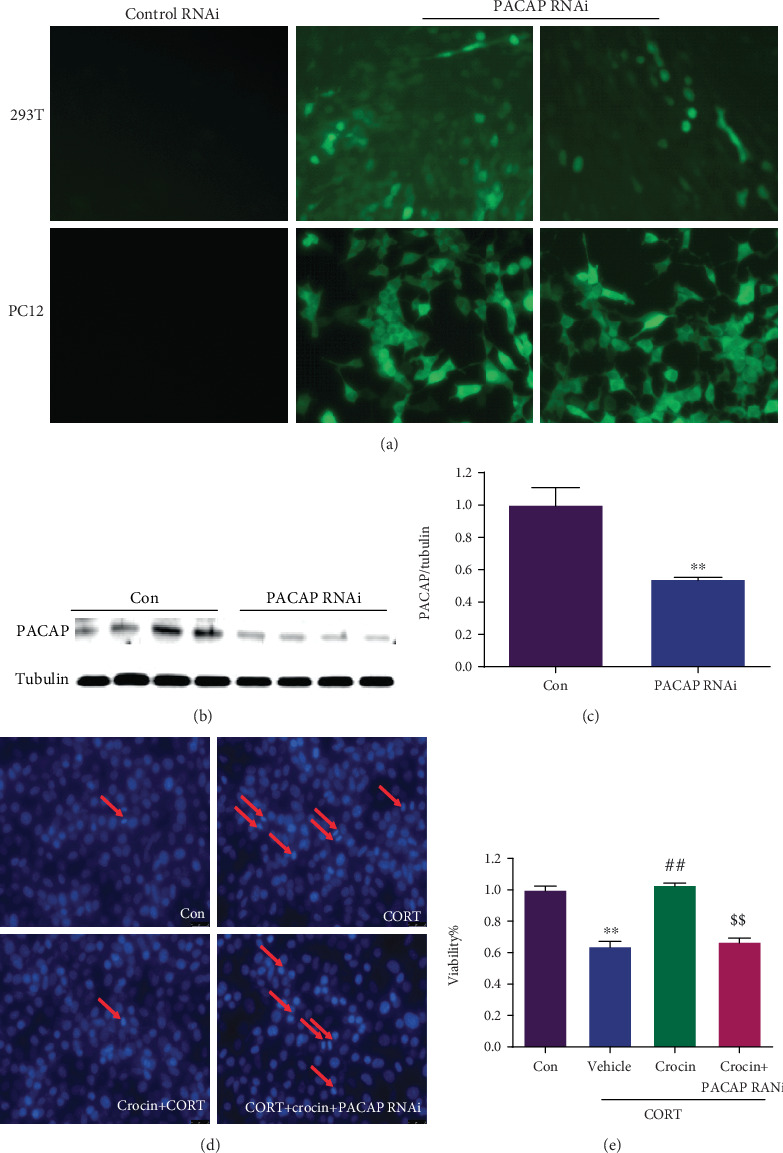
Depression is one of the foremost psychological illness, and the exact mechanism is unclear. Recent studies have reported that the pituitary adenylate cyclase-activating polypeptide (PACAP) signaling pathway is involved in the progression of depression. In the present study, we extracted crocin from the traditional Chinese medicine (TCM), Ellis, to evaluate its antidepressant effect and clarify the underlying mechanism. Here, we established a chronic unpredictable mild stress (CUMS) mouse model to assess whether crocin can improve depression-like behavior in an open field test (OFT), tail suspension test (TST), forced swimming test (FST), and sucrose preference test (SPT). A corticosterone (CORT) model of PC12 was set up to explore the antidepressant mechanism of crocin. We pretreated PC12 cells with crocin for 1 hour and then stimulated the cells with CORT for 24 hours. Cell survival was detected by Hoechst staining and MTT assay. The expression of PACAP, cyclic adenosine monophosphate (cAMP) response element binding protein (CREB), and extracellular regulated protein kinases (ERK) were analyzed by western blotting. PACAP RNAi was used to interfere with PC12 cells to downregulate the content of PACAP. The results showed that crocin (30 mg/kg) significantly reversed the decrease of body weight and elevation of serum CORT, mitigated CUMS induced depression-like behaviors of mice, and crocin (12.5 mol/L) protected PC12 cells against CORT (200 mol/L)-induced injury. Furthermore, crocin greatly increased the protein expression of PACAP and phosphorylation of ERK and CREB in the CORT model. PACAP RNAi cancelled the neuroprotective effect of crocin. In conclusion, these results indicated that crocin exerted an antidepressant effect via upregulating PACAP and its downstream ERK and CREB signaling pathways.
抑郁症是最主要的心理疾病之一,其确切机制尚不清楚。最近的研究报告称,垂体腺苷酸环化酶激活肽(PACAP)信号通路参与了抑郁症的进展。在本研究中,我们从中药(TCM)中提取藏红花素,以评估其抗抑郁作用,并阐明其潜在机制。在这里,我们建立了慢性不可预测轻度应激(CUMS)小鼠模型,以评估藏红花素是否能改善旷场试验(OFT)、悬尾试验(TST)、强迫游泳试验(FST)和蔗糖偏好试验(SPT)中的抑郁样行为。建立了 PC12 细胞的皮质酮(CORT)模型,以探讨藏红花素的抗抑郁机制。我们用藏红花素预处理 PC12 细胞 1 小时,然后用 CORT 刺激细胞 24 小时。用 Hoechst 染色和 MTT 检测细胞存活。用 Western blot 分析 PACAP、环磷酸腺苷反应元件结合蛋白(CREB)和细胞外调节蛋白激酶(ERK)的表达。用 PACAP RNAi 干扰 PC12 细胞以下调 PACAP 的含量。结果表明,藏红花素(30mg/kg)显著逆转了体重下降和血清 CORT 升高,缓解了 CUMS 诱导的小鼠抑郁样行为,藏红花素(12.5μmol/L)保护 PC12 细胞免受 CORT(200μmol/L)诱导的损伤。此外,藏红花素大大增加了 CORT 模型中 PACAP 和 ERK 和 CREB 磷酸化的蛋白表达。PACAP RNAi 取消了藏红花素的神经保护作用。总之,这些结果表明,藏红花素通过上调 PACAP 及其下游 ERK 和 CREB 信号通路发挥抗抑郁作用。