Bio-Organic Chemistry, Institute of Complex Molecular Systems, Department of Biomedical Engineering, Eindhoven University of Technology, P. O. Box 513, 5600 MB, Eindhoven, The Netherlands.
State Key Laboratory of Biochemical Engineering, Institute of Process Engineering, Chinese Academy of Sciences, Beijing, 100190, China.
Angew Chem Int Ed Engl. 2020 Nov 9;59(46):20582-20588. doi: 10.1002/anie.202008708. Epub 2020 Sep 2.
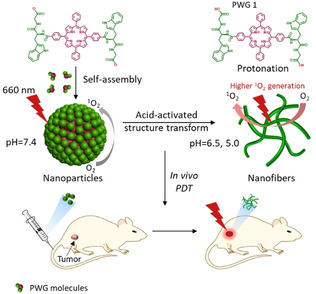
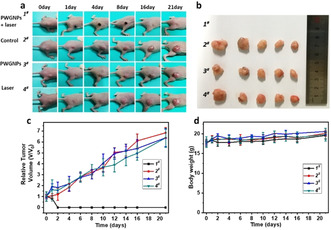
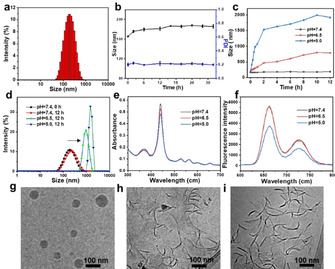
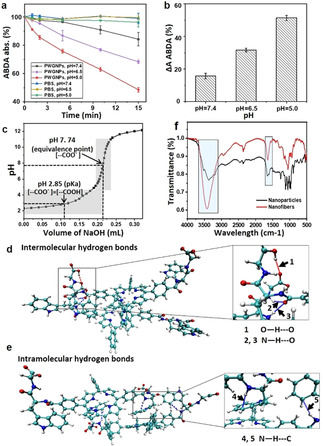
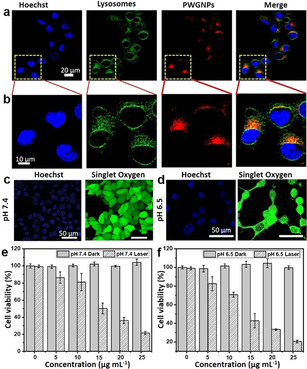
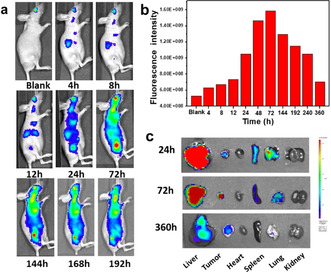
Inspired by the dynamic morphology control of molecular assemblies in biological systems, we have developed pH-responsive transformable peptide-based nanoparticles for photodynamic therapy (PDT) with prolonged tumor retention times. The self-assembled peptide-porphyrin nanoparticles transformed into nanofibers when exposed to the acidic tumor microenvironment, which was mainly driven by enhanced intermolecular hydrogen bond formation between the protonated molecules. The nanoparticle transformation into fibrils improved their singlet oxygen generation ability and enabled high accumulation and long-term retention at tumor sites. Strong fluorescent signals of these nanomaterials were detected in tumor tissue up to 7 days after administration. Moreover, the peptide assemblies exhibited excellent anti-tumor efficacy via PDT in vivo. This in situ fibrillar transformation strategy could be utilized to design effective stimuli-responsive biomaterials for long-term imaging and therapy.
受生物体系中分子组装体的动态形态控制启发,我们开发了一种基于 pH 响应可变形的肽基纳米粒子用于光动力疗法(PDT),可延长肿瘤的滞留时间。自组装的肽-卟啉纳米粒子在暴露于酸性肿瘤微环境时会转变成纳米纤维,这主要是由质子化分子之间增强的分子间氢键形成所驱动的。纳米粒子转变成纤维提高了它们的单线态氧生成能力,并使其能够在肿瘤部位高度聚集和长期滞留。在给药后 7 天内,这些纳米材料在肿瘤组织中检测到强烈的荧光信号。此外,肽组装体通过体内 PDT 表现出优异的抗肿瘤功效。这种原位纤维转化策略可用于设计有效的刺激响应生物材料,用于长期成像和治疗。