Ai Zexin, Wu Yang'ou, Yu Miao, Li Jia, Li Shengjiao
Shanghai Engineering Research Center of Tooth Restoration and Regeneration, Department of Oral and Maxillofacial Surgery, School and Hospital of Stomatology, Tongji University, Shanghai, China.
Shanghai Engineering Research Center of Tooth Restoration and Regeneration, Department of Prosthodontics, School and Hospital of Stomatology, Tongji University, Shanghai, China.
Front Pharmacol. 2020 Jun 29;11:803. doi: 10.3389/fphar.2020.00803. eCollection 2020.
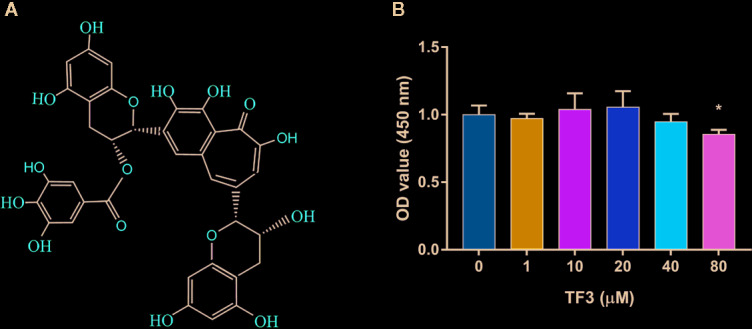
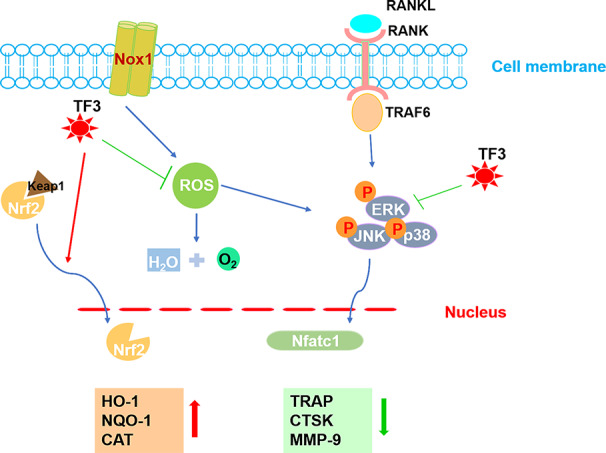
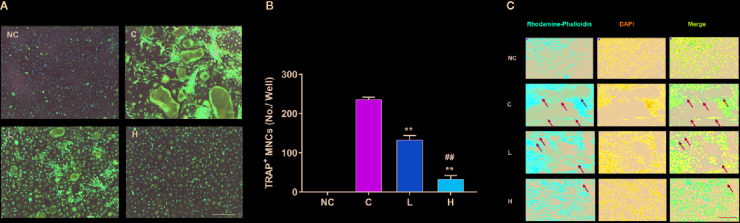
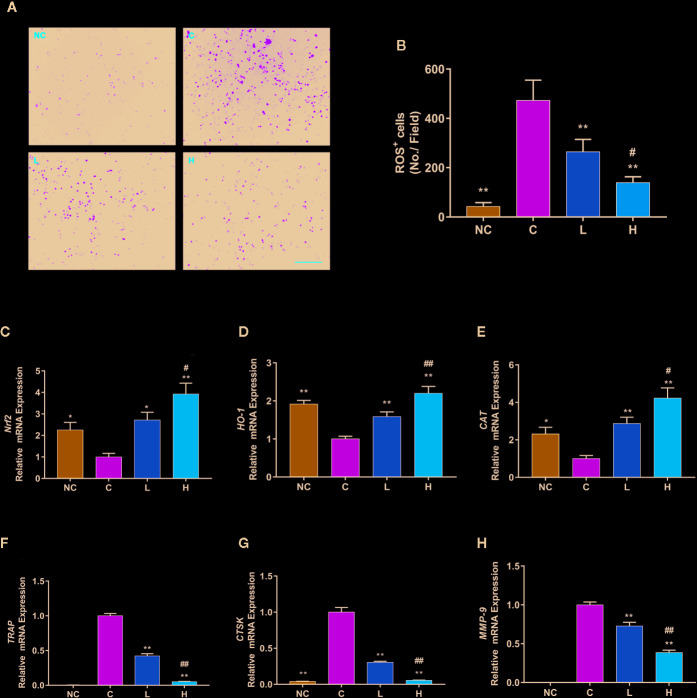
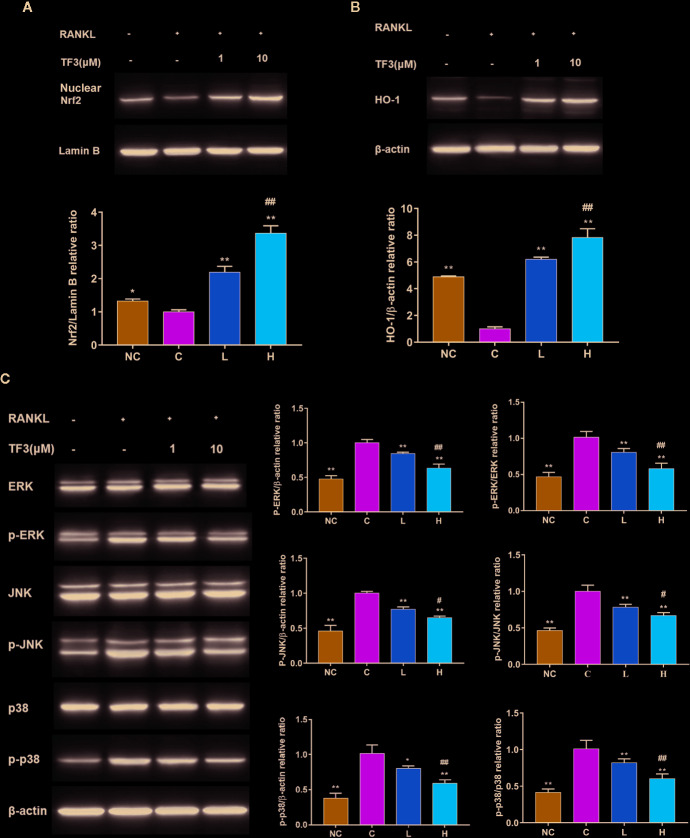
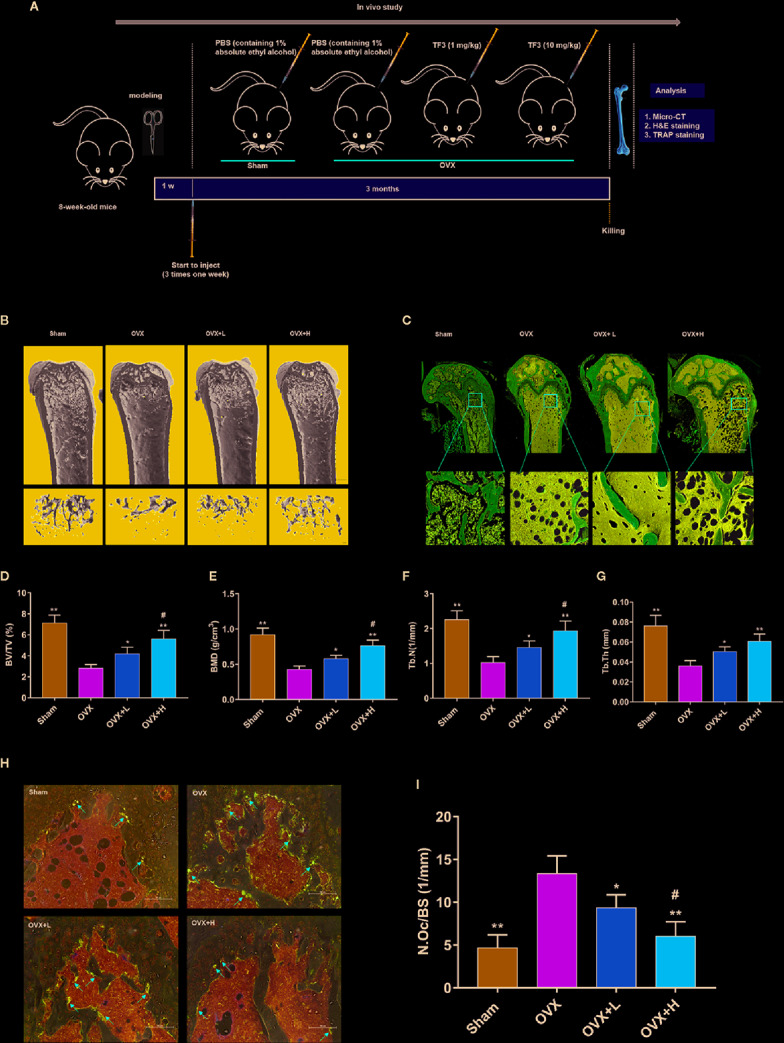
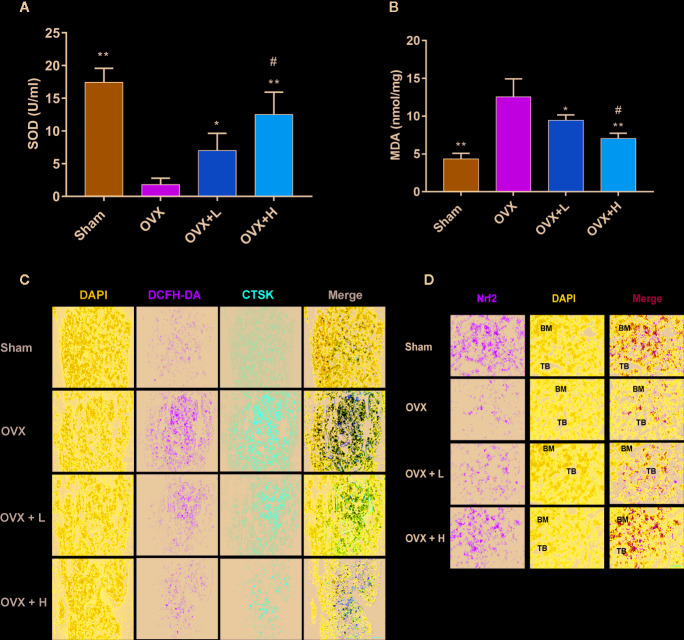
Theaflavin-3, 3'-digallate (TF3) is extracted from black tea and has strong antioxidant capabilities. The aim of this study was to assess the influences of TF3 on osteoclastogenesis and explore the underlying mechanisms. TF3 efficiently decreased receptor activator of nuclear factor-kappa B ligand (RANKL)-induced osteoclast formation and reactive oxygen species (ROS) generation in a dose-dependent manner. Mechanistically, TF3 reduced ROS generation by activating nuclear factor erythroid 2-related factor 2 (Nrf2) and its downstream heme oxygenase-1 (HO-1) and also inhibited the mitogen-activated protein kinases (MAPK) pathway. Moreover, micro-computed tomography (CT) analysis, hematoxylin and eosin (H&E) staining, and TRAP staining of the femurs of C57BL/6J female mice showed that TF3 markedly attenuated bone loss and osteoclastogenesis in mice. Immunofluorescence staining, 2',7'-dichlorofluorescein diacetate (DCFH-DA) staining, and measurement of the levels of malonaldehyde (MDA) and superoxide dismutase (SOD) revealed that TF3 increased the expression of Nrf2 and decreased the intracellular ROS level . These findings indicated that TF3 may have the potential to treat osteoporosis and bone diseases related to excessive osteoclastogenesis inhibiting the intracellular ROS level.
茶黄素 - 3,3'-双没食子酸酯(TF3)从红茶中提取,具有强大的抗氧化能力。本研究的目的是评估TF3对破骨细胞生成的影响,并探索其潜在机制。TF3以剂量依赖性方式有效减少核因子κB受体活化因子配体(RANKL)诱导的破骨细胞形成和活性氧(ROS)生成。机制上,TF3通过激活核因子红细胞2相关因子2(Nrf2)及其下游的血红素加氧酶 - 1(HO - 1)来减少ROS生成,并且还抑制丝裂原活化蛋白激酶(MAPK)途径。此外,对C57BL / 6J雌性小鼠股骨进行的微计算机断层扫描(CT)分析、苏木精和伊红(H&E)染色以及抗酒石酸酸性磷酸酶(TRAP)染色显示,TF3显著减轻了小鼠的骨质流失和破骨细胞生成。免疫荧光染色、2',7'-二氯荧光素二乙酸酯(DCFH - DA)染色以及丙二醛(MDA)和超氧化物歧化酶(SOD)水平的测量表明,TF3增加了Nrf2的表达并降低了细胞内ROS水平。这些发现表明,TF3可能具有治疗骨质疏松症和与破骨细胞过度生成相关的骨疾病的潜力,通过抑制细胞内ROS水平来实现。