Department of Prosthodontics, School and Hospital of Stomatology, Tongji University and Shanghai Engineering Research Center of Tooth Restoration and Regeneration, Shanghai, People's Republic of China.
Drug Des Devel Ther. 2021 Aug 12;15:3509-3522. doi: 10.2147/DDDT.S315249. eCollection 2021.
Emerging evidence has indicated that oxidative stress (OS) contributes to periodontitis. Periodontal ligament cells (PDLCs) are important for the regeneration of periodontal tissue. Quercetin, which is extracted from fruits and vegetables, has strong antioxidant capabilities. However, whether and how quercetin affects oxidative damage in PDLCs during periodontitis remains unknown. The aim of this study was to assess the effects of quercetin on oxidative damage in PDLCs and alveolar bone loss in periodontitis and underlying mechanisms.
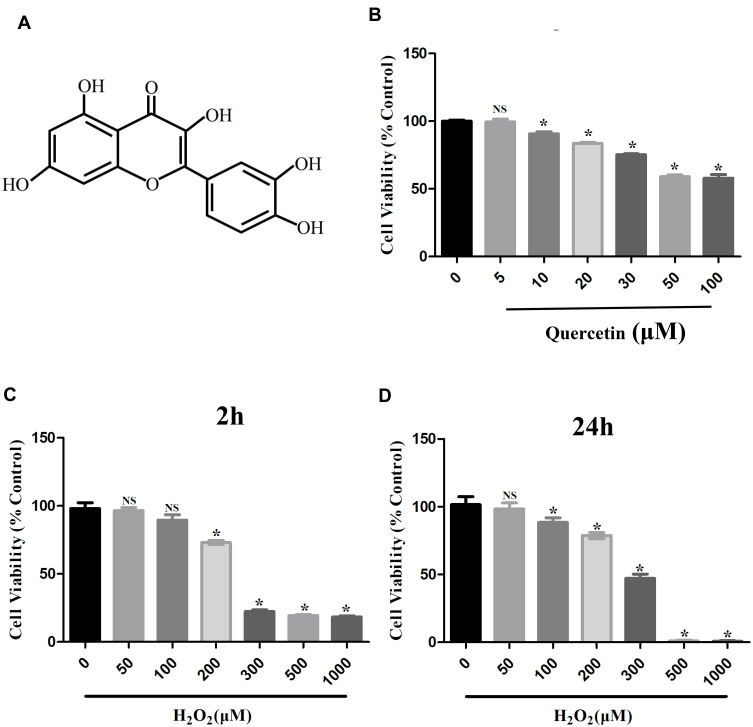
The tissue block culture method was used to extract human PDLCs (hPDLCs). First, a cell counting kit 8 (CCK-8) assay was used to identify the optimal concentrations of hydrogen peroxide (HO) and quercetin. Subsequently, a 2,7-dichlorodihydrofluorescein diacetate (DCFH-DA) probe, RT-qPCR, Western blotting and other methods were used to explore the effects of quercetin on OS in hPDLCs and the underlying mechanism. Finally, quercetin was administered to mice with periodontitis through gavage, and the effect of quercetin on the level of OS and alveolar bone resorption in these mice was observed by immunofluorescence, microcomputed tomography (micro-CT), hematoxylin and eosin staining (H&E) staining and so on.
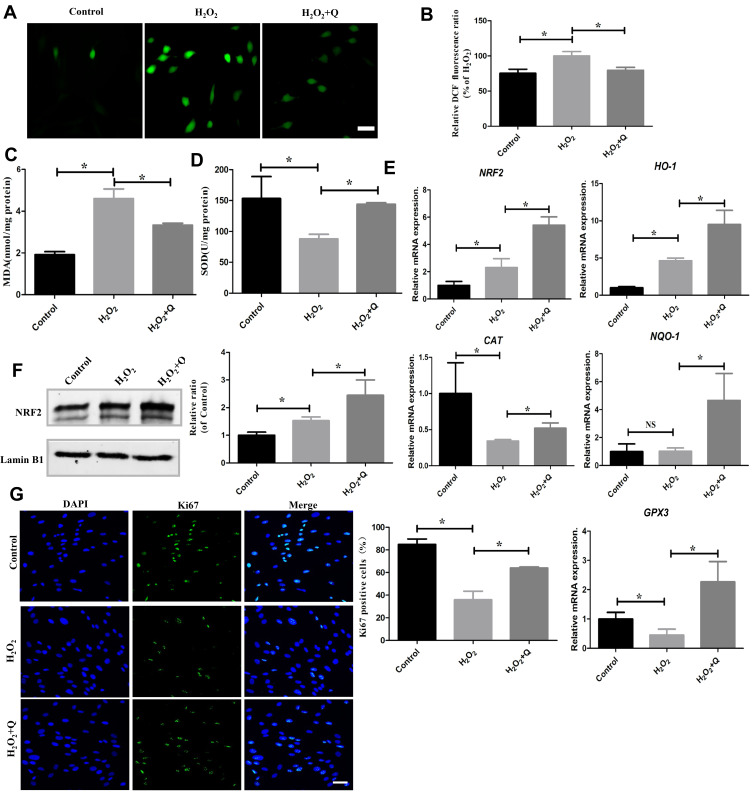
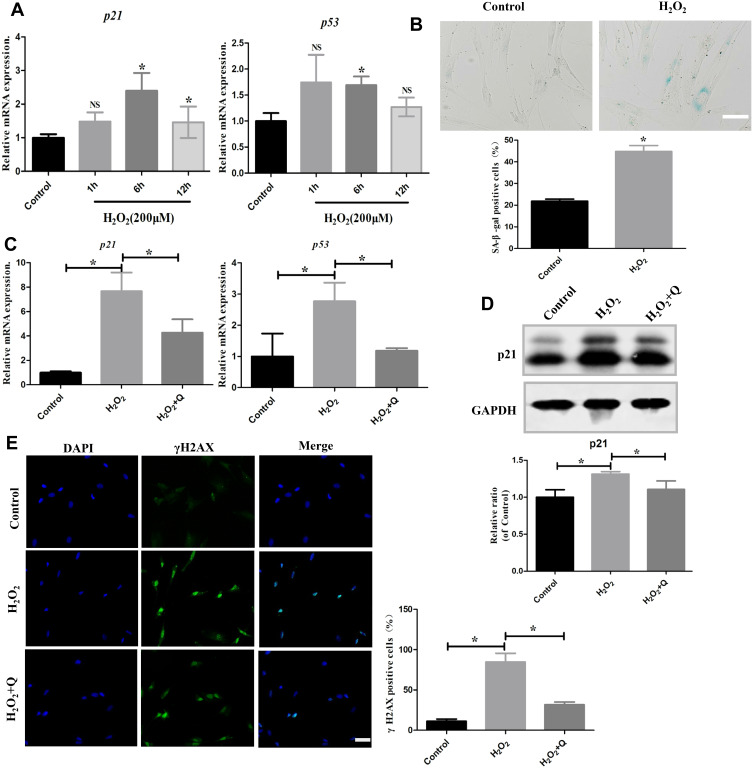
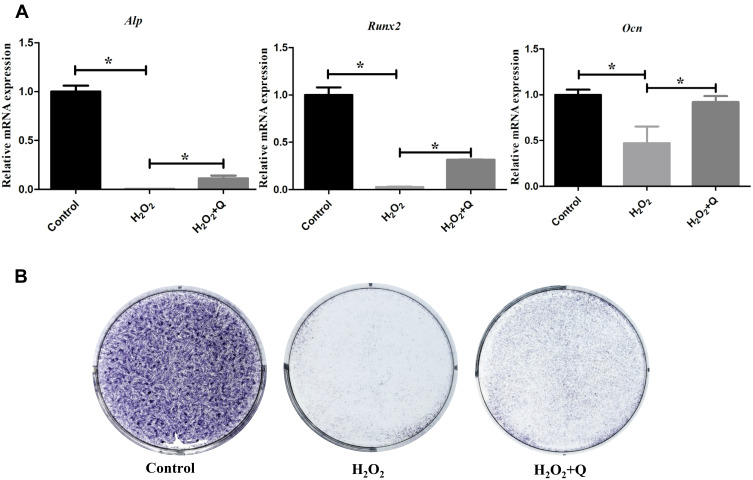
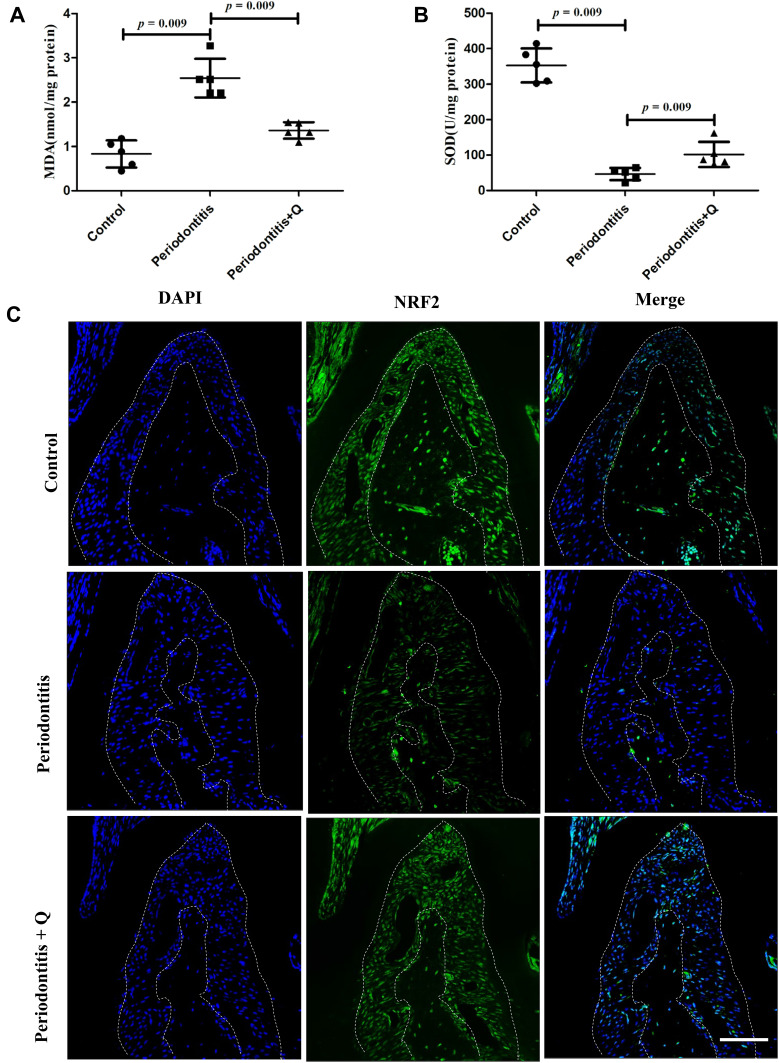
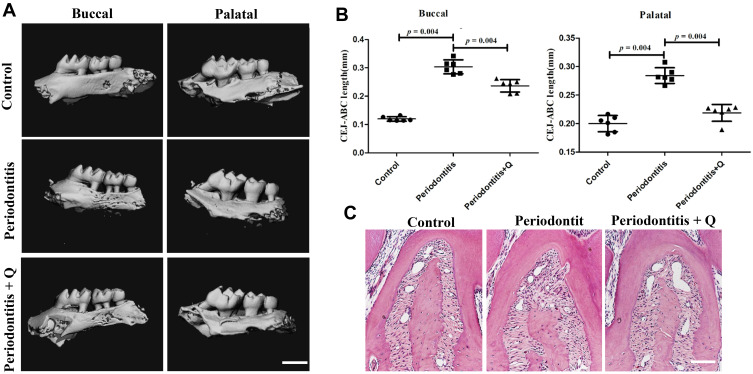
Quercetin at 5 μM strongly activated NF-E2-related factor 2 (NRF2) signaling, alleviated oxidative damage and enhanced the antioxidant capacity of hPDLCs. In addition, quercetin reduced cellular senescence and protected the osteogenic ability of hPDLCs. Finally, quercetin activated NRF2 signaling in the periodontal ligaments, reduced the OS level of mice with periodontitis, and slowed the absorption of alveolar bone in vivo.
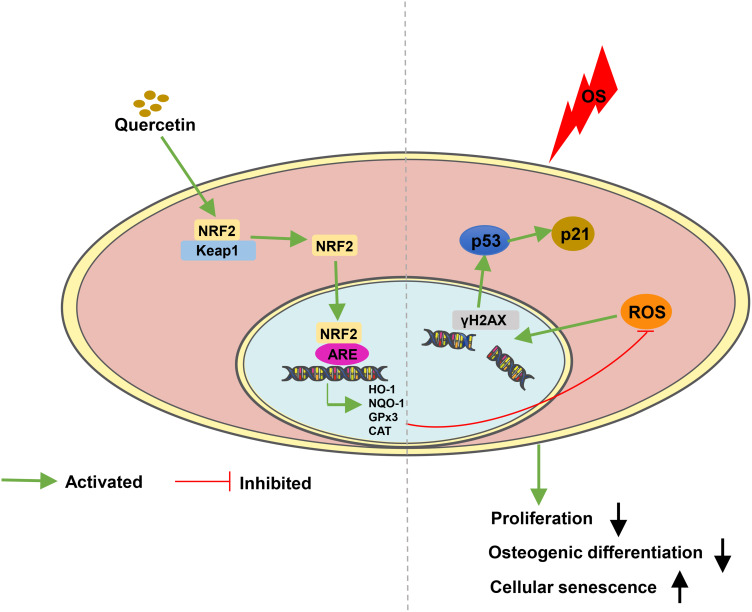
Quercetin can increase the antioxidant capacity of PDLCs and reduce OS damage by activating the NRF2 signaling pathway, which alleviates alveolar bone loss in periodontitis.
有新证据表明,氧化应激(OS)会导致牙周炎。牙周韧带细胞(PDLCs)对牙周组织的再生很重要。槲皮素是从水果和蔬菜中提取的,具有很强的抗氧化能力。然而,槲皮素是否以及如何影响牙周炎期间 PDLCs 的氧化损伤尚不清楚。本研究旨在评估槲皮素对 PDLCs 氧化损伤和牙周炎中牙槽骨丢失的影响及其潜在机制。
采用组织块培养法提取人牙周韧带细胞(hPDLCs)。首先,使用细胞计数试剂盒 8(CCK-8)测定法确定过氧化氢(HO)和槲皮素的最佳浓度。随后,使用 2,7-二氯二氢荧光素二乙酸酯(DCFH-DA)探针、RT-qPCR、Western blot 等方法探讨槲皮素对 hPDLCs 中 OS 的影响及其潜在机制。最后,通过灌胃给予牙周炎小鼠槲皮素,并通过免疫荧光、微计算机断层扫描(micro-CT)、苏木精和伊红染色(H&E 染色)等观察槲皮素对这些小鼠 OS 水平和牙槽骨吸收的影响。
5μM 的槲皮素强烈激活核因子红细胞 2 相关因子 2(NRF2)信号通路,减轻氧化损伤,增强 hPDLCs 的抗氧化能力。此外,槲皮素减少了细胞衰老,保护了 hPDLCs 的成骨能力。最后,槲皮素激活了牙周韧带中的 NRF2 信号通路,降低了牙周炎小鼠的 OS 水平,并在体内减缓了牙槽骨的吸收。
槲皮素通过激活 NRF2 信号通路增加 PDLCs 的抗氧化能力并减少 OS 损伤,从而减轻牙周炎中的牙槽骨丢失。