Jiang Tao, Yang Weiwei, Zhang Hongli, Song Zhiqiang, Liu Tianhua, Lv Xiangqi
Department of Anesthesiology (Hei Long Jiang Province Key Lab of Research on Anesthesiology and Critical Care Medicine), The Second Affiliated Hospital, Harbin Medical University, Harbin, China.
Department of Pathology, Harbin Medical University, Harbin, China.
Front Physiol. 2020 Jun 30;11:596. doi: 10.3389/fphys.2020.00596. eCollection 2020.
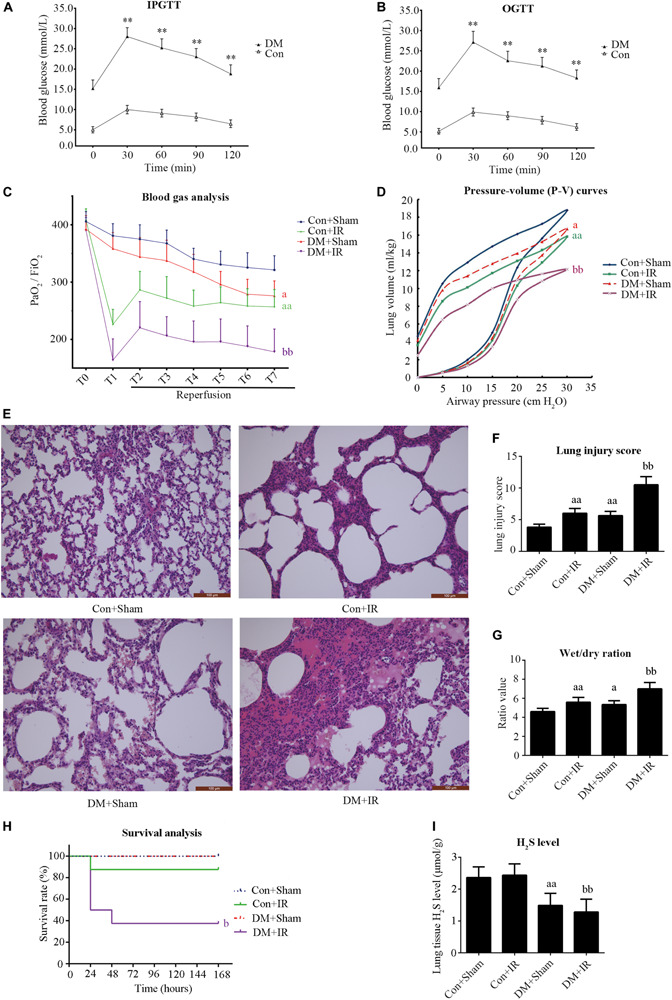
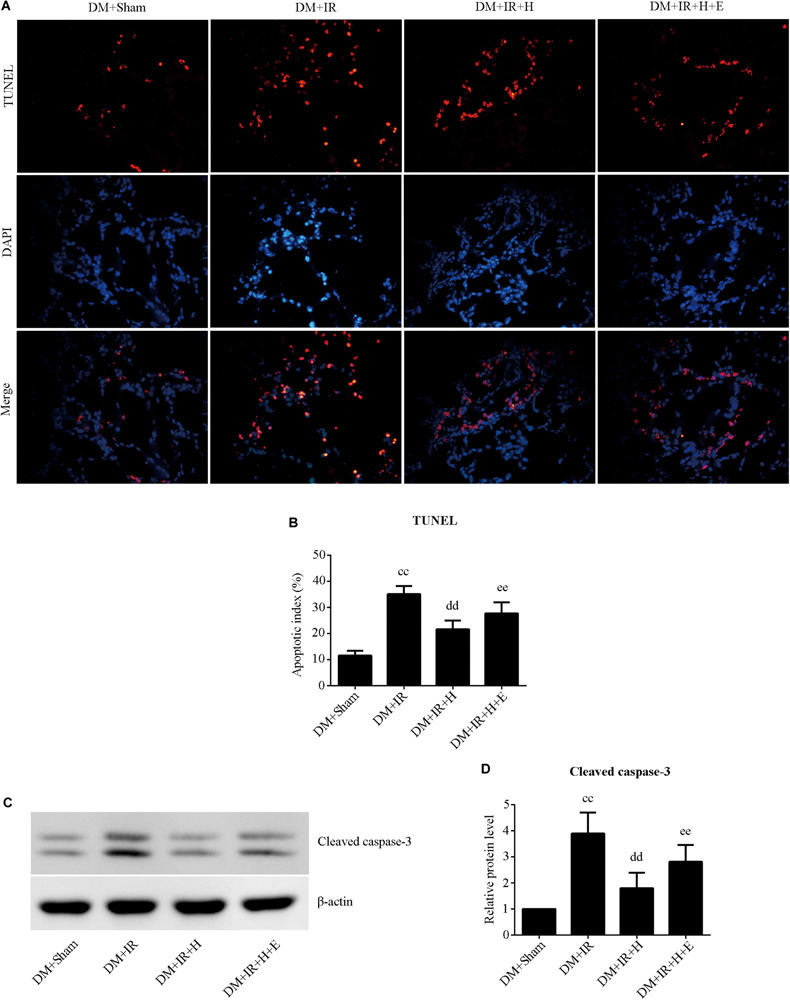
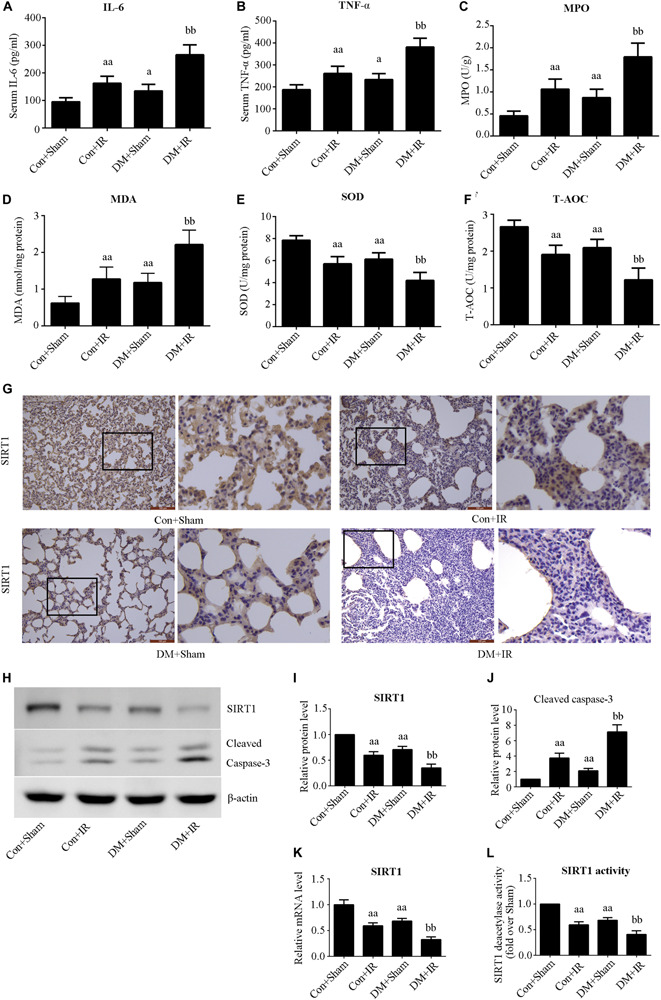
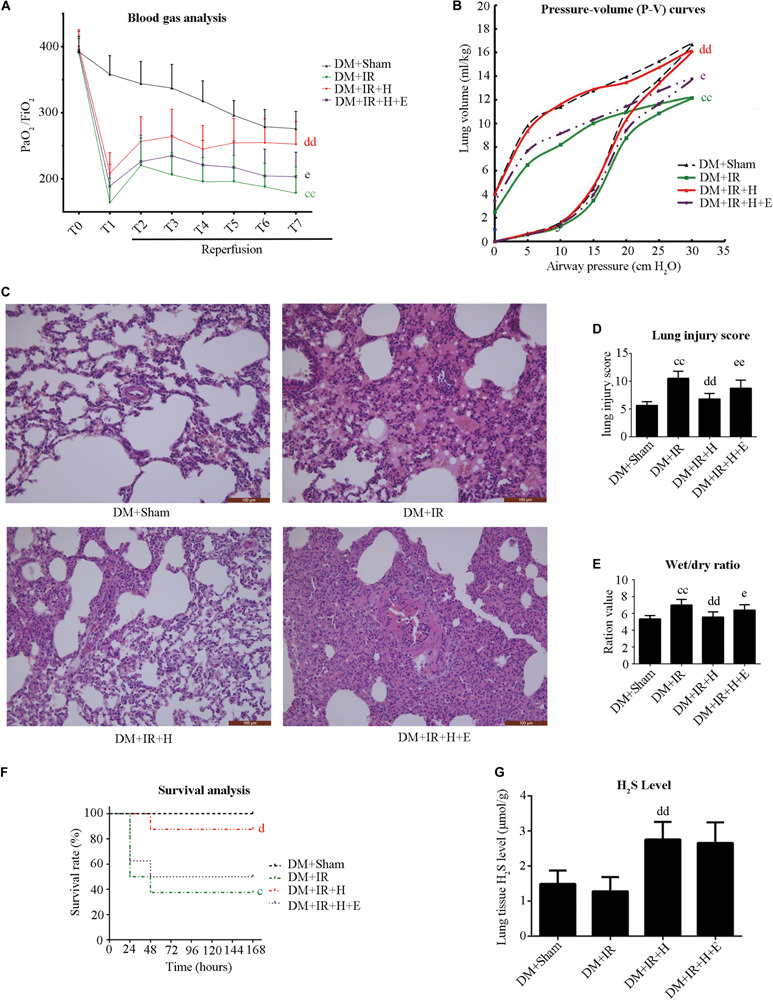
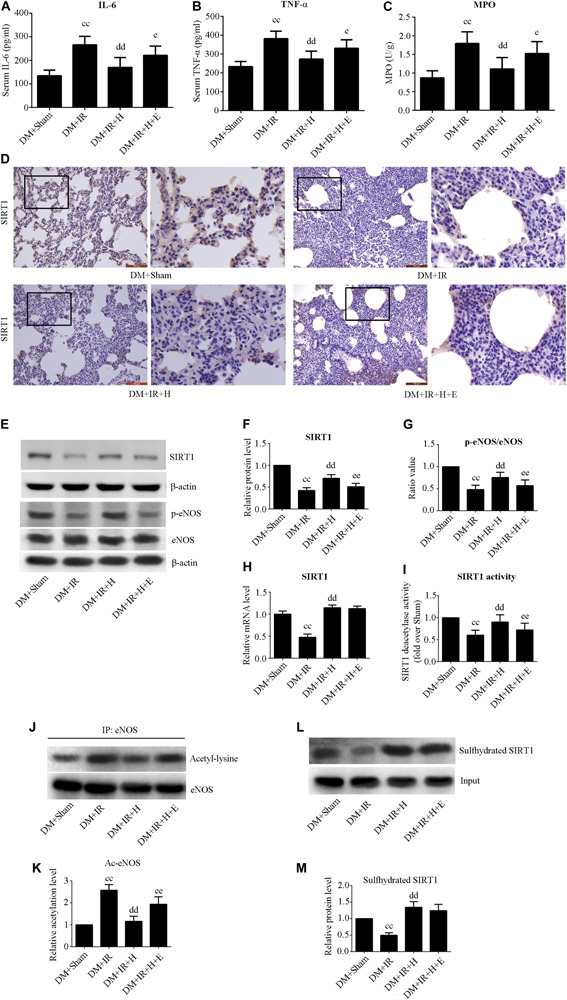
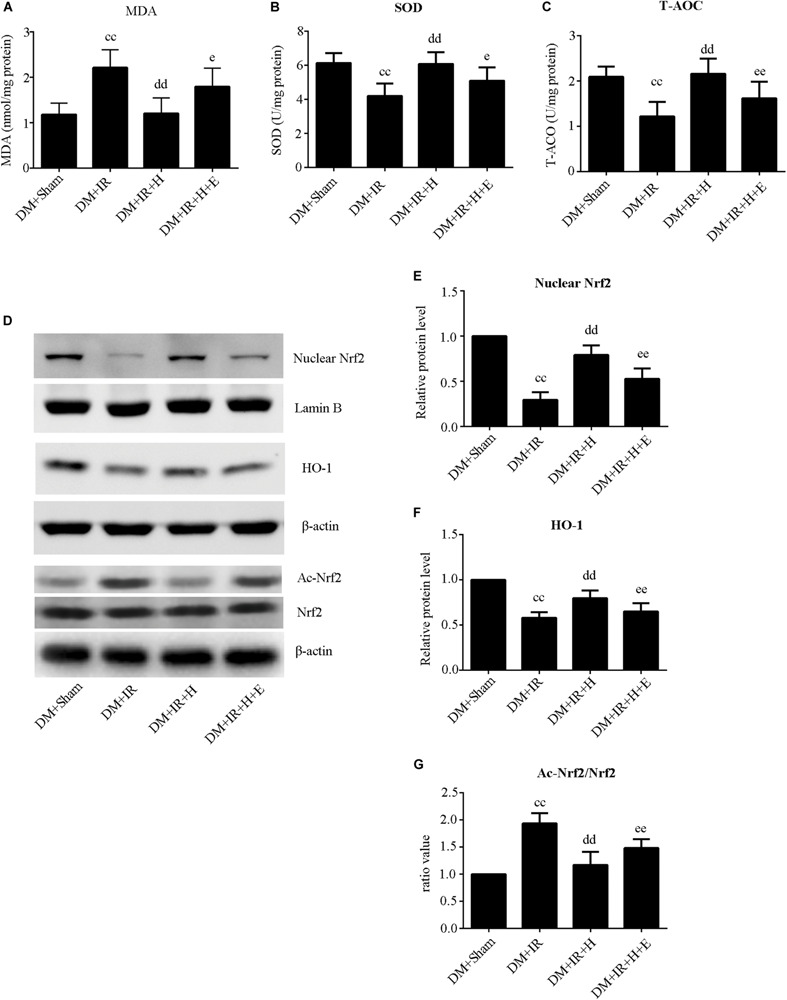
Lung ischemia-reperfusion (IR) injury remains a significant factor for the early mortality of lung transplantations. Diabetes mellitus (DM) is an independent risk factor for 5-year mortality following lung transplantation. Our previous study showed that DM aggravated lung IR injury and that oxidative stress played a key role in this process. Previously, we demonstrated that hydrogen sulfide (HS) protected against diabetic lung IR injury by suppressing oxidative damage. This study aimed to examine the mechanism by which HS affects diabetic lung IR injury. High-fat-diet-fed streptozotocin-induced type 2 diabetic rats were exposed to GYY4137, a slow-releasing HS donor with or without administration of EX527 (a SIRT1 inhibitor), and then subjected to a surgical model of IR injury of the lung. Lung function, oxidative stress, cell apoptosis, and inflammation were assessed. We found that impairment of lung SIRT1 signaling under type 2 diabetic conditions was further exacerbated by IR injury. GYY4137 treatment markedly activated SIRT1 signaling and ameliorated lung IR injury in type 2 DM animals by improving lung functional recovery, diminishing oxidative damage, reducing inflammation, and suppressing cell apoptosis. However, these effects were largely compromised by EX527. Additionally, treatment with GYY4137 significantly activated the Nrf2/HO-1 antioxidant signaling pathway and increased eNOS phosphorylation. However, these effects were largely abolished by EX527. Together, our results indicate that GYY4137 treatment effectively attenuated lung IR injury under type 2 diabetic conditions via activation of lung SIRT1 signaling. SIRT1 activation upregulated Nrf2/HO-1 and activated the eNOS-mediated antioxidant signaling pathway, thus reducing cell apoptosis and inflammation and eventually preserving lung function.
肺缺血再灌注(IR)损伤仍然是肺移植早期死亡率的一个重要因素。糖尿病(DM)是肺移植后5年死亡率的独立危险因素。我们之前的研究表明,糖尿病会加重肺IR损伤,氧化应激在这一过程中起关键作用。此前,我们证明硫化氢(HS)通过抑制氧化损伤来保护糖尿病肺免受IR损伤。本研究旨在探讨HS影响糖尿病肺IR损伤的机制。用高脂饮食喂养并用链脲佐菌素诱导的2型糖尿病大鼠,给予GYY4137(一种缓释HS供体),同时给予或不给予EX527(一种SIRT1抑制剂),然后进行肺IR损伤的手术模型。评估肺功能、氧化应激、细胞凋亡和炎症情况。我们发现,2型糖尿病条件下肺SIRT1信号通路的损伤在IR损伤后进一步加剧。GYY4137治疗显著激活SIRT1信号通路,并通过改善肺功能恢复、减少氧化损伤、减轻炎症和抑制细胞凋亡,改善2型糖尿病动物的肺IR损伤。然而,这些作用在很大程度上被EX527抵消。此外,GYY4137治疗显著激活Nrf2/HO-1抗氧化信号通路并增加eNOS磷酸化。然而,这些作用在很大程度上被EX527消除。总之,我们的结果表明,GYY4137治疗通过激活肺SIRT1信号通路有效减轻2型糖尿病条件下的肺IR损伤。SIRT1激活上调Nrf2/HO-1并激活eNOS介导的抗氧化信号通路,从而减少细胞凋亡和炎症,最终保护肺功能。