Bipolar and Depressive Disorders Unit, Hospital Clínic de Barcelona, Catalonia, Spain; Barcelona Clínic Schizophrenia Unit, Hospital Clínic de Barcelona, Catalonia, Spain; Department of Psychiatry and Psychology, Hospital Clínic de Barcelona, Catalonia, Spain; Institute of Neuroscience (ICN), Hospital Clínic de Barcelona, Catalonia, Spain; Hospital Clínic de Barcelona, 170 Villarroel St., 08036 Barcelona, Catalonia, Spain.
Department of Anaesthesiology, Hospital Clínic de Barcelona, Catalonia, Spain; Hospital Clínic de Barcelona, 170 Villarroel St., 08036 Barcelona, Catalonia, Spain; Institut d'Investigacions Biomèdiques August Pi i Sunyer (IDIBAPS), 08036 Barcelona, Spain; Centro de Investigación Biomédica en Red Salud Mental (CIBERSAM), 28029 Madrid, Spain; University of Barcelona, 08036 Barcelona, Catalonia, Spain.
J Affect Disord. 2020 Nov 1;276:241-248. doi: 10.1016/j.jad.2020.06.051. Epub 2020 Jul 15.
During the COVID-19 pandemic, electroconvulsive therapy units have had to confront challenges such as the infectious hazard due to aerosol-generating ventilation, or the lack of staff and material resources. Our objective was to elaborate a protocol to make ECT during the COVID-19 pandemic a safer procedure for patients and professionals.
A multidisciplinary workgroup (including mental health, anesthesia, preventive medicine, and occupational risk professionals) was formed in the Hospital Clínic de Barcelona, in March 2020. A core group conducted a review of the scientific literature and healthcare organizations' guidelines and wrote a protocol draft. Then, a discussion with the workgroup was made until consensus was reached. The protocol has been continuously updated. Discussions were made by group e-mailing and video conferencing.
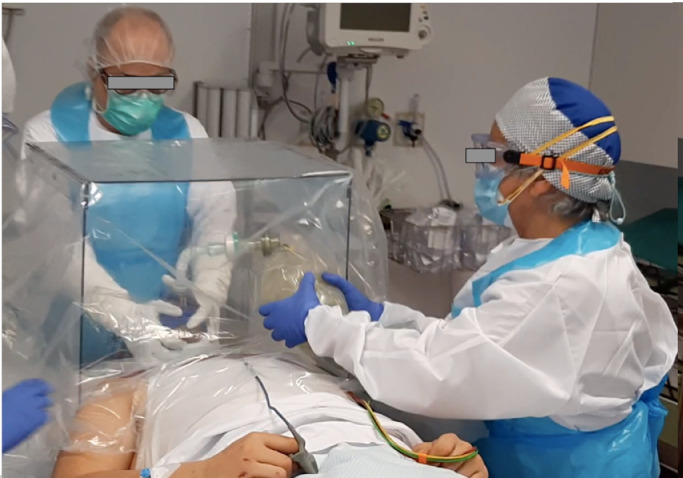
The protocol includes the following main areas: (1) ECT unit's structural and functional considerations; (2) SARS-CoV-2 screening protocol; (3) ECT clinical practice adaptation (personal protective equipment, airway management, recovery room, and maintenance of the facilities); (4) management of COVID-19 cases; and (5) protocol assessment.
The literature review was not systematic; the consensus was not based on a structured methodology. For other ECT units, local advisories may not be valid, and resource shortages (such as anesthetist availability, or the lack of respirators and PCR tests) may impede or prevent their implementation.
During the COVID-19 pandemic, ECT should continue to be advocated as an essential medical procedure. It is recommended that each ECT unit develop its own protocol. This proposal may be used as a reference.
在 COVID-19 大流行期间,电抽搐治疗单位不得不应对因气溶胶产生通风而带来的感染危险,或者面临人员和物力资源短缺等挑战。我们的目标是制定一项方案,使 COVID-19 大流行期间的电抽搐治疗对患者和专业人员更安全。
2020 年 3 月,在巴塞罗那 Clinic 医院成立了一个多学科工作组(包括心理健康、麻醉、预防医学和职业风险专业人员)。一个核心小组对科学文献和医疗保健组织的指南进行了审查,并撰写了一份方案草案。然后,与工作组进行了讨论,直到达成共识。该方案不断更新。讨论通过电子邮件组和视频会议进行。
该方案包括以下主要领域:(1)电抽搐治疗单位的结构和功能考虑;(2)SARS-CoV-2 筛查方案;(3)电抽搐治疗临床实践的调整(个人防护设备、气道管理、恢复室和设施维护);(4)COVID-19 病例的管理;(5)方案评估。
文献综述不系统;共识不是基于结构化方法。对于其他电抽搐治疗单位,地方建议可能无效,并且资源短缺(如麻醉师的可用性,或缺乏呼吸机和 PCR 测试)可能会阻碍或阻止其实施。
在 COVID-19 大流行期间,应继续倡导电抽搐治疗作为一项基本医疗程序。建议每个电抽搐治疗单位制定自己的方案。本建议可作为参考。