The Third Affiliated Hospital, State Key Laboratory of Biocontrol, Guangdong Key Laboratory of Pharmaceutical Functional Genes, School of Life Sciences, Sun Yat-sen University, University City , Guangzhou, China.
Laboratory for Marine Biology and Biotechnology, Qingdao National Laboratory for Marine Science and Technology , Qingdao, China.
Virulence. 2020 Dec;11(1):877-888. doi: 10.1080/21505594.2020.1787604.
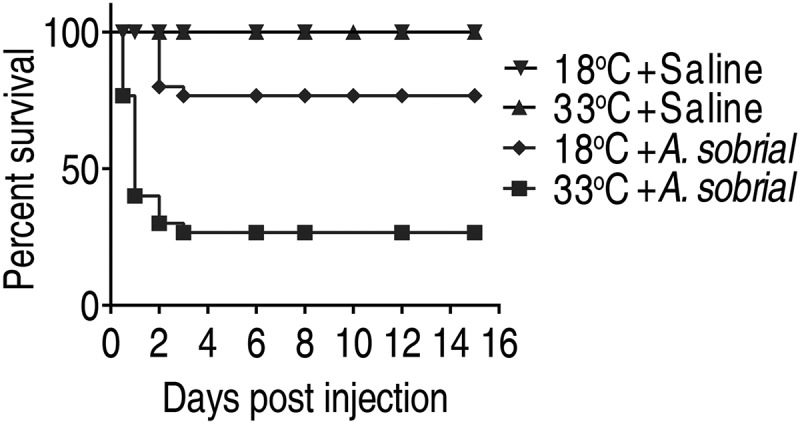
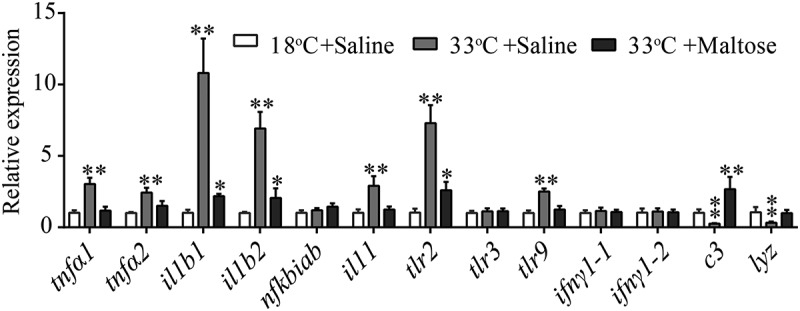
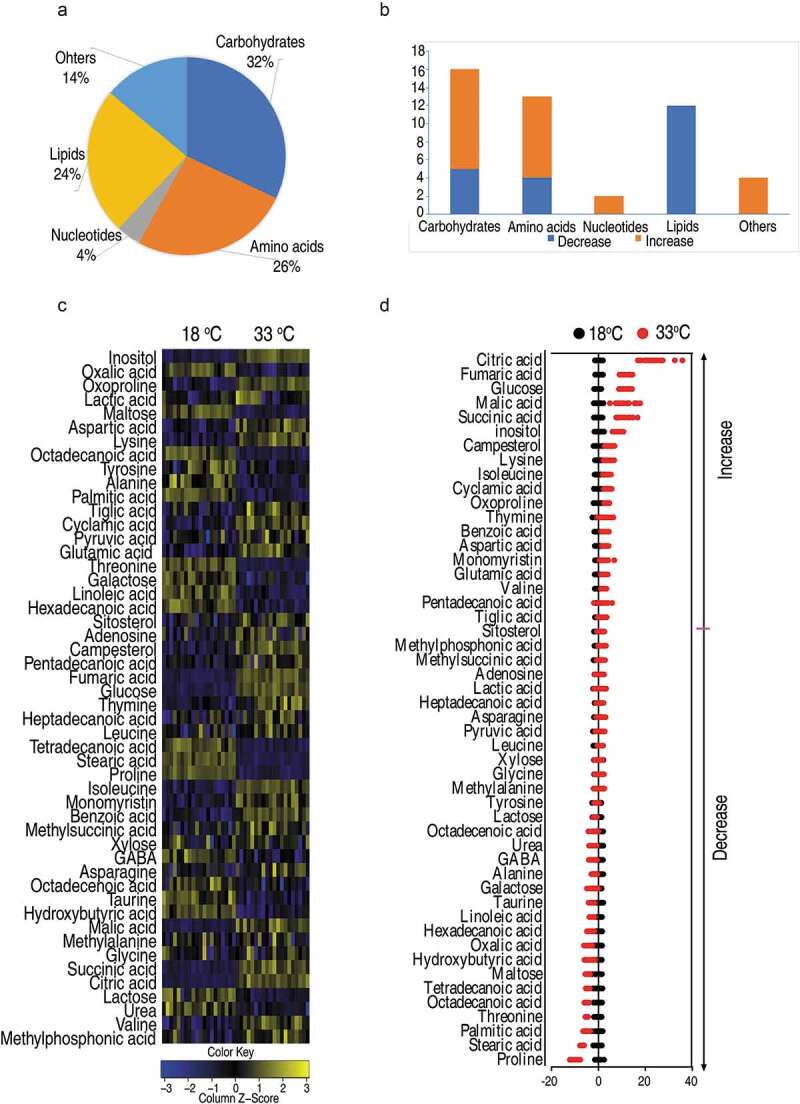
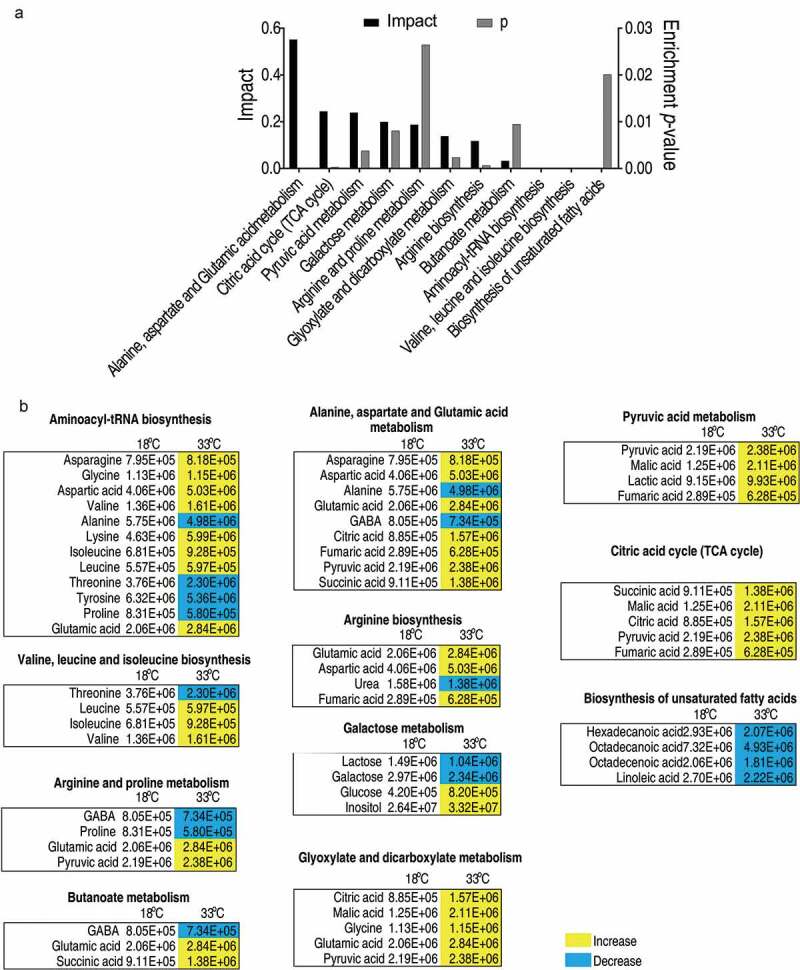
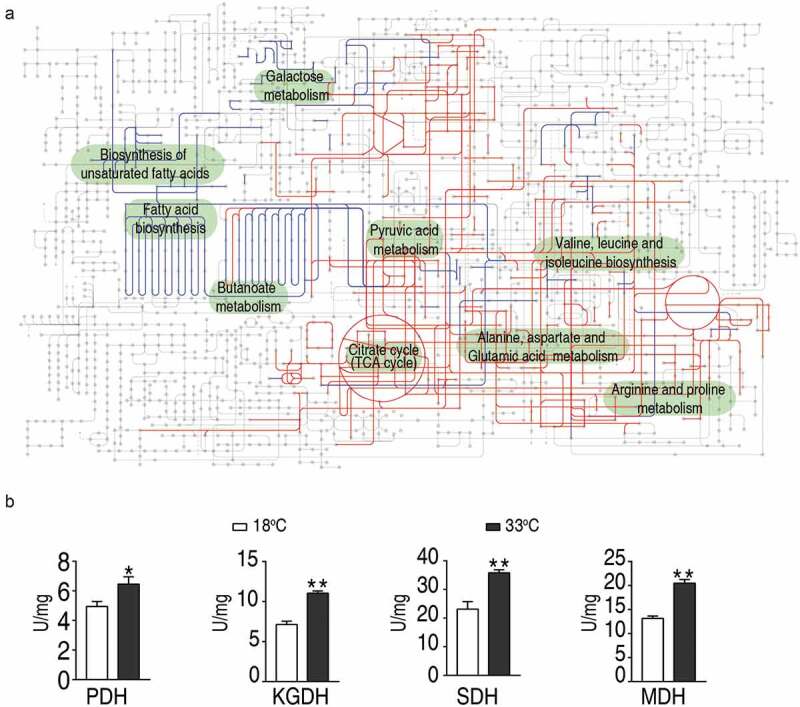
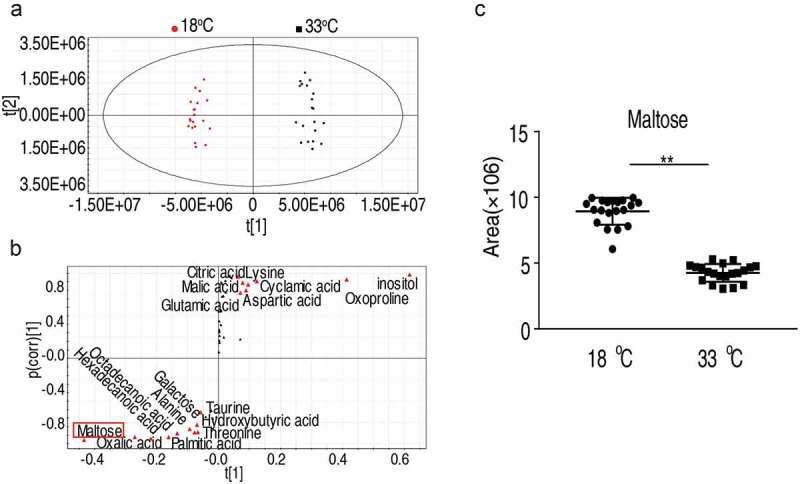
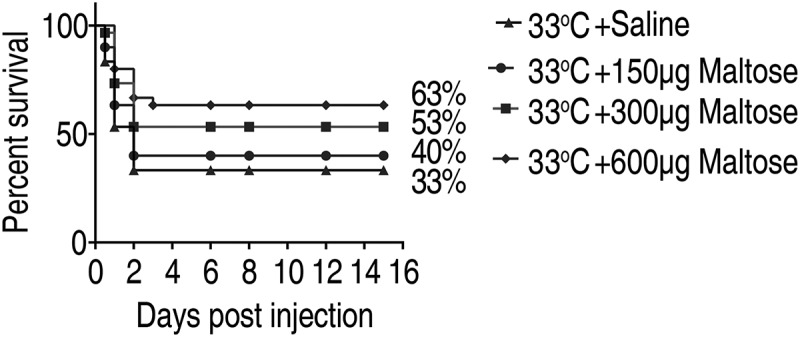
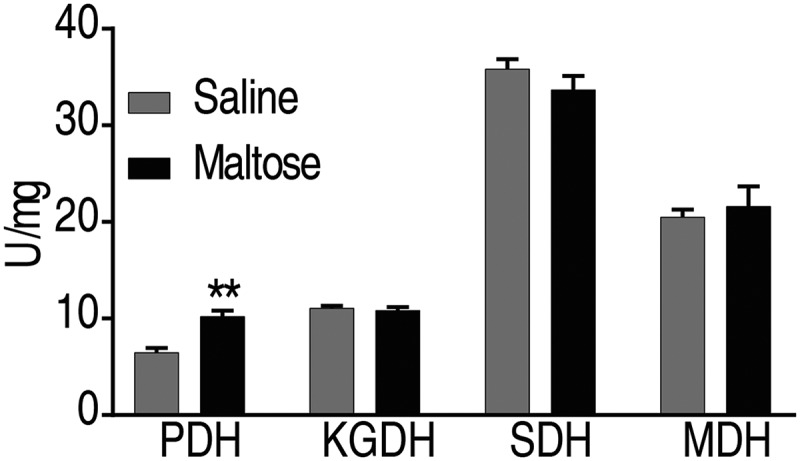
Temperature influences fish's susceptibility to infectious disease through an immune response. However, the mechanism underlying this regulation is yet to be elucidated. In this study, we compared the susceptibility of crucian carp that were grown at 18°C and 33°C, respectively, to infection and found that crucian carp was more susceptible when grown at 33°C. These distinct susceptibilities of fish at different temperatures to infection may partially be explained by their differences in the metabolism as revealed by comparative metabolomics profiling: crucian carp demonstrated enhanced TCA cycle but reduced fatty acid biosynthesis; Our study also found that maltose was the most suppressed metabolite in fish grown at 33°C. Importantly, exogenous injection of maltose enhances crucian carp survival grown at 33°C by 30%. Further study showed that exogenous maltose downregulated the production of several cytokines but enhanced the lysozyme () and complement component , which involves the humoral innate immunity. Our results suggest that maltose promotes the survival of crucian carp likely through fine tuning the immune gene expression, and this finding provides a novel approach to manage bacterial infection.
温度通过免疫反应影响鱼类对传染性疾病的易感性。然而,这种调节的机制尚未阐明。在这项研究中,我们比较了分别在 18°C 和 33°C 下生长的鲫鱼对 感染的易感性,发现 33°C 下生长的鲫鱼更容易感染。鱼类在不同温度下对感染的不同易感性可能部分可以通过代谢组学比较分析来解释:鲫鱼表现出增强的三羧酸循环但减少脂肪酸生物合成;我们的研究还发现,33°C 下生长的鱼中麦芽糖是受抑制最明显的代谢物。重要的是,外源性麦芽糖注射可使在 33°C 下生长的鲫鱼的存活率提高 30%。进一步的研究表明,外源性麦芽糖下调了几种细胞因子的产生,但增强了溶菌酶 (Lysozyme) 和补体成分 3 (Complement Component 3),这涉及到体液先天免疫。我们的研究结果表明,麦芽糖可能通过微调免疫基因表达促进鲫鱼的存活,这一发现为管理细菌感染提供了一种新方法。