• 文献检索
  • 文档翻译
  • 深度研究
  • 学术资讯
  • Suppr Zotero 插件Zotero 插件
  • 邀请有礼
  • 套餐&价格
  • 历史记录
应用&插件
Suppr Zotero 插件Zotero 插件浏览器插件Mac 客户端Windows 客户端微信小程序
定价
高级版会员购买积分包购买API积分包
服务
文献检索文档翻译深度研究API 文档MCP 服务
关于我们
关于 Suppr公司介绍联系我们用户协议隐私条款
关注我们

Suppr 超能文献

核心技术专利:CN118964589B侵权必究
粤ICP备2023148730 号-1Suppr @ 2026

文献检索

告别复杂PubMed语法,用中文像聊天一样搜索,搜遍4000万医学文献。AI智能推荐,让科研检索更轻松。

立即免费搜索

文件翻译

保留排版,准确专业,支持PDF/Word/PPT等文件格式,支持 12+语言互译。

免费翻译文档

深度研究

AI帮你快速写综述,25分钟生成高质量综述,智能提取关键信息,辅助科研写作。

立即免费体验

基于图像分析和机器学习的无标记稀有循环肿瘤细胞检测。

Label-free detection of rare circulating tumor cells by image analysis and machine learning.

机构信息

Department of Mechanical Engineering and Mechanics, Lehigh University, Bethlehem, PA, 18015, USA.

Department of Bioengineering, Lehigh University, Bethlehem, PA, 18015, USA.

出版信息

Sci Rep. 2020 Jul 22;10(1):12226. doi: 10.1038/s41598-020-69056-1.

DOI:10.1038/s41598-020-69056-1
PMID:32699281
原文链接:https://pmc.ncbi.nlm.nih.gov/articles/PMC7376046/
Abstract

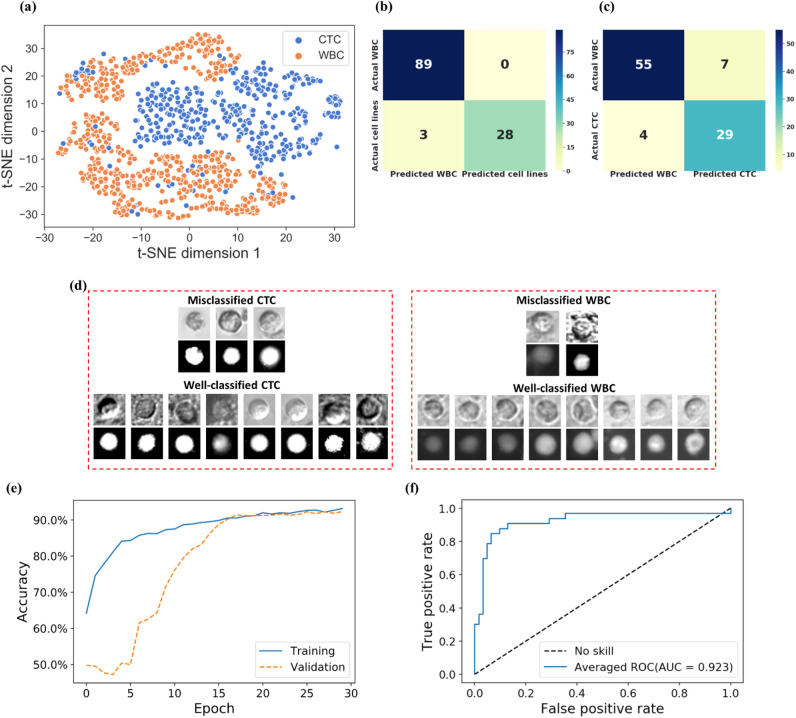
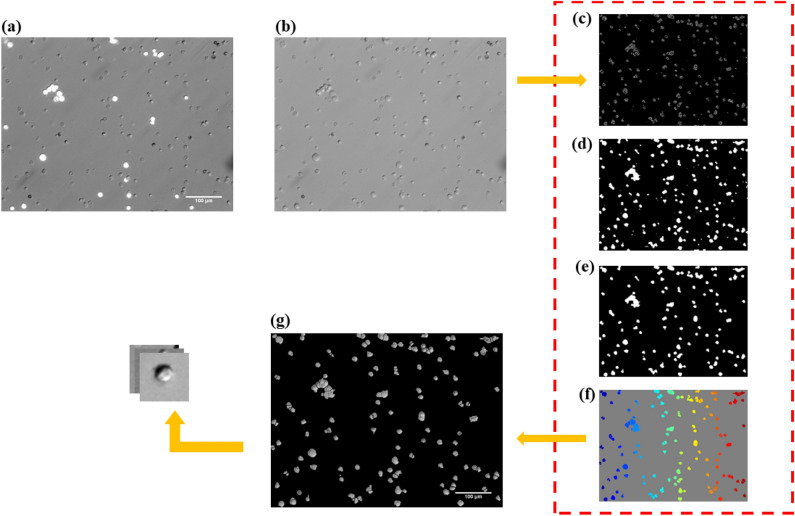
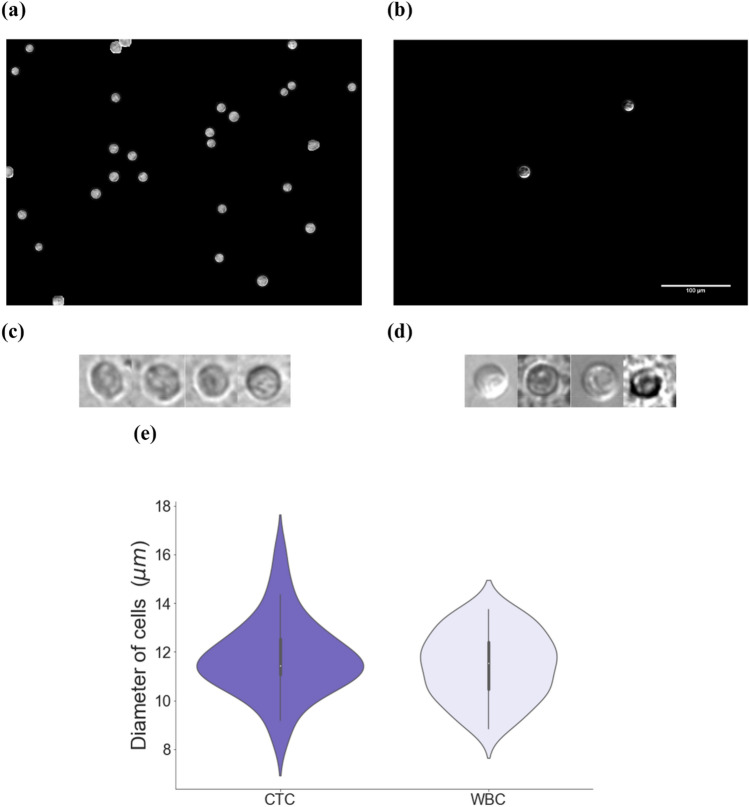
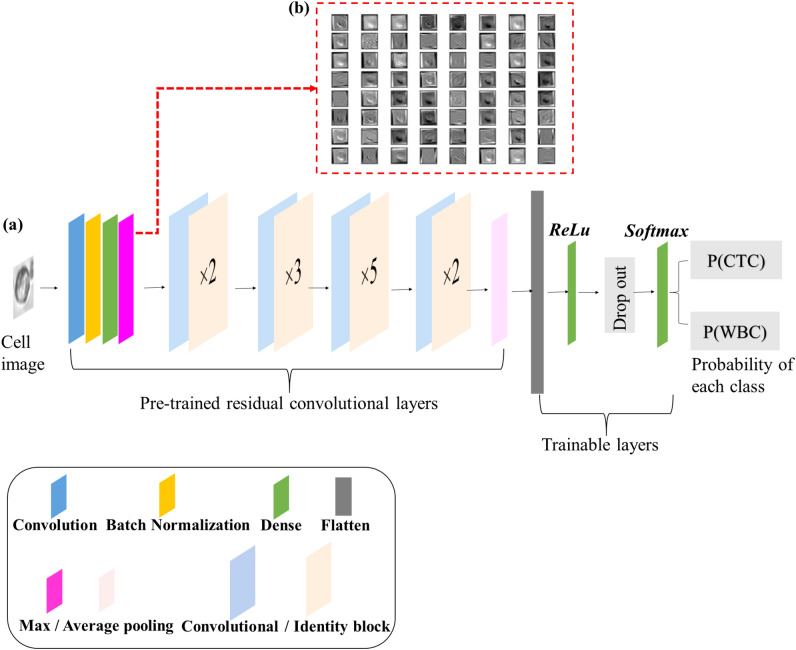
Detection and characterization of rare circulating tumor cells (CTCs) in patients' blood is important for the diagnosis and monitoring of cancer. The traditional way of counting CTCs via fluorescent images requires a series of tedious experimental procedures and often impacts the viability of cells. Here we present a method for label-free detection of CTCs from patient blood samples, by taking advantage of data analysis of bright field microscopy images. The approach uses the convolutional neural network, a powerful image classification and machine learning algorithm to perform label-free classification of cells detected in microscopic images of patient blood samples containing white blood cells and CTCs. It requires minimal data pre-processing and has an easy experimental setup. Through our experiments, we show that our method can achieve high accuracy on the identification of rare CTCs without the need for advanced devices or expert users, thus providing a faster and simpler way for counting and identifying CTCs. With more data becoming available in the future, the machine learning model can be further improved and can serve as an accurate and easy-to-use tool for CTC analysis.

摘要

检测和鉴定患者血液中的稀有循环肿瘤细胞(CTC)对于癌症的诊断和监测至关重要。传统的通过荧光图像计数 CTC 的方法需要一系列繁琐的实验程序,并且经常影响细胞的活力。在这里,我们提出了一种利用明场显微镜图像数据分析的无标记 CTC 检测方法。该方法使用卷积神经网络(一种强大的图像分类和机器学习算法)对包含白细胞和 CTC 的患者血液样本的显微镜图像中检测到的细胞进行无标记分类。它需要最少的数据预处理,并且具有简单的实验设置。通过实验,我们表明,我们的方法可以在无需先进设备或专家用户的情况下,实现对稀有 CTC 的高准确率识别,从而为 CTC 的计数和鉴定提供更快、更简单的方法。随着未来更多数据的出现,机器学习模型可以进一步改进,并成为 CTC 分析的准确易用工具。
https://cdn.ncbi.nlm.nih.gov/pmc/blobs/6af7/7376046/1b9a568c92a9/41598_2020_69056_Fig6_HTML.jpg
https://cdn.ncbi.nlm.nih.gov/pmc/blobs/6af7/7376046/f2b524df78f2/41598_2020_69056_Fig1_HTML.jpg
https://cdn.ncbi.nlm.nih.gov/pmc/blobs/6af7/7376046/f60769963b58/41598_2020_69056_Fig2_HTML.jpg
https://cdn.ncbi.nlm.nih.gov/pmc/blobs/6af7/7376046/f23b706855a4/41598_2020_69056_Fig3_HTML.jpg
https://cdn.ncbi.nlm.nih.gov/pmc/blobs/6af7/7376046/17480e132f99/41598_2020_69056_Fig4_HTML.jpg
https://cdn.ncbi.nlm.nih.gov/pmc/blobs/6af7/7376046/c6a0bebce1d8/41598_2020_69056_Fig5_HTML.jpg
https://cdn.ncbi.nlm.nih.gov/pmc/blobs/6af7/7376046/1b9a568c92a9/41598_2020_69056_Fig6_HTML.jpg
https://cdn.ncbi.nlm.nih.gov/pmc/blobs/6af7/7376046/f2b524df78f2/41598_2020_69056_Fig1_HTML.jpg
https://cdn.ncbi.nlm.nih.gov/pmc/blobs/6af7/7376046/f60769963b58/41598_2020_69056_Fig2_HTML.jpg
https://cdn.ncbi.nlm.nih.gov/pmc/blobs/6af7/7376046/f23b706855a4/41598_2020_69056_Fig3_HTML.jpg
https://cdn.ncbi.nlm.nih.gov/pmc/blobs/6af7/7376046/17480e132f99/41598_2020_69056_Fig4_HTML.jpg
https://cdn.ncbi.nlm.nih.gov/pmc/blobs/6af7/7376046/c6a0bebce1d8/41598_2020_69056_Fig5_HTML.jpg
https://cdn.ncbi.nlm.nih.gov/pmc/blobs/6af7/7376046/1b9a568c92a9/41598_2020_69056_Fig6_HTML.jpg

相似文献

1
Label-free detection of rare circulating tumor cells by image analysis and machine learning.基于图像分析和机器学习的无标记稀有循环肿瘤细胞检测。
Sci Rep. 2020 Jul 22;10(1):12226. doi: 10.1038/s41598-020-69056-1.
2
An integrated enrichment system to facilitate isolation and molecular characterization of single cancer cells from whole blood.一种集成的富集系统,用于方便从全血中分离和分子表征单个癌细胞。
Cytometry A. 2018 Dec;93(12):1226-1233. doi: 10.1002/cyto.a.23599.
3
Label-free detection and enumeration of rare circulating tumor cells by bright-field image cytometry and multi-frame image correlation analysis.无标记法通过明场图像细胞术和多帧图像相关分析检测和计数稀有循环肿瘤细胞。
Lab Chip. 2022 Sep 13;22(18):3390-3401. doi: 10.1039/d2lc00190j.
4
Isolation of rare circulating tumour cells in cancer patients by microchip technology.利用微芯片技术分离癌症患者体内罕见的循环肿瘤细胞。
Nature. 2007 Dec 20;450(7173):1235-9. doi: 10.1038/nature06385.
5
Analogous detection of circulating tumor cells using the AccuCyte -CyteFinder system and ISET system in patients with locally advanced and metastatic prostate cancer.在局部晚期和转移性前列腺癌患者中使用AccuCyte - CyteFinder系统和ISET系统对循环肿瘤细胞进行类似检测。
Prostate. 2018 Mar;78(4):300-307. doi: 10.1002/pros.23474. Epub 2017 Dec 29.
6
Benchtop technologies for circulating tumor cells separation based on biophysical properties.基于生物物理特性的循环肿瘤细胞分离台式技术。
Biomed Res Int. 2015;2015:239362. doi: 10.1155/2015/239362. Epub 2015 Apr 21.
7
Wedge-shaped microfluidic chip for circulating tumor cells isolation and its clinical significance in gastric cancer.用于循环肿瘤细胞分离的楔形微流控芯片及其在胃癌中的临床意义。
J Transl Med. 2018 May 23;16(1):139. doi: 10.1186/s12967-018-1521-8.
8
Fourier Ptychographic Microscopy for Rapid, High-Resolution Imaging of Circulating Tumor Cells Enriched by Microfiltration.用于对通过微滤富集的循环肿瘤细胞进行快速、高分辨率成像的傅里叶叠层显微镜技术。
Methods Mol Biol. 2017;1634:107-117. doi: 10.1007/978-1-4939-7144-2_8.
9
High‑throughput and continuous flow isolation of rare circulating tumor cells and clusters in gastric cancer from human whole blood samples using electromagnetic vibration‑based filtration.基于电磁振动过滤的高通量和连续流动从人全血样本中分离胃癌稀有循环肿瘤细胞和细胞簇。
Oncol Rep. 2020 Jun;43(6):1975-1985. doi: 10.3892/or.2020.7567. Epub 2020 Mar 30.
10
Toward Microfluidic Label-Free Isolation and Enumeration of Circulating Tumor Cells from Blood Samples.朝着从血液样本中进行无标记的微流控循环肿瘤细胞分离和计数的方向发展。
Cytometry A. 2019 Oct;95(10):1085-1095. doi: 10.1002/cyto.a.23868. Epub 2019 Jul 31.

引用本文的文献

1
Circulating tumor cells: Blood-based detection, molecular biology, and clinical applications.循环肿瘤细胞:基于血液的检测、分子生物学及临床应用。
Cancer Cell. 2025 Aug 11;43(8):1399-1422. doi: 10.1016/j.ccell.2025.07.008. Epub 2025 Jul 31.
2
Establishing a Highly Accurate Circulating Tumor Cell Image Recognition System for Human Lung Cancer by Pre-Training on Lung Cancer Cell Lines.通过对肺癌细胞系进行预训练建立高度准确的人肺癌循环肿瘤细胞图像识别系统。
Cancers (Basel). 2025 Jul 9;17(14):2289. doi: 10.3390/cancers17142289.
3
Label-free live cell recognition and tracking for biological discoveries and translational applications.

本文引用的文献

1
Analysis of Single Circulating Tumor Cells in Renal Cell Carcinoma Reveals Phenotypic Heterogeneity and Genomic Alterations Related to Progression.分析肾细胞癌中的单个循环肿瘤细胞揭示了与进展相关的表型异质性和基因组改变。
Int J Mol Sci. 2020 Feb 21;21(4):1475. doi: 10.3390/ijms21041475.
2
Cooperative and Escaping Mechanisms between Circulating Tumor Cells and Blood Constituents.循环肿瘤细胞与血液成分之间的协同和逃逸机制。
Cells. 2019 Nov 3;8(11):1382. doi: 10.3390/cells8111382.
3
High-Throughput Automated Microscopy of Circulating Tumor Cells.
用于生物学发现和转化应用的无标记活细胞识别与追踪
Npj Imaging. 2024 Oct 7;2(1):41. doi: 10.1038/s44303-024-00046-y.
4
Contrastive Representation Learning for Single Cell Phenotyping in Whole Slide Imaging of Enrichment-free Liquid Biopsy.无富集液体活检全切片成像中用于单细胞表型分析的对比表征学习
bioRxiv. 2025 May 24:2025.05.21.655334. doi: 10.1101/2025.05.21.655334.
5
Advancements in Circulating Tumor Cell Detection for Early Cancer Diagnosis: An Integration of Machine Learning Algorithms with Microfluidic Technologies.用于早期癌症诊断的循环肿瘤细胞检测进展:机器学习算法与微流控技术的整合
Biosensors (Basel). 2025 Mar 29;15(4):220. doi: 10.3390/bios15040220.
6
An integrated approach of feature selection and machine learning for early detection of breast cancer.一种用于乳腺癌早期检测的特征选择与机器学习的综合方法。
Sci Rep. 2025 Apr 15;15(1):13015. doi: 10.1038/s41598-025-97685-x.
7
MIML: multiplex image machine learning for high precision cell classification via mechanical traits within microfluidic systems.MIML:通过微流控系统内的机械特性进行高精度细胞分类的多重图像机器学习
Microsyst Nanoeng. 2025 Mar 7;11(1):43. doi: 10.1038/s41378-025-00874-x.
8
Deep learning-based lung cancer risk assessment using chest computed tomography images without pulmonary nodules ≥8 mm.使用无≥8mm肺结节的胸部计算机断层扫描图像进行基于深度学习的肺癌风险评估。
Transl Lung Cancer Res. 2025 Jan 24;14(1):150-162. doi: 10.21037/tlcr-24-882. Epub 2025 Jan 22.
9
A Hybrid Intelligence Approach for Circulating Tumor Cell Enumeration in Digital Pathology by Using CNN and Weak Annotations.一种利用卷积神经网络(CNN)和弱标注进行数字病理学中循环肿瘤细胞计数的混合智能方法。
IEEE Access. 2023;11:142992-143003. doi: 10.1109/access.2023.3343701. Epub 2023 Dec 18.
10
Acoustofluidic Actuation of Living Cells.活细胞的声流体驱动
Micromachines (Basel). 2024 Mar 29;15(4):466. doi: 10.3390/mi15040466.
高通量自动化循环肿瘤细胞显微镜检测
Sci Rep. 2019 Sep 24;9(1):13766. doi: 10.1038/s41598-019-50241-w.
4
Circulating tumor cells as a response monitor in stage IV non-small cell lung cancer.循环肿瘤细胞作为 IV 期非小细胞肺癌的反应监测指标。
J Transl Med. 2019 Aug 28;17(1):294. doi: 10.1186/s12967-019-2035-8.
5
Automated detection and sorting of microencapsulation via machine learning.通过机器学习实现微囊化的自动检测与分类
Lab Chip. 2019 May 14;19(10):1808-1817. doi: 10.1039/c8lc01394b.
6
Liquid Biopsy for the Management of Patients with Colorectal Cancer.液体活检在结直肠癌患者管理中的应用。
Digestion. 2019;99(1):39-45. doi: 10.1159/000494411. Epub 2018 Dec 14.
7
A Convolutional Neural Network Uses Microscopic Images to Differentiate between Mouse and Human Cell Lines and Their Radioresistant Clones.卷积神经网络利用显微镜图像区分小鼠和人细胞系及其耐辐射克隆。
Cancer Res. 2018 Dec 1;78(23):6703-6707. doi: 10.1158/0008-5472.CAN-18-0653. Epub 2018 Sep 25.
8
Label-free isolation of prostate circulating tumor cells using Vortex microfluidic technology.使用涡旋微流控技术对前列腺循环肿瘤细胞进行无标记分离。
NPJ Precis Oncol. 2017 May 8;1(1):15. doi: 10.1038/s41698-017-0015-0. eCollection 2017.
9
Prognostic factors and prognostic models for renal cell carcinoma: a literature review.肾细胞癌的预后因素和预后模型:文献综述。
World J Urol. 2018 Dec;36(12):1943-1952. doi: 10.1007/s00345-018-2309-4. Epub 2018 Apr 30.
10
Tracking Cancer Evolution Reveals Constrained Routes to Metastases: TRACERx Renal.追踪癌症演进揭示转移受限途径:TRACERx 肾脏。
Cell. 2018 Apr 19;173(3):581-594.e12. doi: 10.1016/j.cell.2018.03.057. Epub 2018 Apr 12.