Centre for Haemato-Oncology, Barts Cancer Institute, Queen Mary University of London, EC1M 6BQ, London, UK.
MRC Human Genetics Unit and Edinburgh Cancer Research Centre, MRC Institute of Genetics & Molecular Medicine, University of Edinburgh, Western General Hospital, Crewe Road, EH4 2XU, Edinburgh, UK.
Nat Commun. 2020 Jul 22;11(1):3671. doi: 10.1038/s41467-020-17269-3.
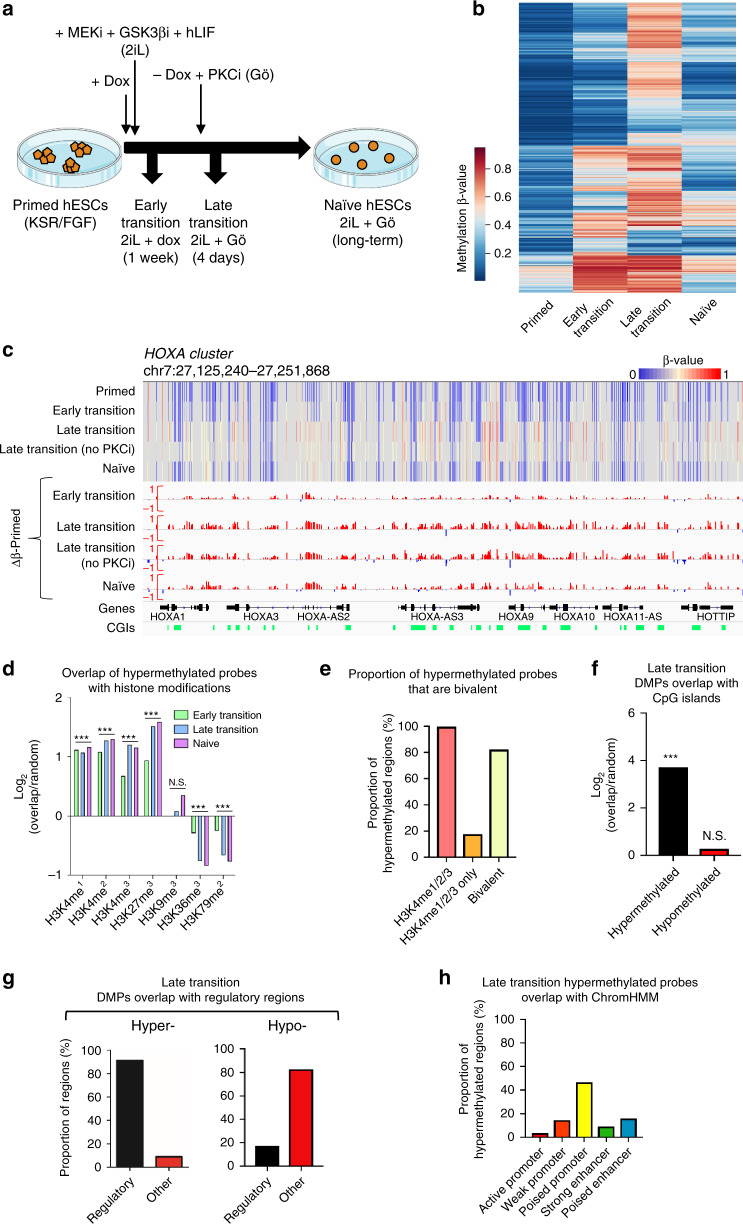
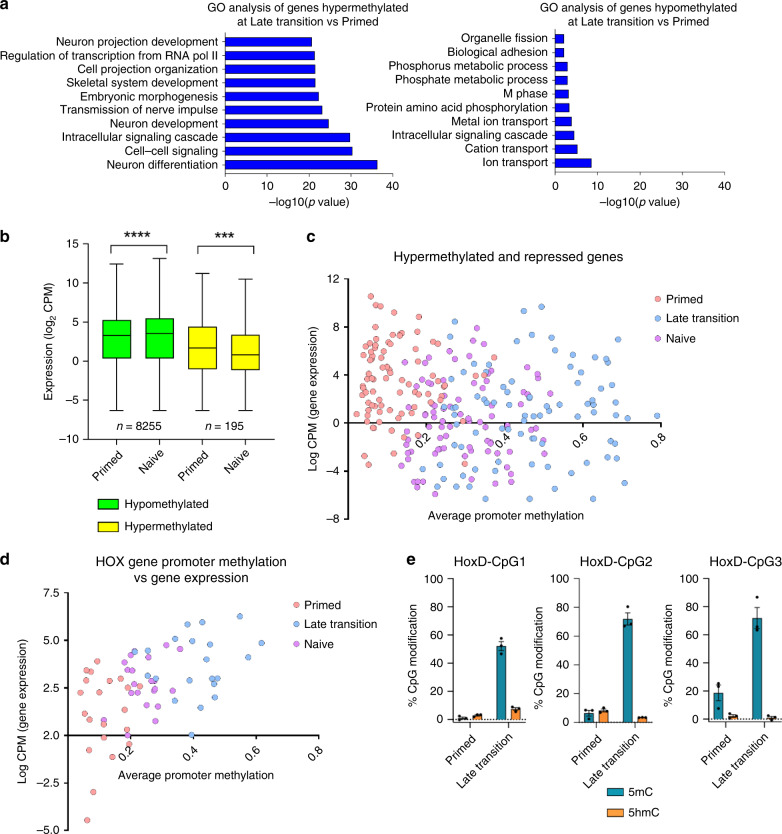
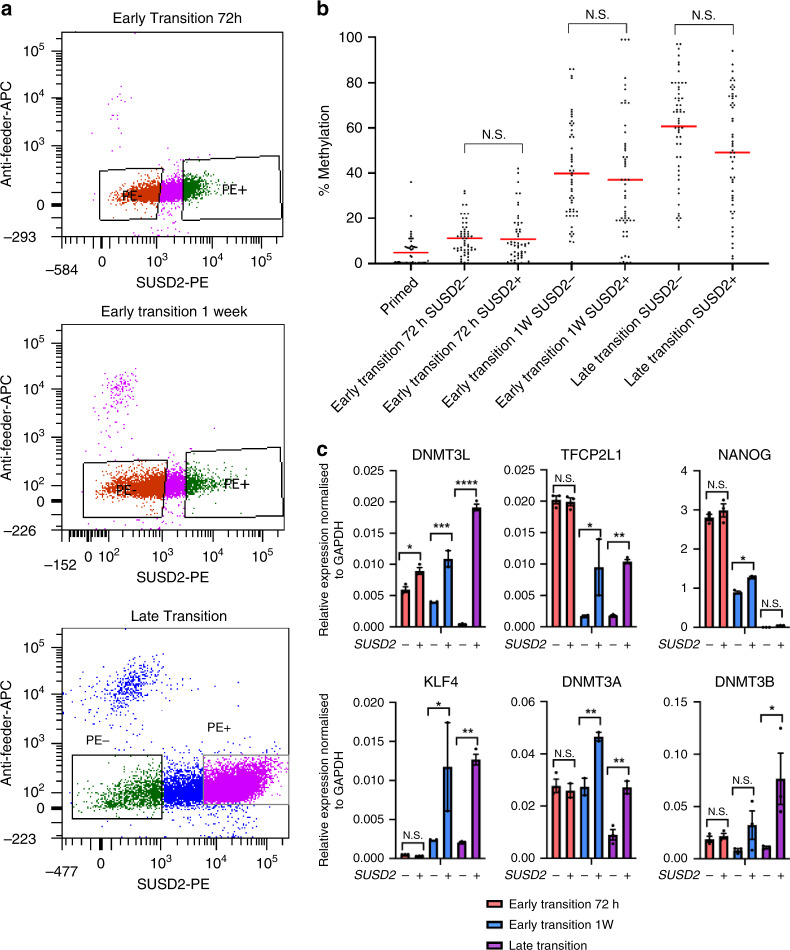
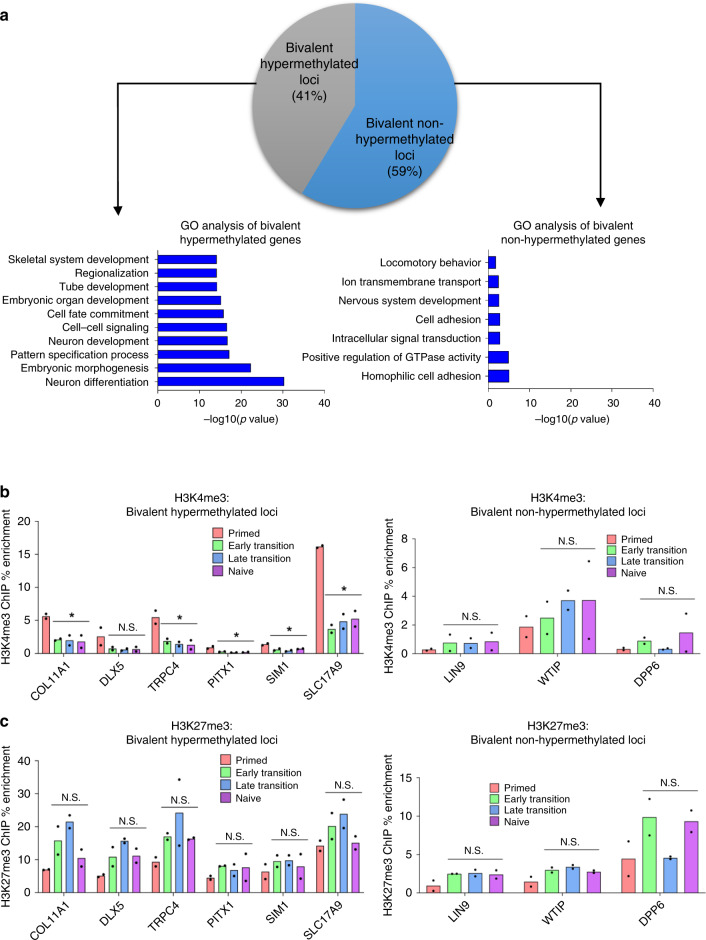
Epigenetic reprogramming is a cancer hallmark, but how it unfolds during early neoplastic events and its role in carcinogenesis and cancer progression is not fully understood. Here we show that resetting from primed to naïve human pluripotency results in acquisition of a DNA methylation landscape mirroring the cancer DNA methylome, with gradual hypermethylation of bivalent developmental genes. We identify a dichotomy between bivalent genes that do and do not become hypermethylated, which is also mirrored in cancer. We find that loss of H3K4me3 at bivalent regions is associated with gain of methylation. Additionally, we observe that promoter CpG island hypermethylation is not restricted solely to emerging naïve cells, suggesting that it is a feature of a heterogeneous intermediate population during resetting. These results indicate that transition to naïve pluripotency and oncogenic transformation share common epigenetic trajectories, which implicates reprogramming and the pluripotency network as a central hub in cancer formation.
表观遗传重编程是癌症的一个标志,但它在早期肿瘤发生事件中的展开情况及其在致癌和癌症进展中的作用尚不完全清楚。在这里,我们表明,从已启动的到幼稚的人类多能性的重置导致获得与癌症 DNA 甲基组图谱相匹配的 DNA 甲基化图谱,具有双价发育基因的逐渐过度甲基化。我们发现,双价基因是否发生过度甲基化存在二分法,这在癌症中也是如此。我们发现,双价区域的 H3K4me3 丢失与甲基化的获得有关。此外,我们还观察到启动子 CpG 岛超甲基化不仅限于新兴的幼稚细胞,这表明它是重置过程中异质中间群体的一个特征。这些结果表明,向幼稚多能性和致癌转化的转变具有共同的表观遗传轨迹,这表明重编程和多能性网络是癌症形成的中心枢纽。