Moon Joonoh, Ha Heon-Young, Kim Kyeong-Won, Park Seong-Jun, Lee Tae-Ho, Kim Sung-Dae, Jang Jae Hoon, Jo Hyo-Haeng, Hong Hyun-Uk, Lee Bong Ho, Lee Young-Joo, Lee Changhee, Suh Dong-Woo, Han Heung Nam, Raabe Dierk, Lee Chang-Hoon
Steel Department, Advanced Metals Division, Korea Institute of Materials Science, 797 Changwondae-ro, Seongsan-gu, Changwon, Gyeongnam, 51508, Republic of Korea.
Department of Materials Science and Engineering, Changwon National University, 20 Changwondaehak-ro, Uichang-gu, Changwon, Gyeongnam, 51140, Republic of Korea.
Sci Rep. 2020 Jul 22;10(1):12140. doi: 10.1038/s41598-020-69177-7.
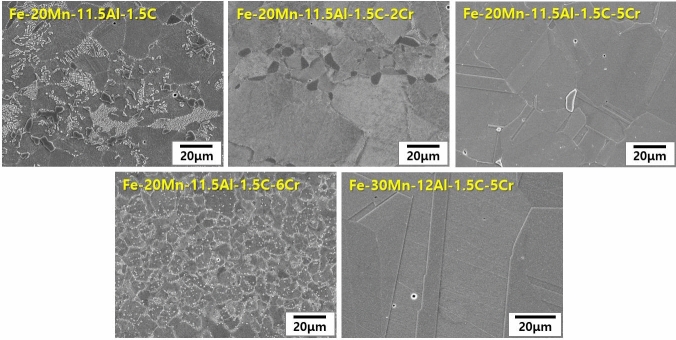
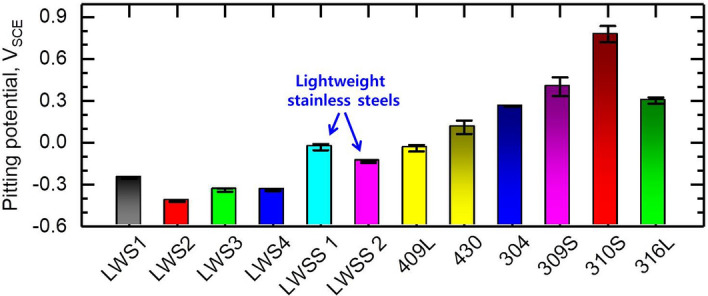
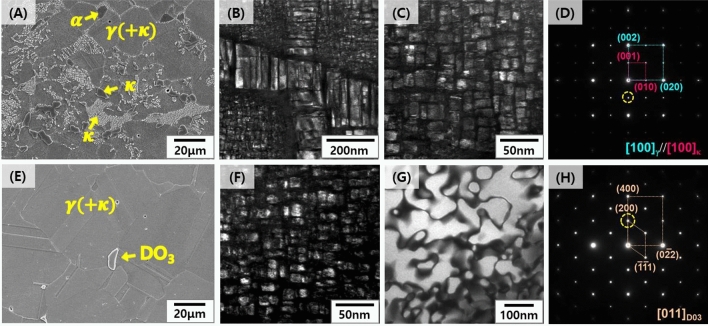
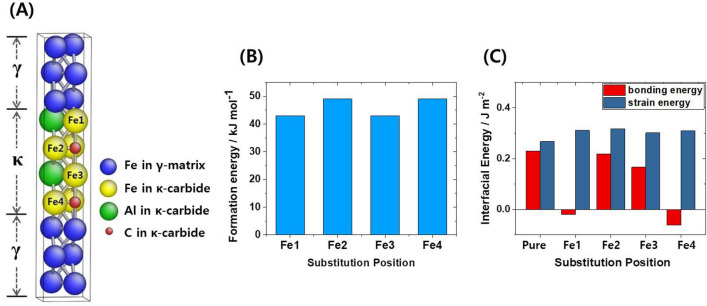
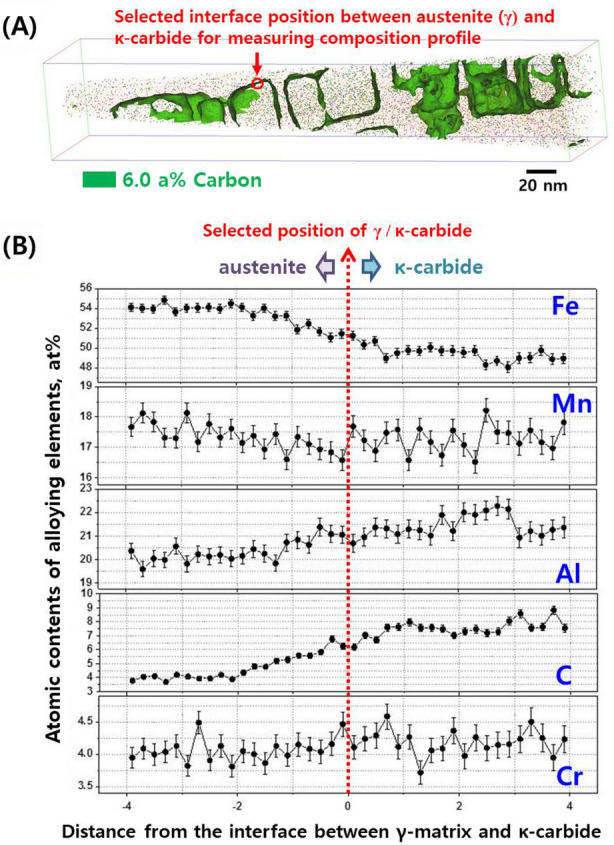
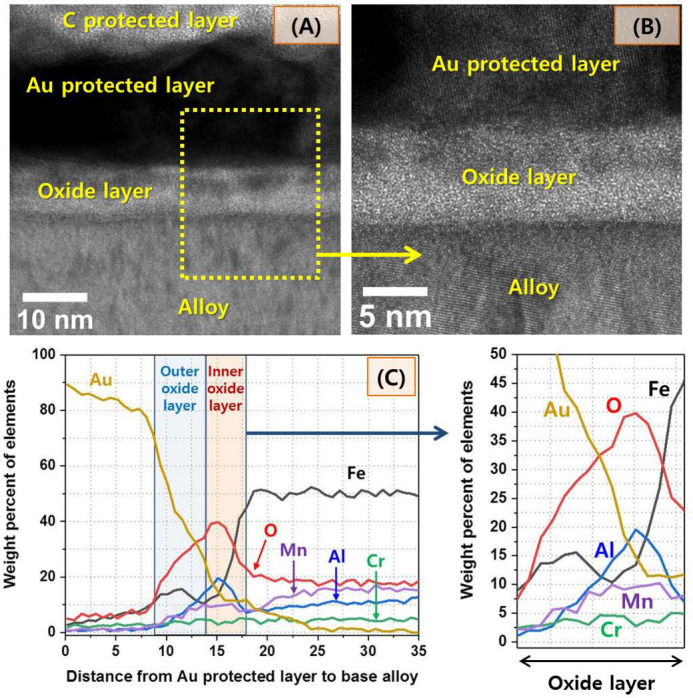
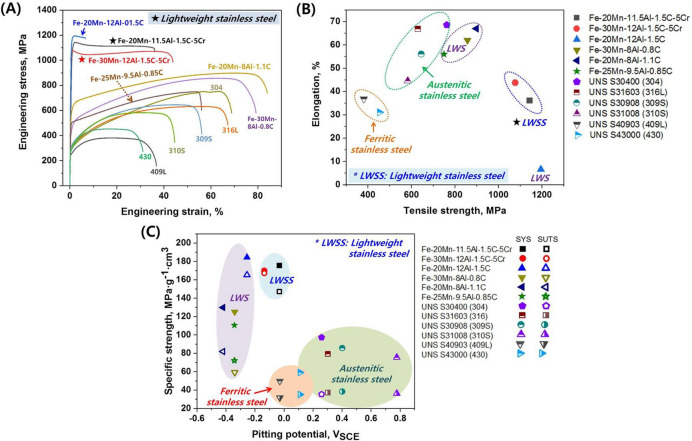
Steel is the global backbone material of industrialized societies, with more than 1.8 billion tons produced per year. However, steel-containing structures decay due to corrosion, destroying annually 3.4% (2.5 trillion US$) of the global gross domestic product. Besides this huge loss in value, a solution to the corrosion problem at minimum environmental impact would also leverage enhanced product longevity, providing an immense contribution to sustainability. Here, we report a leap forward toward this aim through the development of a new family of low-density stainless steels with ultra-high strength (> 1 GPa) and high ductility (> 35%). The alloys are based on the Fe-(20-30)Mn-(11.5-12.0)Al-1.5C-5Cr (wt%) system and are strengthened by dispersions of nano-sized FeAlC-type κ-carbide. The alloying with Cr enhances the ductility without sacrificing strength, by suppressing the precipitation of κ-carbide and thus stabilizing the austenite matrix. The formation of a protective Al-rich oxide film on the surface lends the alloys outstanding resistance to pitting corrosion similar to ferritic stainless steels. The new alloy class has thus the potential to replace commercial stainless steels as it has much higher strength at similar formability, 17% lower mass density and lower environmental impact, qualifying it for demanding lightweight, corrosion resistant, high-strength structural parts.
钢铁是工业化社会的全球支柱性材料,每年产量超过18亿吨。然而,含钢结构会因腐蚀而损坏,每年造成全球国内生产总值3.4%(2.5万亿美元)的损失。除了巨大的价值损失外,以最小环境影响解决腐蚀问题的方案还将提高产品使用寿命,为可持续发展做出巨大贡献。在此,我们报告通过开发一种新型低密度不锈钢实现了这一目标的重大进展,该不锈钢具有超高强度(>1吉帕)和高延展性(>35%)。这些合金基于Fe-(20-30)Mn-(11.5-12.0)Al-1.5C-5Cr(重量百分比)体系,并通过纳米级FeAlC型κ碳化物弥散体强化。与铬合金化通过抑制κ碳化物的析出从而稳定奥氏体基体,在不牺牲强度的情况下提高了延展性。在表面形成富含铝的保护性氧化膜,使这些合金具有与铁素体不锈钢类似的出色耐点蚀性。因此,这种新型合金类材料有潜力取代商用不锈钢,因为它在相似的可成形性下具有更高的强度、低17%的质量密度和更低的环境影响,适用于要求苛刻的轻质、耐腐蚀、高强度结构部件。