Liu Jinhui, Mei Jie, Li Siyue, Wu Zhipeng, Zhang Yan
Department of Gynecology, The First Affiliated Hospital of Nanjing Medical University, Nanjing, 210029 Jiangsu China.
Department of Oncology, Wuxi People's Hospital Affiliated to Nanjing Medical University, Wuxi, 214023 Jiangsu China.
Cancer Cell Int. 2020 Jul 20;20:329. doi: 10.1186/s12935-020-01428-z. eCollection 2020.
Endometrial cancer (EnCa) ranks fourth in menace within women's malignant tumors. Large numbers of studies have proven that functional genes can change the process of tumors by regulating the cell cycle, thereby achieving the goal of targeted therapy.
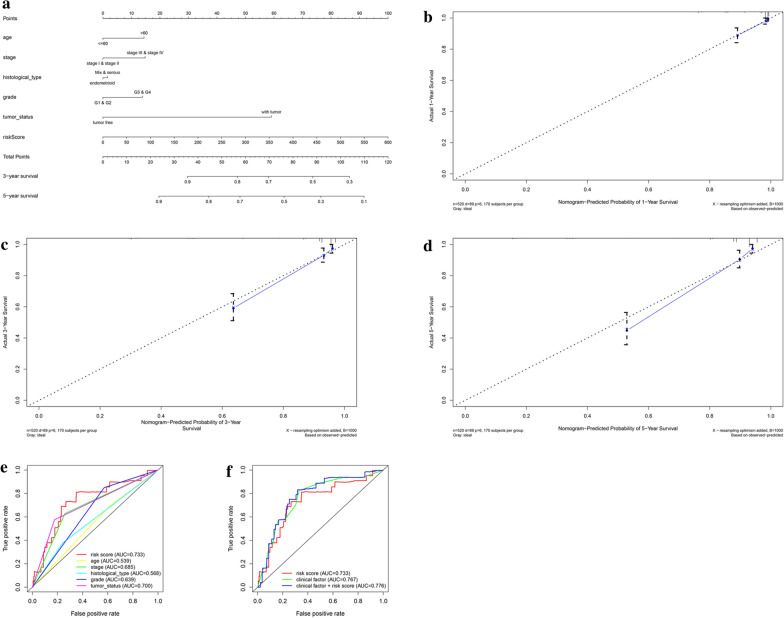
The transcriptional data of EnCa samples obtained from the TCGA database was analyzed. A battery of bioinformatics strategies, which included GSEA, Cox and LASSO regression analysis, establishment of a prognostic signature and a nomogram for overall survival (OS) assessment. The GEPIA and CPTAC analysis were applied to validate the dysregulation of hub genes. For mutation analysis, the "maftools" package was used.
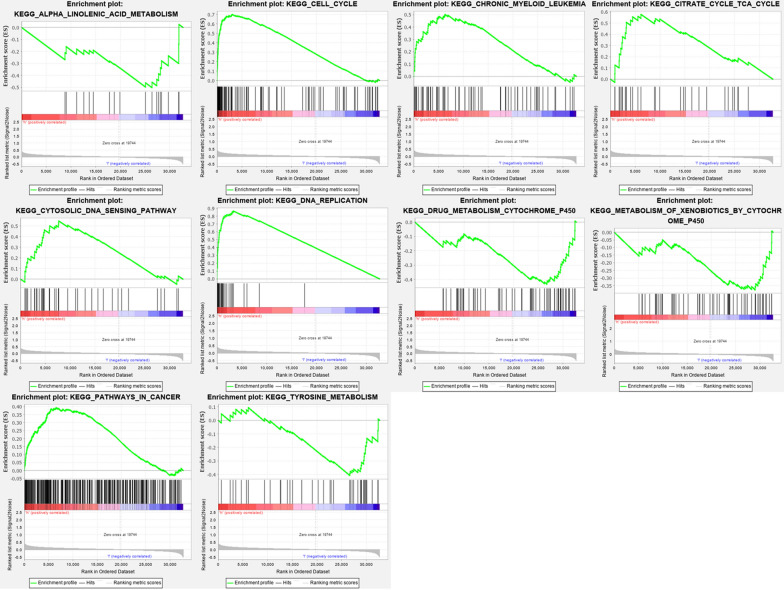
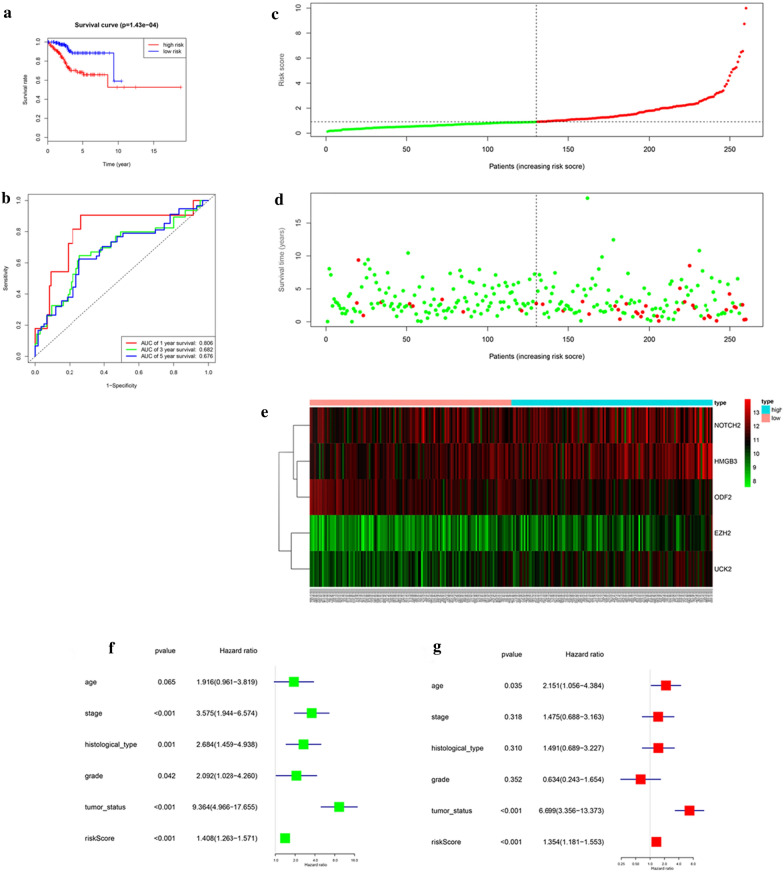
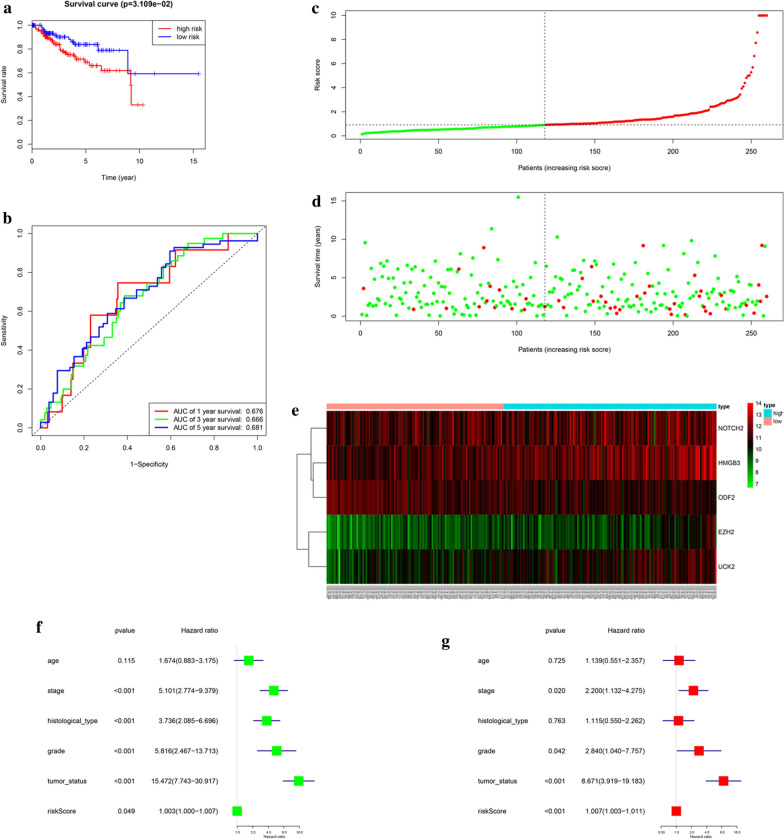
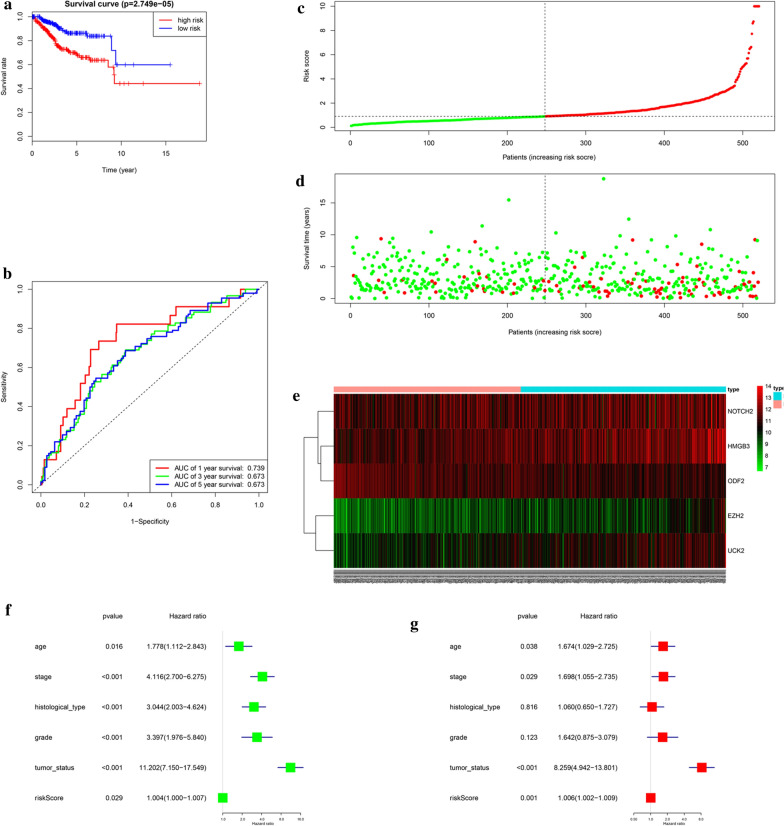
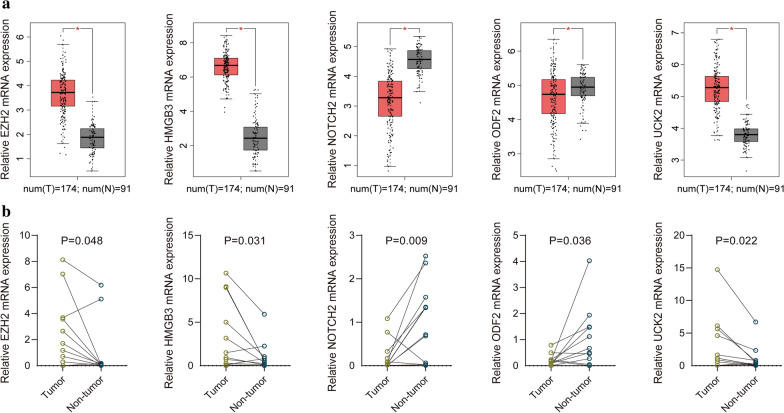
GSEA identified that cell cycle was the most associated pathway to EnCa. Five cell cycle-related genes including HMGB3, EZH2, NOTCH2, UCK2 and ODF2 were identified as prognosis-related genes to build a prognostic signature. Based on this model, the EnCa patients could be divided into low- and high-risk groups, and patients with high-risk score exhibited poorer OS. Time-dependent ROC and Cox regression analyses revealed that the 5-gene signature could predict EnCa prognosis exactly and independently. GEPIA and CPTAC validation exhibited that these genes were notably dysregulated between EnCa and normal tissues. Lower mutation rates of PTEN, TTN, ARID1A, and etc. were found in samples with high-risk score compared with that with low-risk score. GSEA analysis suggested that the samples of the low- and high-risk groups were concentrated on various pathways, which accounted for the different oncogenic mechanisms in patients in two groups.
The current research construct a 5-gene signature to evaluate prognosis of EnCa patients, which may innovative clinical application of prognostic assessment.
子宫内膜癌(EnCa)在女性恶性肿瘤中的威胁程度排名第四。大量研究证明,功能基因可通过调节细胞周期改变肿瘤进程,从而实现靶向治疗的目标。
分析从TCGA数据库获得的EnCa样本的转录数据。采用一系列生物信息学策略,包括基因集富集分析(GSEA)、Cox和LASSO回归分析,建立预后特征和用于总生存期(OS)评估的列线图。应用GEPIA和CPTAC分析来验证关键基因的失调情况。对于突变分析,使用“maftools”软件包。
GSEA确定细胞周期是与EnCa最相关的通路。鉴定出包括HMGB3、EZH2、NOTCH2、UCK2和ODF2在内的五个细胞周期相关基因作为预后相关基因,以构建预后特征。基于该模型,EnCa患者可分为低风险和高风险组,高风险评分的患者OS较差。时间依赖性ROC和Cox回归分析表明,5基因特征可准确且独立地预测EnCa预后。GEPIA和CPTAC验证表明,这些基因在EnCa组织和正常组织之间存在明显失调。与低风险评分的样本相比,高风险评分的样本中PTEN、TTN、ARID1A等的突变率较低。GSEA分析表明,低风险和高风险组的样本集中在各种通路上,这解释了两组患者不同的致癌机制。
当前研究构建了一个5基因特征来评估EnCa患者的预后,这可能为预后评估带来创新性的临床应用。