Department of Veterinary Microbiology and Preventive Medicine, Iowa State University, Ames, IA, United States of America.
Interdepartmental Microbiology Graduate Program, Iowa State University, Ames, IA, United States of America.
PLoS One. 2020 Jul 23;15(7):e0229192. doi: 10.1371/journal.pone.0229192. eCollection 2020.
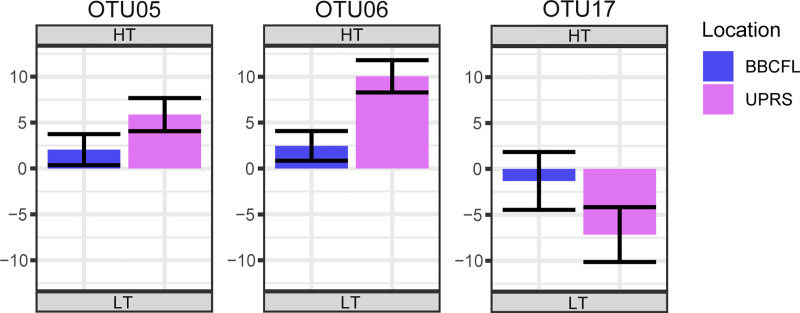
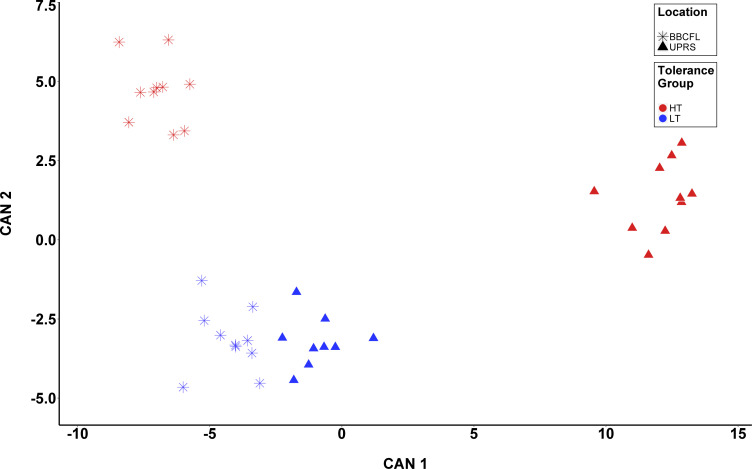
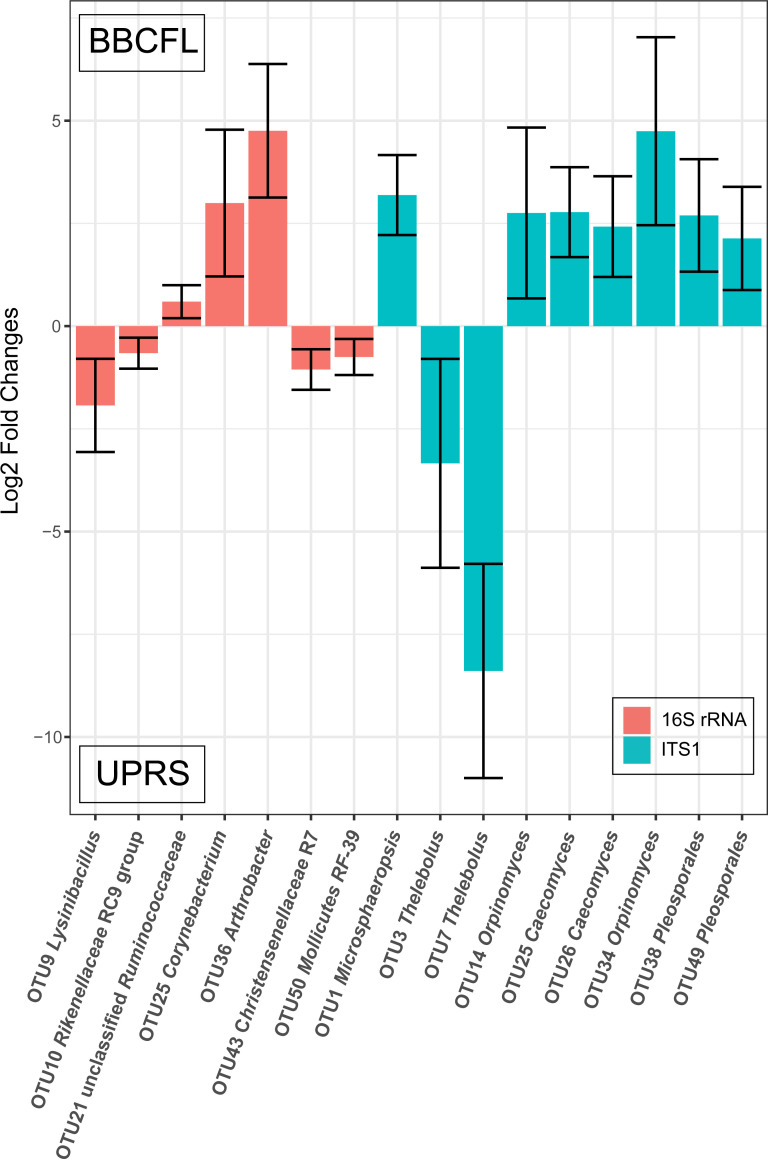
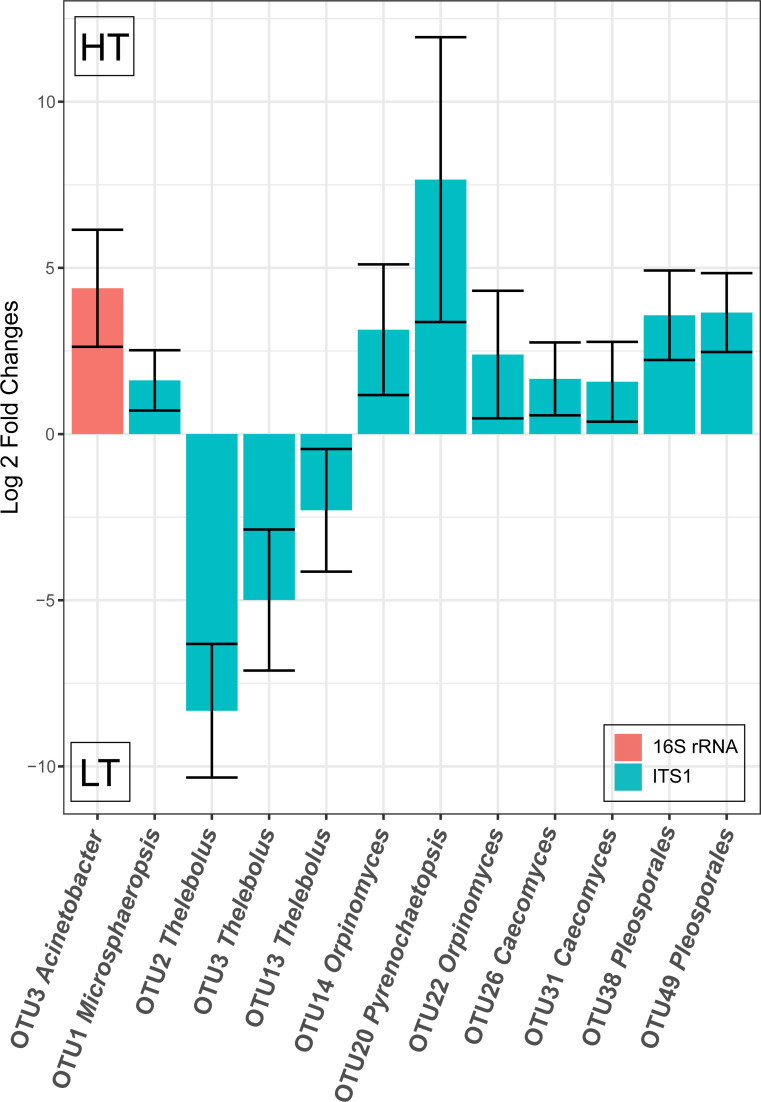
Tall fescue (Lolium arundinaceum) is a widely used forage grass which shares a symbiosis with the endophytic fungus Epichloë coenophiala. The endophyte produces an alkaloid toxin that provides herbivory, heat and drought resistance to the grass, but can cause fescue toxicosis in grazing livestock. Fescue toxicosis can lead to reduced weight gain and milk yields resulting in significant losses to the livestock industry. The objective of this study was to identify bacterial and fungal communities associated with fescue toxicosis tolerance. In this trial, 149 Angus cows across two farms were continuously exposed to toxic, endophyte-infected, fescue for a total of 13 weeks. Of those 149 cows, 40 were classified into either high (HT) or low (LT) tolerance groups according to their growth performance (weight gain). 20 HT and 20 LT cattle balanced by farm were selected for amplicon sequencing to compare the fecal microbiota of the two tolerance groups. This study reveals significantly (q<0.05) different bacterial and fungal microbiota between HT and LT cattle, and indicates that fungal phylotypes may be important for an animal's response to fescue toxicosis: We found that fungal phylotypes affiliating to the Neocallimastigaceae, which are known to be important fiber-degrading fungi, were consistently more abundant in the HT cattle. Whereas fungal phylotypes related to the genus Thelebolus were more abundant in the LT cattle. This study also found more pronounced shifts in the microbiota in animals receiving higher amounts of the toxin. We identified fungal phylotypes which were consistently more abundant either in HT or LT cattle and may thus be associated with the respective animal's response to fescue toxicosis. Our results thus suggest that some fungal phylotypes might be involved in mitigating fescue toxicosis.
高羊茅(Lolium arundinaceum)是一种广泛使用的饲料草,与内生真菌 Epichloë coenophiala 共生。内生真菌产生一种生物碱毒素,使草具有抗食草性、耐热和耐旱性,但会导致放牧家畜中毒。羊茅草中毒会导致体重增加和产奶量减少,给畜牧业造成重大损失。本研究旨在确定与羊茅草中毒耐受性相关的细菌和真菌群落。在这项试验中,两个农场的 149 头安格斯牛连续 13 周接触有毒的内生真菌感染的羊茅草。在这 149 头牛中,根据生长性能(体重增加)将 40 头分为高(HT)或低(LT)耐受组。按农场平衡选择 20 头 HT 和 20 头 LT 牛进行扩增子测序,以比较两组牛的粪便微生物群。本研究揭示了 HT 和 LT 牛之间的细菌和真菌微生物群存在显著差异(q<0.05),并表明真菌分类群可能对动物对羊茅草中毒的反应很重要:我们发现,属于 Neocallimastigaceae 的真菌分类群,已知是重要的纤维降解真菌,在 HT 牛中始终更为丰富。而与 Thelebolus 属相关的真菌分类群在 LT 牛中更为丰富。本研究还发现,在接受更高剂量毒素的动物中,微生物群的变化更为明显。我们确定了在 HT 或 LT 牛中始终更为丰富的真菌分类群,因此可能与相应动物对羊茅草中毒的反应有关。我们的结果表明,一些真菌分类群可能参与减轻羊茅草中毒。