Laboratorio de Estudios de Interacción Celular en Reproducción y Cáncer, Instituto de Biología y Medicina Experimental (IBYME), Consejo Nacional de Investigaciones Científicas y Técnicas de Argentina (CONICET)‑Fundación IBYME (FIBYME), Ciudad Autónoma de Buenos Aires 1428ADN, Argentina.
Centro de Investigaciones Inmunológicas, Básicas y Aplicadas, Facultad de Ciencias Médicas, Universidad Nacional de La Plata, La Plata, Buenos Aires 1900, Argentina.
Oncol Rep. 2020 Sep;44(3):873-886. doi: 10.3892/or.2020.7648. Epub 2020 Jun 16.
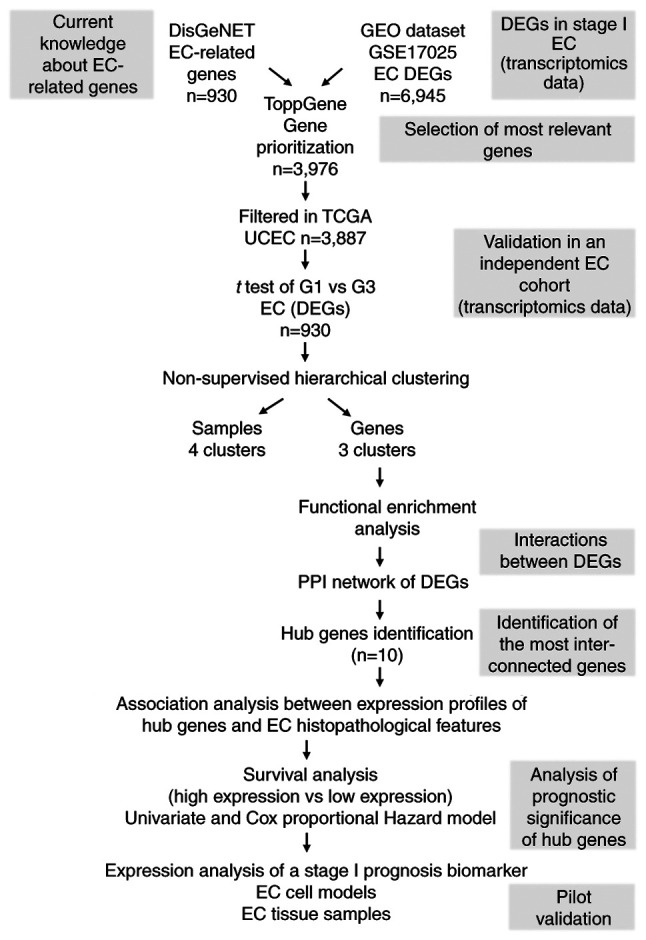
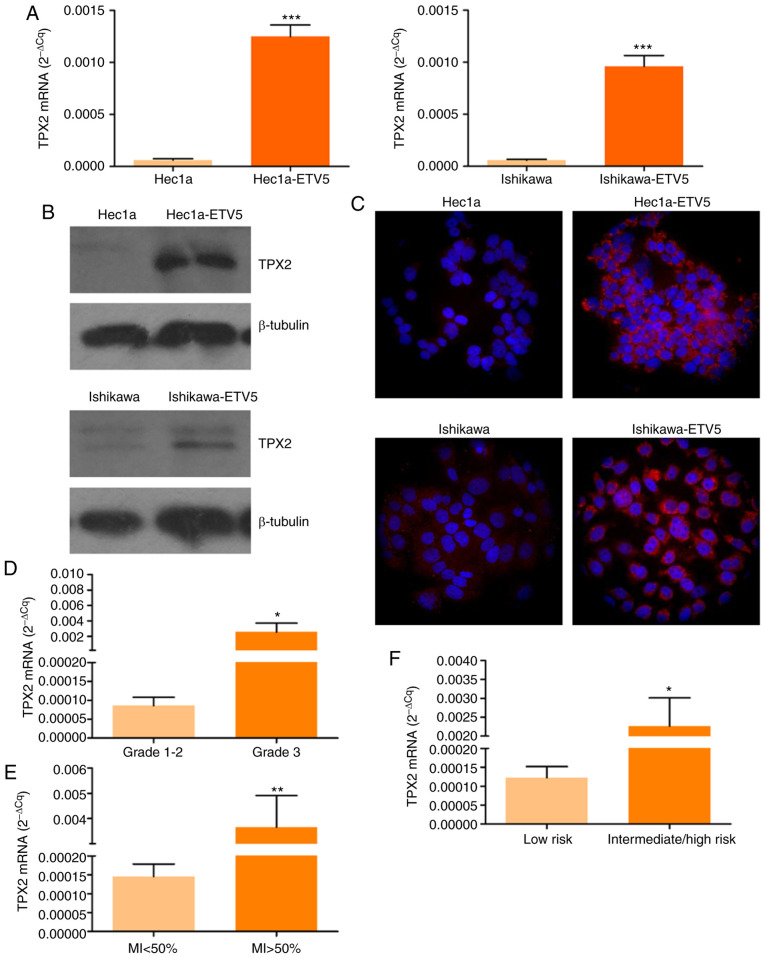
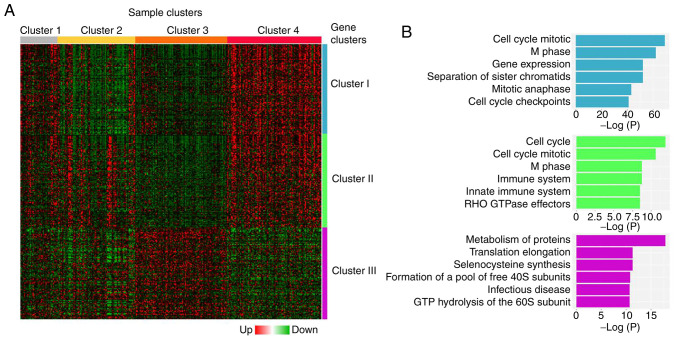
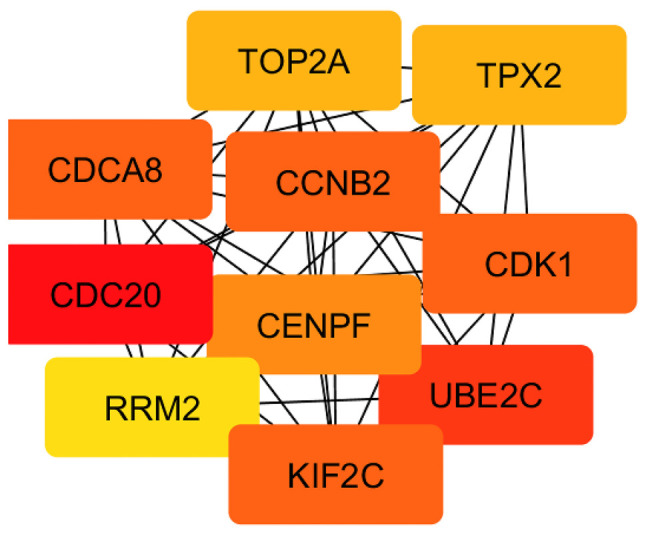
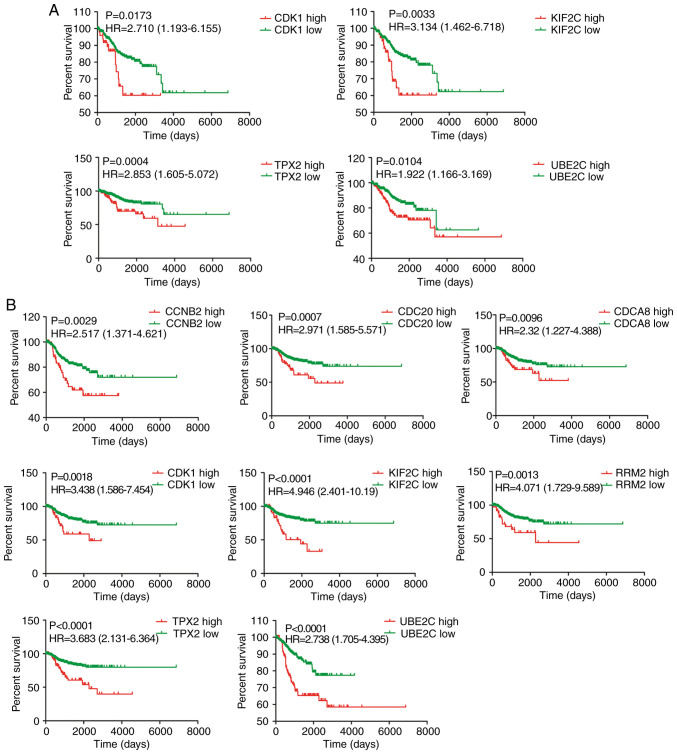
Endometrial cancer (EC) is the sixth most common cancer in women worldwide. Early diagnosis is critical in recurrent EC management. The present study aimed to identify biomarkers of EC early recurrence using a workflow that combined text and data mining databases (DisGeNET, Gene Expression Omnibus), a prioritization algorithm to select a set of putative candidates (ToppGene), protein‑protein interaction network analyses (Search Tool for the Retrieval of Interacting Genes, cytoHubba), association analysis of selected genes with clinicopathological parameters, and survival analysis (Kaplan‑Meier and Cox proportional hazard ratio analyses) using a The Cancer Genome Atlas cohort. A total of 10 genes were identified, among which the targeting protein for Xklp2 (TPX2) was the most promising independent prognostic biomarker in stage I EC. TPX2 expression (mRNA and protein) was higher (P<0.0001 and P<0.001, respectively) in ETS variant transcription factor 5‑overexpressing Hec1a and Ishikawa cells, a previously reported cell model of aggressive stage I EC. In EC biopsies, TPX2 mRNA expression levels were higher (P<0.05) in high grade tumors (grade 3) compared with grade 1‑2 tumors (P<0.05), in tumors with deep myometrial invasion (>50% compared with <50%; P<0.01), and in intermediate‑high recurrence risk tumors compared with low‑risk tumors (P<0.05). Further validation studies in larger and independent EC cohorts will contribute to confirm the prognostic value of TPX2.
子宫内膜癌(EC)是全球女性中第六常见的癌症。在 EC 的复发性管理中,早期诊断至关重要。本研究旨在使用结合文本和数据挖掘数据库(DisGeNET、Gene Expression Omnibus)、用于选择一组假定候选物的优先级算法(ToppGene)、蛋白质-蛋白质相互作用网络分析(Search Tool for the Retrieval of Interacting Genes、cytoHubba)、所选基因与临床病理参数的关联分析以及使用癌症基因组图谱队列进行的生存分析(Kaplan-Meier 和 Cox 比例风险比分析)的工作流程,来确定 EC 早期复发的生物标志物。确定了 10 个基因,其中 Xklp2(TPX2)的靶向蛋白是 I 期 EC 中最有前途的独立预后生物标志物。在 ETS 变体转录因子 5 过表达的 Hec1a 和 Ishikawa 细胞中,TPX2 的表达(mRNA 和蛋白质)更高(P<0.0001 和 P<0.001),这是先前报道的侵袭性 I 期 EC 的细胞模型。在 EC 活检中,TPX2 mRNA 表达水平在高级别肿瘤(3 级)中高于低级别肿瘤(1-2 级)(P<0.05),在深肌层浸润(>50%比<50%;P<0.01)的肿瘤中高于浸润深度<50%的肿瘤,以及在中高危复发风险肿瘤中高于低危肿瘤(P<0.05)。在更大和独立的 EC 队列中进行进一步验证研究将有助于确认 TPX2 的预后价值。