Department of Pathology, School of Basic Medicine Sciences, Guangdong Medical University, Zhanjiang, Guangdong 524023, P.R. China.
Hainan Provincial Key Laboratory for Tropical Cardiovascular Diseases Research and Key Laboratory of Emergency and Trauma of Ministry of Education, Institute of Cardiovascular Research of The First Affiliated Hospital, Hainan Medical University, Haikou, Hainan 571199, P.R. China.
Int J Mol Med. 2020 Sep;46(3):1225-1238. doi: 10.3892/ijmm.2020.4661. Epub 2020 Jun 26.
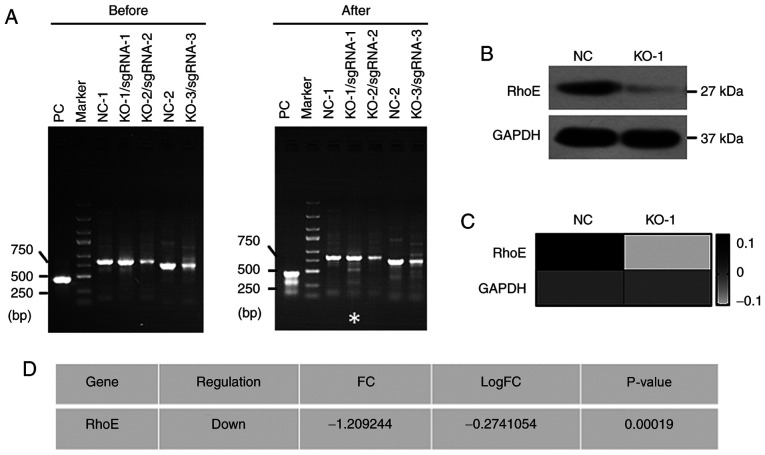
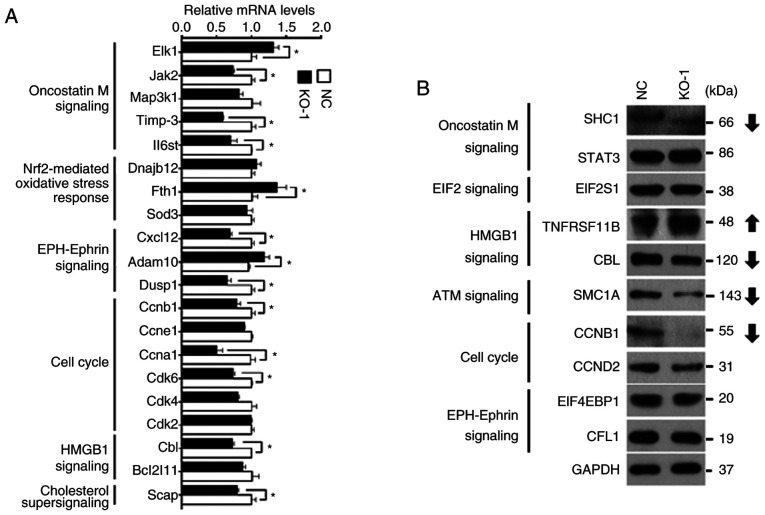
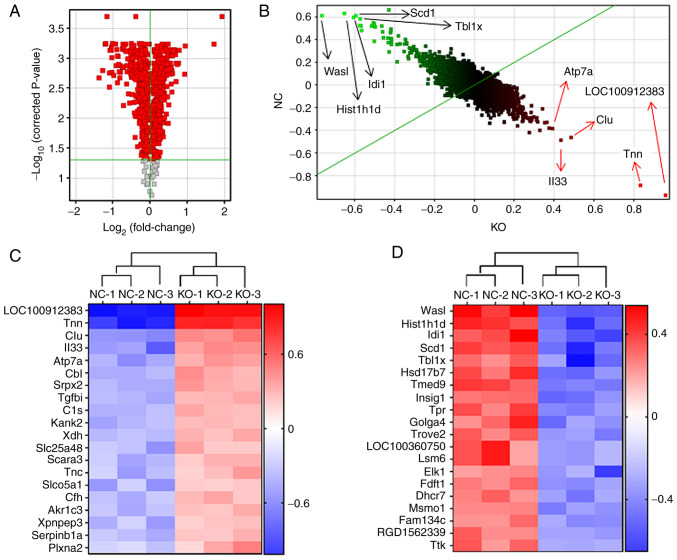
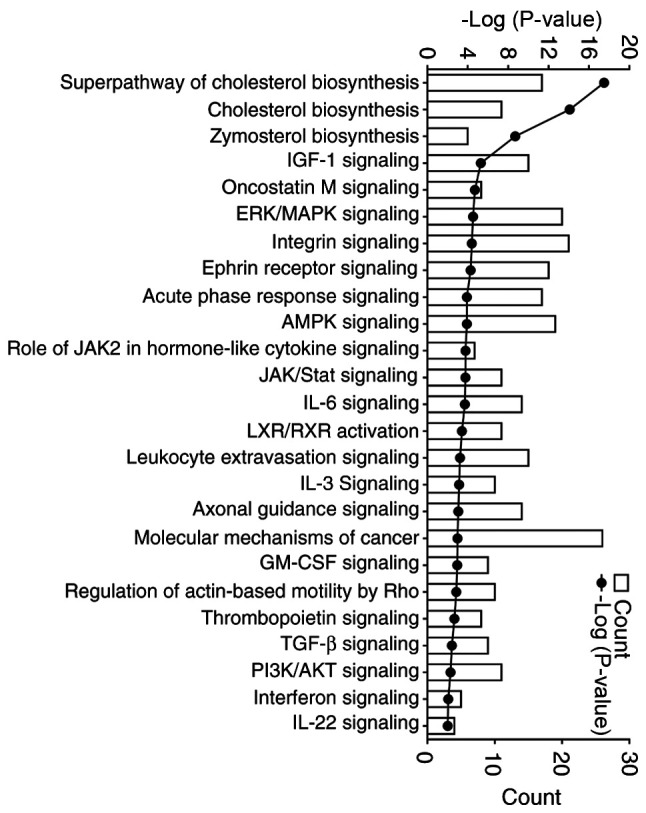
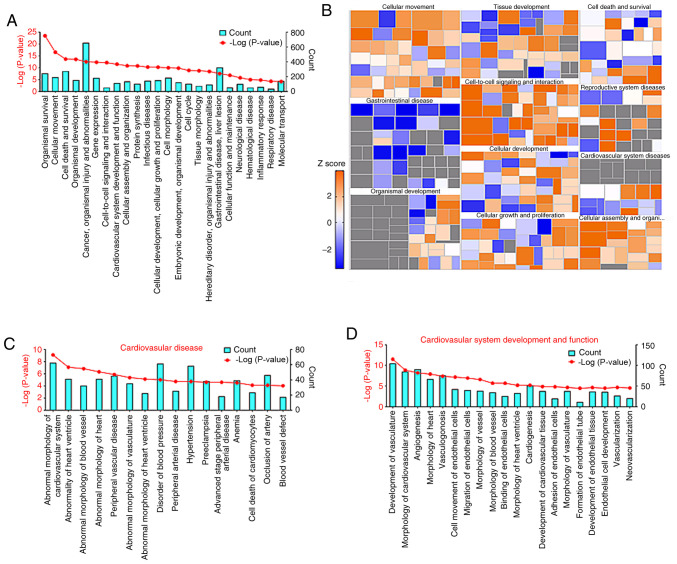
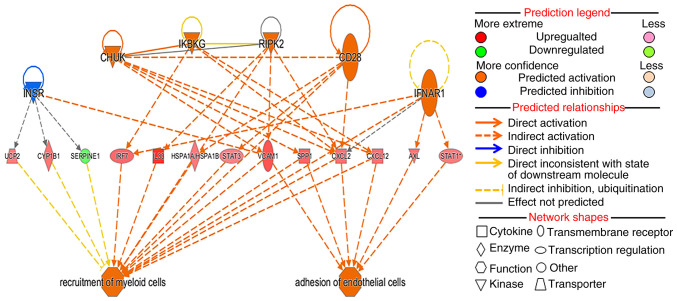
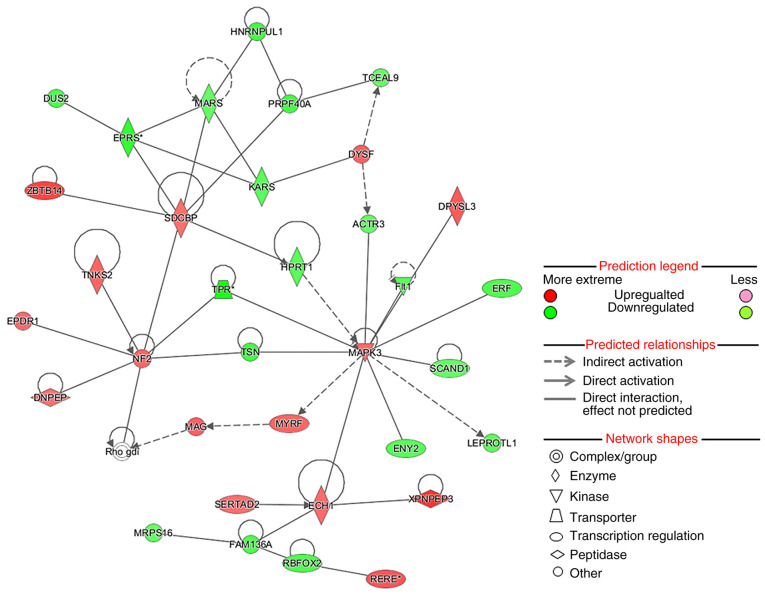
RhoE/Rnd3 is an atypical member of the Rho superfamily of proteins, However, the global biological function profile of this protein remains unsolved. In the present study, a RhoE‑knockout H9C2 cardiomyocyte cell line was established using CRISPR/Cas9 technology, following which differentially expressed genes (DEGs) between the knockout and wild‑type cell lines were screened using whole genome expression gene chips. A total of 829 DEGs, including 417 upregulated and 412 downregulated, were identified using the threshold of fold changes ≥1.2 and P<0.05. Using the ingenuity pathways analysis system with a threshold of ‑Log (P‑value)>2, 67 canonical pathways were found to be enriched. Many of the detected signaling pathways, including that of oncostatin M signaling, were found to be associated with the inflammatory response. Subsequent disease and function analysis indicated that apart from cardiovascular disease and development function, RhoE may also be involved in other diseases and function, including organismal survival, cancer, organismal injury and abnormalities, cell‑to‑cell signaling and interaction, and molecular transport. In addition, 885 upstream regulators were enriched, including 59 molecules that were predicated to be strongly activated (Z‑score >2) and 60 molecules that were predicated to be significantly inhibited (Z‑scores <‑2). In particular, 33 regulatory effects and 25 networks were revealed to be associated with the DEGs. Among them, the most significant regulatory effects were 'adhesion of endothelial cells' and 'recruitment of myeloid cells' and the top network was 'neurological disease', 'hereditary disorder, organismal injury and abnormalities'. In conclusion, the present study successfully edited the RhoE gene in H9C2 cells using CRISPR/Cas9 technology and subsequently analyzed the enriched DEGs along with their associated canonical signaling pathways, diseases and functions classification, upstream regulatory molecules, regulatory effects and interaction networks. The results of the present study should facilitate the discovery of the global biological and functional properties of RhoE and provide new insights into role of RhoE in human diseases, especially those in the cardiovascular system.
RhoE/Rnd3 是 Rho 蛋白超家族的一个非典型成员,然而,该蛋白的全局生物学功能特征仍未得到解决。在本研究中,使用 CRISPR/Cas9 技术建立了 RhoE 敲除 H9C2 心肌细胞系,随后使用全基因组表达基因芯片筛选敲除和野生型细胞系之间的差异表达基因(DEGs)。使用倍数变化≥1.2 和 P<0.05 的阈值,共鉴定出 829 个 DEGs,包括 417 个上调基因和 412 个下调基因。使用阈值为 -Log(P 值)>2 的 ingenuity 途径分析系统,发现 67 个经典途径被富集。许多检测到的信号通路,包括 Oncostatin M 信号通路,与炎症反应有关。随后的疾病和功能分析表明,除了心血管疾病和发育功能外,RhoE 还可能与其他疾病和功能有关,包括生物生存、癌症、生物损伤和异常、细胞间信号传递和相互作用以及分子运输。此外,富集了 885 个上游调节剂,包括 59 个预测强烈激活(Z 分数>2)的分子和 60 个预测显著抑制(Z 分数<‑2)的分子。特别是,有 33 个调节作用和 25 个网络与 DEGs 相关。其中,最显著的调节作用是“内皮细胞黏附”和“髓样细胞募集”,顶级网络是“神经疾病”、“遗传疾病、生物损伤和异常”。综上所述,本研究成功地使用 CRISPR/Cas9 技术编辑了 H9C2 细胞中的 RhoE 基因,随后分析了富集的 DEGs 及其相关的经典信号通路、疾病和功能分类、上游调节分子、调节作用和相互作用网络。本研究的结果应有助于发现 RhoE 的全局生物学和功能特性,并为 RhoE 在人类疾病中的作用提供新的见解,特别是在心血管系统中。