Pipestone Applied Research, Pipestone Veterinary Services, Pipestone, Minnesota, USA.
Department of Diagnostic Medicine/Pathobiology, College of Veterinary Medicine, Kansas State University, Manhattan, Kansas, USA.
Transbound Emerg Dis. 2021 Mar;68(2):833-845. doi: 10.1111/tbed.13749. Epub 2020 Aug 6.
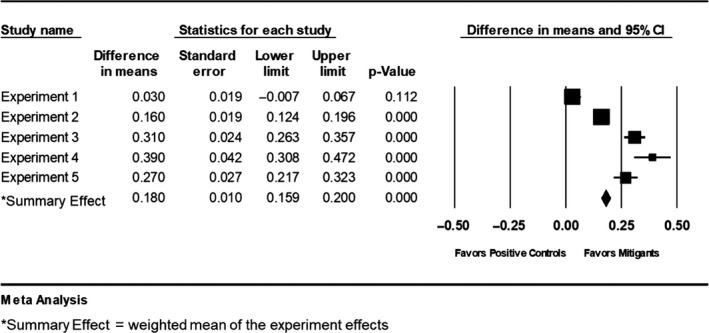
The role of animal feed as a vehicle for the transport and transmission of viral diseases was first identified during the porcine epidemic diarrhoea virus (PEDV) epidemic in North America. Since that time, various feed additives have been evaluated at the laboratory level to measure their effect on viral viability and infectivity in contaminated feed using bioassay piglet models. While a valid first step, the conditions of these studies were not representative of commercial swine production. Therefore, the purpose of this study was to evaluate the ability of feed additives to mitigate the risk of virus-contaminated feed using a model based on real-world conditions. This new model used an 'ice-block' challenge, containing equal concentrations of porcine reproductive and respiratory syndrome virus (PRRSV), Senecavirus A (SVA) and PEDV, larger populations of pigs, representative commercial facilities and environments, along with realistic volumes of complete feed supplemented with selected additives. Following supplementation, the ice block was manually dropped into designated feed bins and pigs consumed feed by natural feeding behaviour. After challenge, samples were collected at the pen level (feed troughs, oral fluids) and at the animal level (clinical signs, viral infection, growth rate, and mortality) across five independent experiments involving 15 additives. In 14 of the additives tested, pigs on supplemented diets had significantly greater average daily gain (ADG), significantly lower clinical signs and infection levels, and numerically lower mortality rates compared to non-supplemented controls. In conclusion, the majority of the additives evaluated mitigated the effects of PRRSV 174, PEDV and SVA in contaminated feed, resulting in improved health and performance.
动物饲料作为病毒传播媒介的作用首次在北美猪流行性腹泻病毒(PEDV)疫情中被发现。自那时以来,各种饲料添加剂已在实验室水平进行了评估,使用生物测定仔猪模型来衡量其对污染饲料中病毒活力和感染力的影响。虽然这是一个有效的第一步,但这些研究的条件不能代表商业养猪生产的实际情况。因此,本研究的目的是使用基于实际情况的模型来评估饲料添加剂减轻受病毒污染饲料风险的能力。这种新模型使用了含有等量猪繁殖与呼吸综合征病毒(PRRSV)、塞尼卡病毒 A(SVA)和 PEDV 的“冰块”挑战,包含更大的猪群、具有代表性的商业设施和环境,以及添加了选定添加剂的真实量的全价饲料。补充添加剂后,冰块会被手动放入指定的饲料箱中,猪会通过自然进食行为消耗饲料。挑战后,在五个独立实验中,在每个实验中都从栏位水平(饲料槽、口腔液)和动物水平(临床症状、病毒感染、生长速度和死亡率)采集样本,共涉及 15 种添加剂。在测试的 14 种添加剂中,与未添加添加剂的对照组相比,添加了这些添加剂的猪的平均日增重(ADG)显著增加,临床症状和感染水平显著降低,死亡率也呈降低趋势。总之,评估的大多数添加剂减轻了污染饲料中 PRRSV 174、PEDV 和 SVA 的影响,从而改善了健康和生产性能。