Department of Communication, Renmin University of China, China.
Department of Psychology, Florida State University, FL, USA; School of Psychology, University of Queensland, Brisbane, Australia.
Psychiatry Res. 2020 Oct;292:113297. doi: 10.1016/j.psychres.2020.113297. Epub 2020 Jul 13.
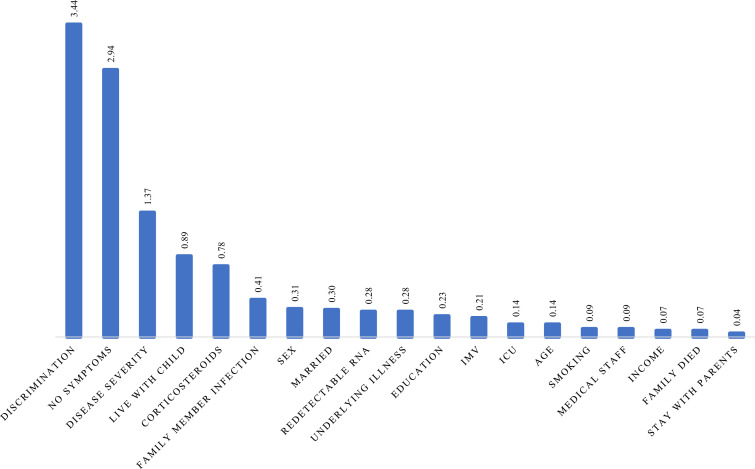
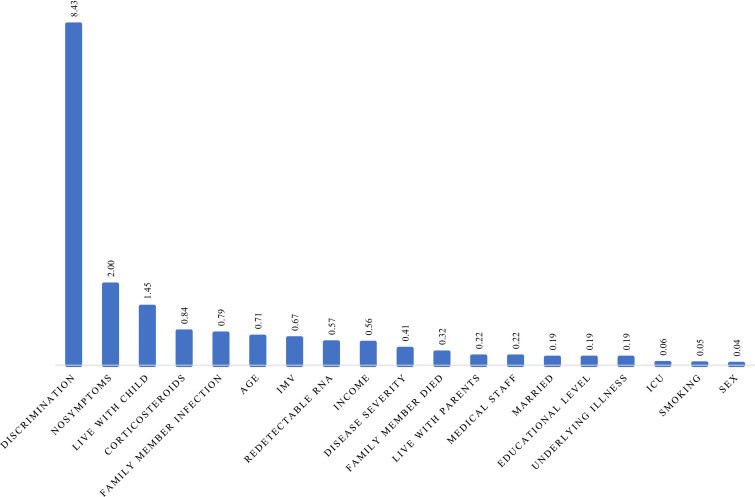
The coronavirus disease 2019 (COVID-19) pandemic can have a profound impact on the mental health of patients who survived the illness. However, little is known about the prevalence rate of mental health disorders among hospital discharged COVID-19 patients and its associated factors. A cross-sectional survey of hospital discharged patients was conducted April 11-22, 2020 in Wuhan, China (where the pandemic began). 675 participants completed the survey, including 90 (13.3%) medical staff (physicians and nurses who had been ill). We used Fisher's exact test and multivariable logistic regression methods to explore the risk factors associated with mental health problems (anxiety, depression, and PTSD symptoms associated with COVID-19 hospitalization). Adverse mental health effects of COVID-19 are evident after discharge from the hospital, with sleep difficulties highlighted as a central issue. As we found that perceived discrimination was a central predictor of mental illness, preventing and addressing social stigma associated with COVID-19 may be crucial for improving mental health for recovered patients.
2019 年冠状病毒病(COVID-19)大流行可能对幸存患者的心理健康产生深远影响。然而,对于出院的 COVID-19 患者中心理健康障碍的患病率及其相关因素知之甚少。2020 年 4 月 11 日至 22 日,在中国武汉(疫情开始的地方)进行了一项出院患者的横断面调查。675 名参与者完成了调查,其中 90 名(13.3%)为医务人员(曾患病的医生和护士)。我们使用 Fisher 精确检验和多变量逻辑回归方法探讨了与心理健康问题相关的风险因素(与 COVID-19 住院相关的焦虑、抑郁和 PTSD 症状)。出院后,COVID-19 对心理健康的不良影响明显,睡眠困难是一个突出的问题。由于我们发现感知歧视是精神疾病的一个核心预测因素,因此预防和解决与 COVID-19 相关的社会污名可能对改善康复患者的心理健康至关重要。