Institute of Molecular and Cell Biology (IMCB), Singapore 138673, Singapore.
Department of Pathology, NUS, Singapore 117597, Singapore.
Int J Mol Sci. 2020 Jul 21;21(14):5164. doi: 10.3390/ijms21145164.
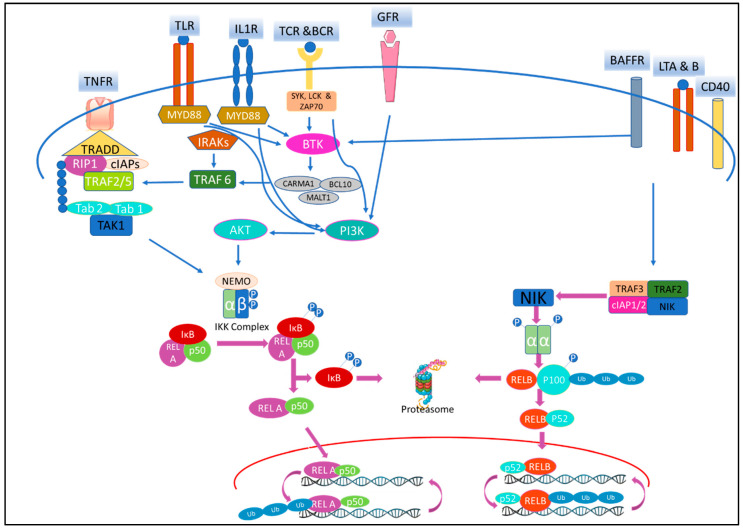
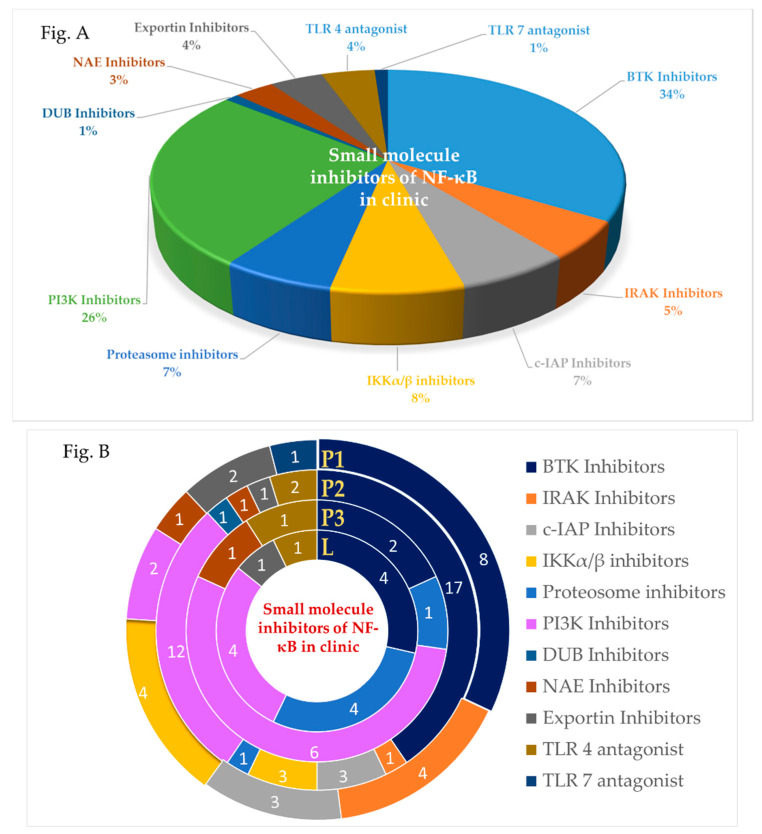
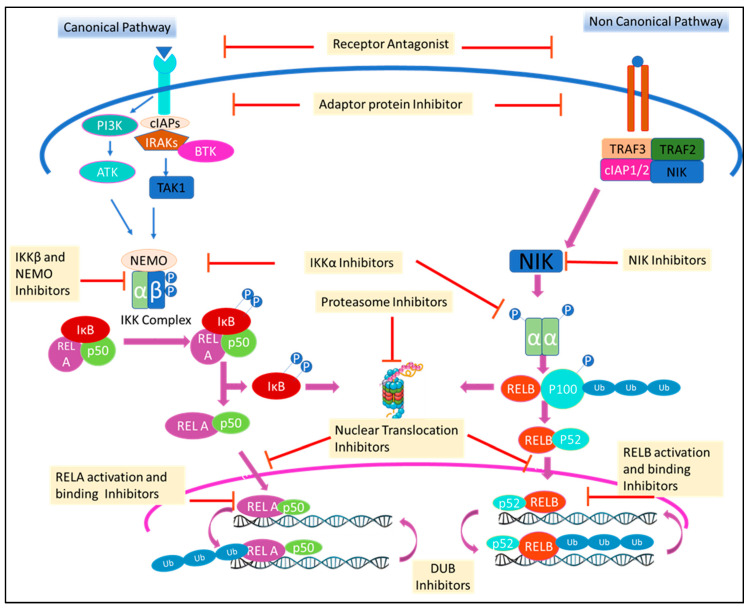
Nuclear factor kappa B (NF-κB) signaling is implicated in all major human chronic diseases, with its role in transcription of hundreds of gene well established in the literature. This has propelled research into targeting the NF-κB pathways for modulating expression of those genes and the diseases mediated by them. In-spite of the critical, but often promiscuous role played by this pathway and the inhibition causing adverse drug reaction, currently many biologics, macromolecules, and small molecules that modulate this pathway are in the market or in clinical trials. Furthermore, many marketed drugs that were later found to also have NF-κB targeting activity were repurposed for new therapeutic interventions. Despite the rising importance of biologics in drug discovery, small molecules got around 76% of US-FDA (Food and Drug Administration-US) approval in the last decade. This encouraged us to review information regarding clinically relevant small molecule inhibitors of the NF-κB pathway from cell surface receptor stimulation to nuclear signaling. We have also highlighted the underexplored targets in this pathway that have potential to succeed in clinic.
核因子 kappa B(NF-κB)信号通路与人类的多种慢性疾病相关,其在数百个基因转录中的作用在文献中已有明确记载。这促使人们研究针对 NF-κB 通路的靶点,以调节这些基因的表达及其介导的疾病。尽管该通路具有关键作用,但通常也具有多效性,并且抑制作用会导致药物不良反应,目前已有许多生物制剂、大分子和小分子可调节该通路,这些药物或处于市场中,或处于临床试验阶段。此外,许多后来被发现具有 NF-κB 靶向活性的已上市药物被重新用于新的治疗干预。尽管生物制剂在药物发现中的重要性日益增加,但在过去十年中,小分子在美国食品和药物管理局(Food and Drug Administration-US)获得批准的药物中占了约 76%。这促使我们回顾了从细胞表面受体刺激到核信号转导的 NF-κB 通路的临床相关小分子抑制剂的信息。我们还强调了该通路中具有在临床取得成功潜力的未充分探索靶点。