Jeong Soojung, Oh Jisun, Lim Ji Sun, Kim Sunghee, Jeong Deokyeol, Kim Soo Rin, Kim Jong-Sang
School of Food Science and Biotechnology (BK21 Plus), Kyungpook National University, Daegu 41566, Korea.
Institute of Agricultural Science and Technology, Kyungpook National University, Daegu 41566, Korea.
Foods. 2020 Jul 18;9(7):954. doi: 10.3390/foods9070954.
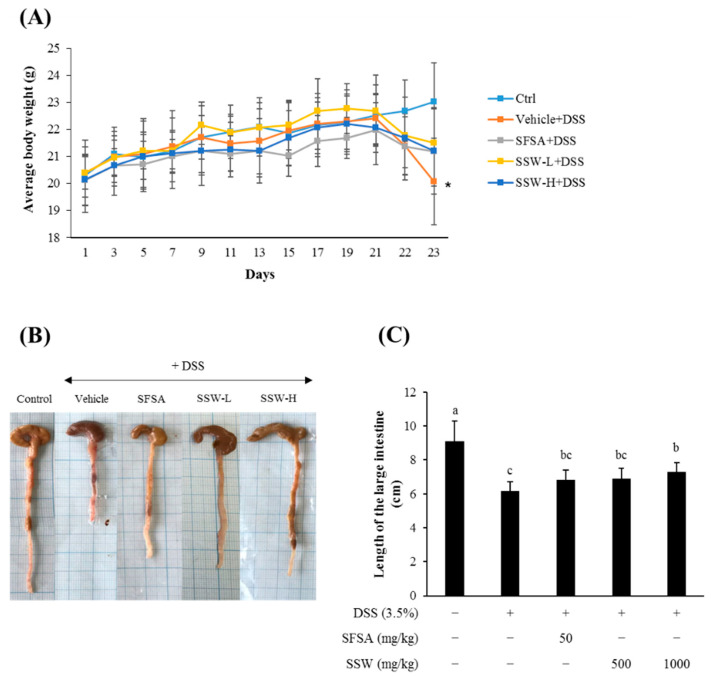
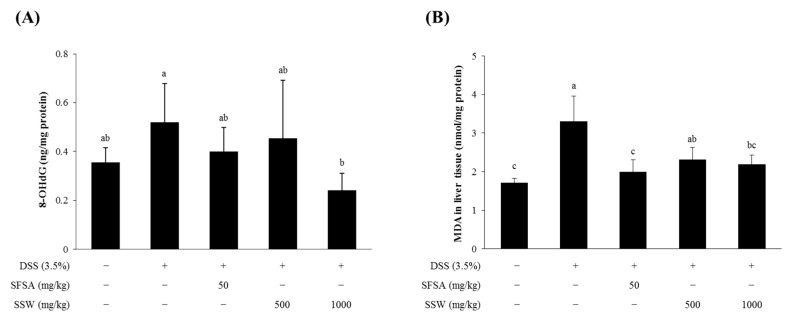
This study was performed to examine the beneficial potential of steamed soybean wastewater (SSW), which is generated during the manufacture of fermented soybean products and usually discarded as a by-product. The SSW was found to contain considerable amounts of isoflavones and had concentration-dependent radical scavenging capabilities. Moreover, oral administration of SSW effectively prevented colonic damage induced by dextran sulfate sodium (DSS), based on improvement of morphological and histological features, reduction of oxidative stress indicators, suppression of proinflammatory cytokine production, downregulation of inflammatory marker expression in the colonic tissue, and inhibition of the inflammatory activation of macrophages. It suggests that SSW could prevent intestinal inflammation in humans, although its efficacy should be verified through careful study design in humans. These findings have implications for enhancement of the value-added of SSW and for reduction of wastewater treatment costs incurred by the food industry.
本研究旨在探讨发酵豆制品生产过程中产生的通常作为副产品丢弃的蒸制大豆废水(SSW)的潜在益处。研究发现,SSW含有大量异黄酮,具有浓度依赖性的自由基清除能力。此外,口服SSW可有效预防葡聚糖硫酸钠(DSS)诱导的结肠损伤,这基于形态学和组织学特征的改善、氧化应激指标的降低、促炎细胞因子产生的抑制、结肠组织中炎症标志物表达的下调以及巨噬细胞炎症激活的抑制。这表明SSW可能预防人类肠道炎症,尽管其疗效应通过精心设计的人体研究来验证。这些发现对于提高SSW的附加值以及降低食品工业产生的废水处理成本具有重要意义。