
遭受外部硫酸盐侵蚀的混凝土降解机制:不同养护条件的比较
Degradation Mechanism of Concrete Subjected to External Sulfate Attack: Comparison of Different Curing Conditions.
作者信息
Zhao Gaowen, Shi Mei, Guo Mengzhen, Fan Henghui
机构信息
School of Highway, Chang'an University, Xi'an 710064, China.
Department of Geotechnical Engineering, Tongji University, Shanghai 200092, China.
出版信息
Materials (Basel). 2020 Jul 16;13(14):3179. doi: 10.3390/ma13143179.
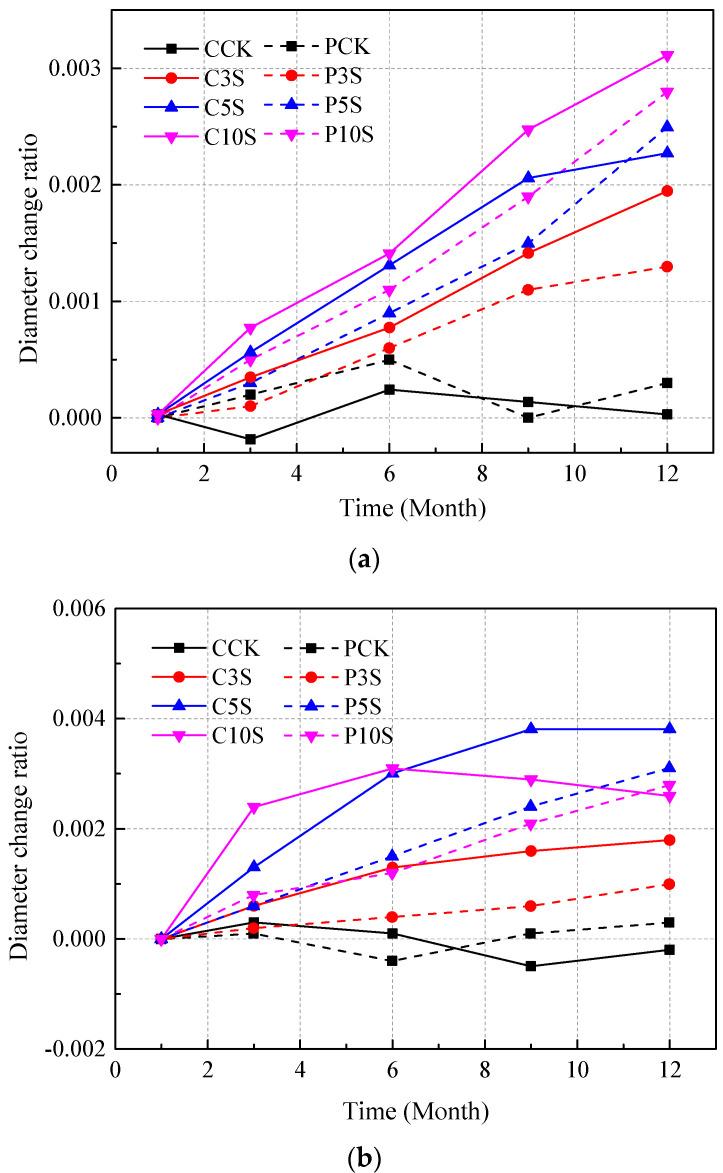
Sulfate induced degradation of concrete brings great damage to concrete structures in saline or offshore areas. The degradation mechanism of cast-in-situ concrete still remains unclear. This paper investigates the degradation process and corresponding mechanism of cast-in-situ concrete when immersed in sulfate-rich corrosive environments. Concrete samples with different curing conditions were prepared and immersed in sulfate solutions for 12 months to simulate the corrosion of precast and cast-in-situ concrete structures, respectively. Tests regarding the changes of physical, chemical, and mechanical properties of concrete samples were conducted and recorded continuously during the immersion. Micro-structural and mineral methods were performed to analyze the changes of concrete samples after immersion. Results indicate that the corrosion process of cast-in-situ concrete is much faster than the degradation of precast concrete. Chemical attack is the main cause of degradation for both precast and cast-in-situ concrete. Concrete in the environment with higher sulfate concentration suffers more severe degradation. The water/cement ratio has a significant influence on the durability of concrete. A lower water/cement ratio results in obviously better resistance against sulfate attack for both precast and cast-in-situ concrete.
硫酸盐导致的混凝土劣化对盐碱地或近海区域的混凝土结构造成了巨大破坏。现浇混凝土的劣化机制仍不明确。本文研究了现浇混凝土在富含硫酸盐的腐蚀环境中浸泡时的劣化过程及相应机制。制备了不同养护条件的混凝土试件,并分别浸泡在硫酸盐溶液中12个月,以模拟预制和现浇混凝土结构的腐蚀情况。在浸泡过程中持续进行并记录了关于混凝土试件物理、化学和力学性能变化的试验。采用微观结构和矿物学方法分析浸泡后混凝土试件的变化。结果表明,现浇混凝土的腐蚀过程比预制混凝土的劣化快得多。化学侵蚀是预制和现浇混凝土劣化的主要原因。硫酸盐浓度较高环境中的混凝土劣化更严重。水灰比对混凝土耐久性有显著影响。较低的水灰比使预制和现浇混凝土对硫酸盐侵蚀的抵抗能力明显更好。




 Zotero 插件