Stout Sarah H, Babulal Ganesh M, Johnson Ann M, Williams Monique M, Roe Catherine M
Knight Alzheimer's Disease Research Center, 4488 Forest Park Blvd, Saint Louis, MO, 63108, USA.
Department of Neurology, Saint Louis, MO, USA.
J Cross Cult Gerontol. 2020 Sep;35(3):329-339. doi: 10.1007/s10823-020-09405-9.
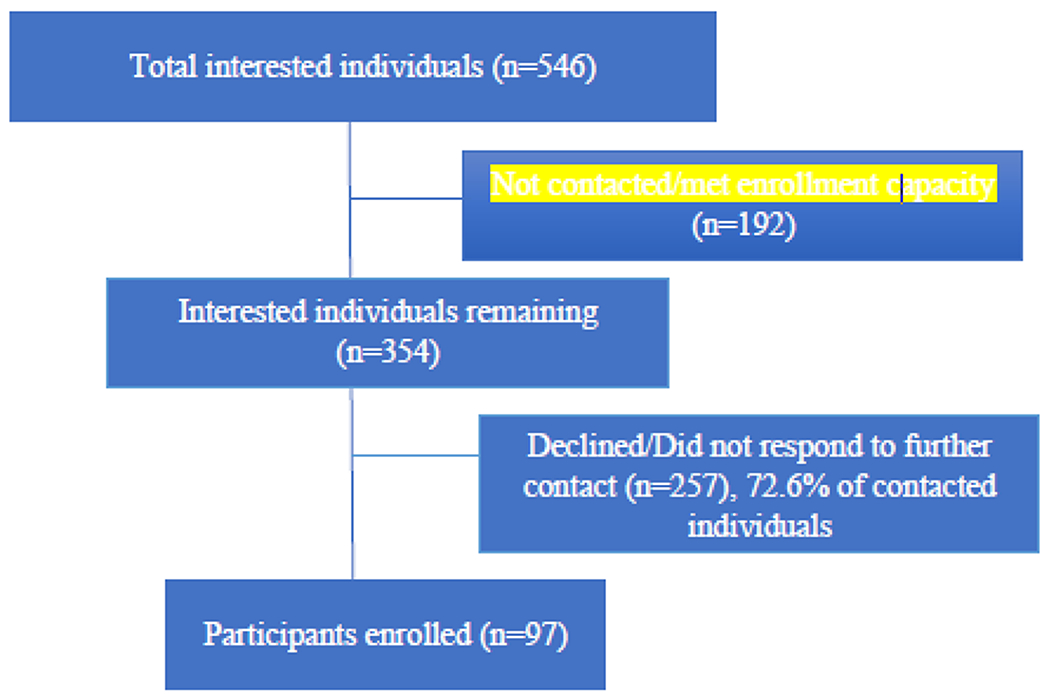
The increasing prevalence of Alzheimer disease (AD), higher risk among certain ethnoracial groups, and lack of effective therapies highlights the need to recruit and enroll diverse populations in prospective, observational studies and clinical trials. However, there is little known about the effectiveness of traditional media vs. social media outreach on recruitment in aging study studies. This study retrospectively examined the effectiveness and differences in using both traditional and social media materials for the recruitment of African American (AA) versus non-Hispanic white (NHW) participants for a prospective, longitudinal study examining preclinical AD and driving outcomes. Participants needed to be at least 65 years old, drive at least an average of once weekly, own a vehicle that was manufactured in 1996 or later, and agree to cognitive testing, psychometric testing, brain magnetic resonance imaging (MRI), brain amyloid positron emission tomography (PET), and cerebrospinal fluid collection via lumbar puncture. A total of 546 individuals contacted the study coordinator by phone or email. Of those individuals, 97 enrolled and 192 were not contacted secondary to filling enrollment capacity. Sixteen participants (16.5%) were AA and the remainder were NHW. Of the 354 individuals whom the coordinator contacted back, approximately 73% declined or did not return calls. Social media was more effective with recruiting NHW participants, while traditional advertisement (newspaper) was more successful in recruiting AA participants in this urban setting. Prospective studies should balance participant burden and enrollment with a targeted, multi-tiered recruitment plan and sufficient budget to reach the population of interest.
阿尔茨海默病(AD)的患病率不断上升,某些种族群体的患病风险更高,且缺乏有效的治疗方法,这凸显了在前瞻性观察研究和临床试验中招募和纳入不同人群的必要性。然而,对于传统媒体与社交媒体宣传在衰老研究招募方面的效果,人们知之甚少。本研究回顾性地考察了在一项针对临床前AD及驾驶结果的前瞻性纵向研究中,使用传统媒体和社交媒体材料招募非裔美国人(AA)与非西班牙裔白人(NHW)参与者的效果及差异。参与者需至少65岁,平均每周至少驾驶一次,拥有一辆1996年或之后生产的车辆,并同意接受认知测试、心理测量测试、脑磁共振成像(MRI)、脑淀粉样蛋白正电子发射断层扫描(PET)以及通过腰椎穿刺采集脑脊液。共有546人通过电话或电子邮件联系了研究协调员。在这些人中,97人登记参加,192人因达到登记容量上限而未被联系。16名参与者(16.5%)为非裔美国人,其余为非西班牙裔白人。在协调员回访的354人中,约73%拒绝或未回电。在招募非西班牙裔白人参与者方面,社交媒体更有效,而在这个城市环境中,传统广告(报纸)在招募非裔美国人参与者方面更成功。前瞻性研究应通过有针对性的多层次招募计划和足够的预算来平衡参与者负担与登记人数,以覆盖感兴趣的人群。