García-Pastor María E, Zapata Pedro J, Castillo Salvador, Martínez-Romero Domingo, Guillén Fabián, Valero Daniel, Serrano María
Department of Agro-Food Technology, University Miguel Hernández, Orihuela, Spain.
Department of Applied Biology, University Miguel Hernández, Orihuela, Spain.
Front Plant Sci. 2020 Jul 1;11:668. doi: 10.3389/fpls.2020.00668. eCollection 2020.
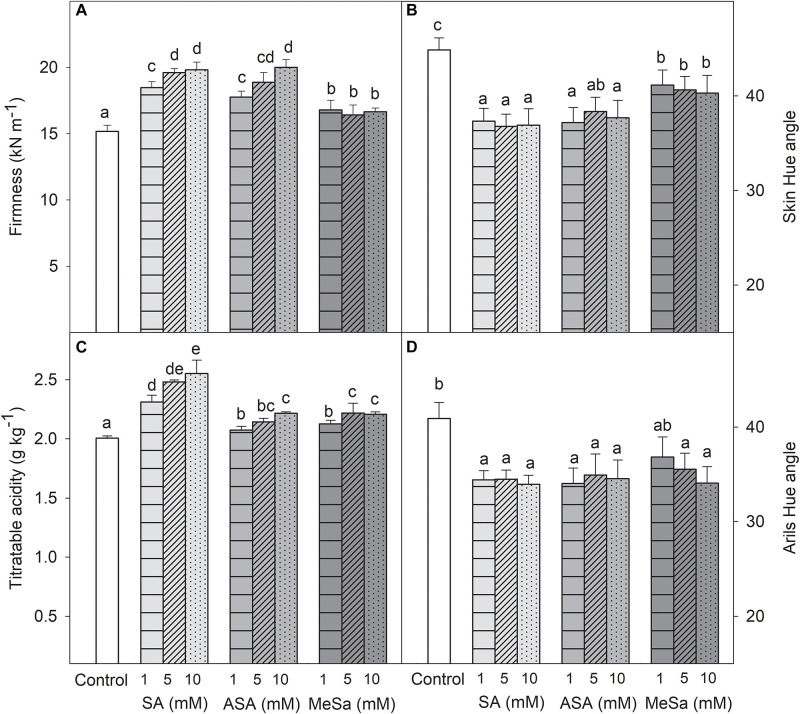
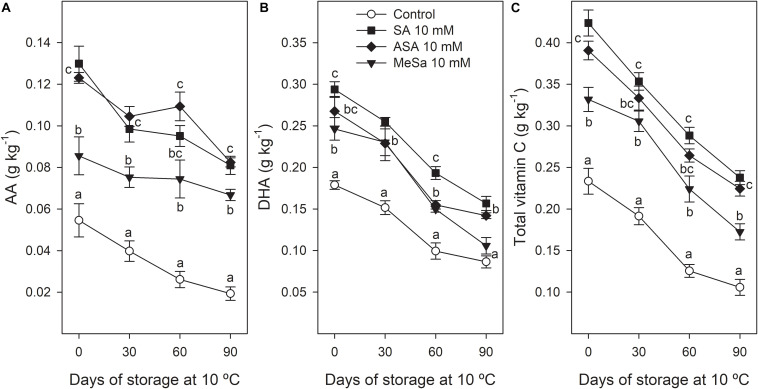
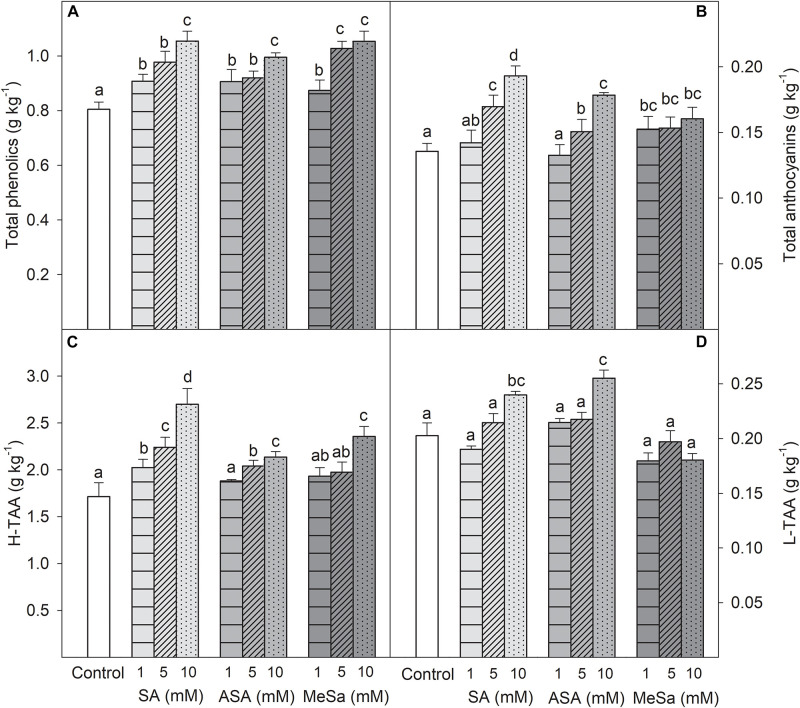
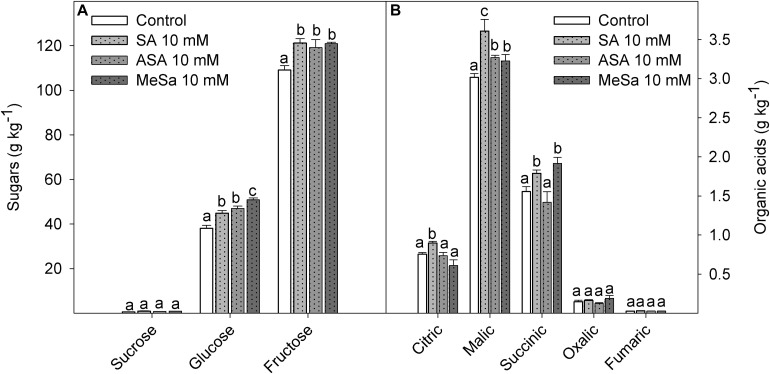
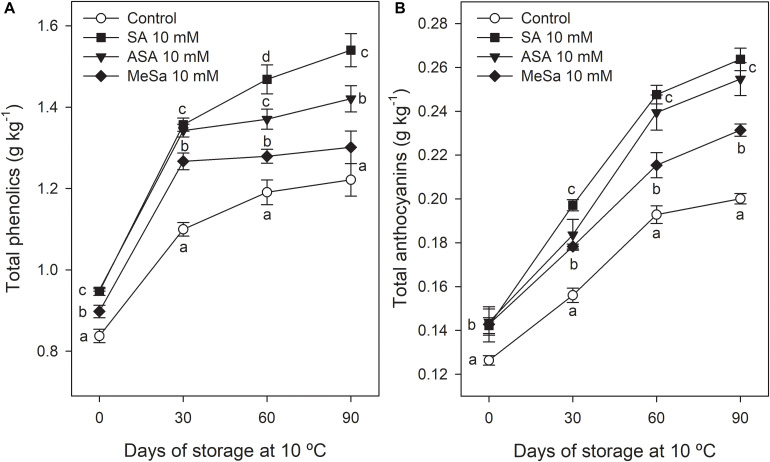
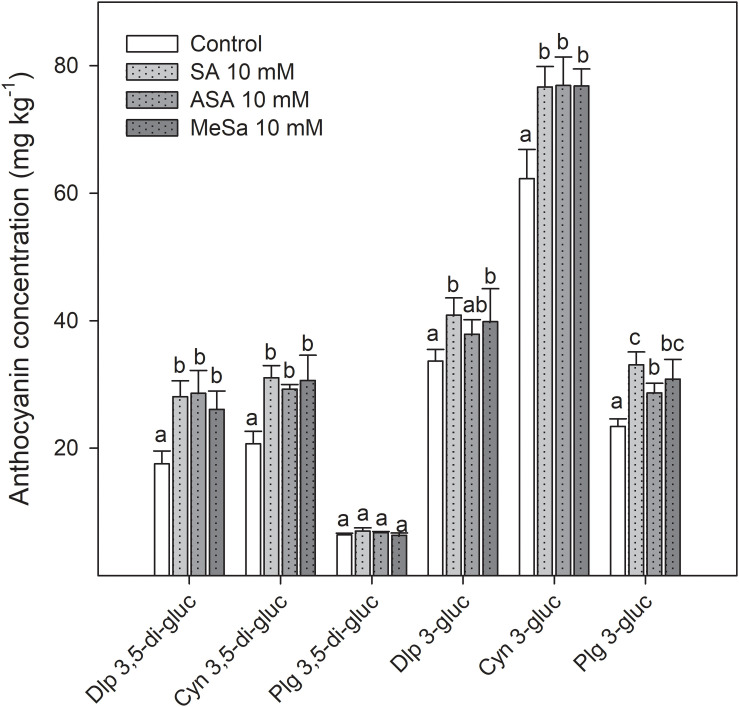
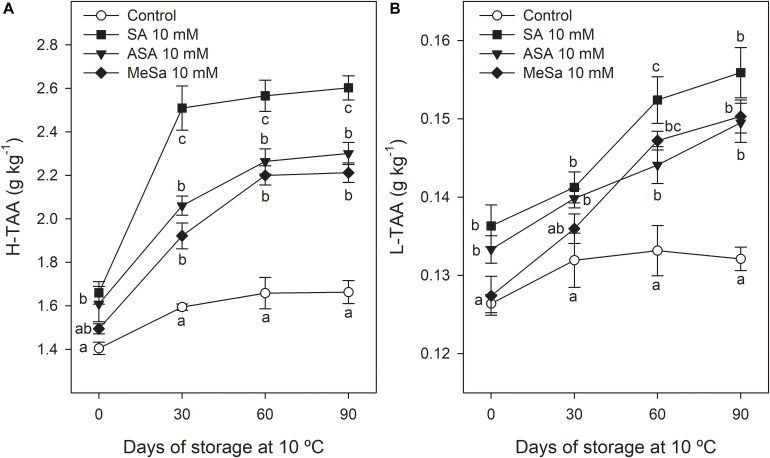
In the present research two experiments were performed to evaluate the effect of pre-harvest salicylic acid (SA), acetyl salicylic acid (ASA), and methyl salicylate (MeSa), applied as a foliar spray to pomegranate "Mollar de Elche," on crop yield, fruit quality parameters, and bioactive compounds at harvest and during storage. In the 2017 experiment, trees were treated with SA, ASA, and MeSa at 1, 5, and 10 mM and a higher crop yield (kg tree and number of harvested fruit tree) and quality parameters (firmness, aril color, and individual sugars and organic acids) at harvest were obtained, as well as a higher concentration of phenolics, anthocyanins, and ascorbic acid. The best results were achieved with 10 mM dose of the three assayed compounds, which was chosen for the 2018 experiment, and results for crop yield and fruit quality attributes were confirmed. These quality traits and the concentration of phenolics, anthocyanins, and ascorbic acid were maintained at higher levels in pomegranate fruit from treated trees than in controls during prolonged storage at 10°C. In addition, the effects of salicylate treatments on increasing total and individual anthocyanin concentration in pomegranate arils led to arils with a deeper red color (Graphical Abstract) and, in turn, fruit that would be more appreciated in the international market. This fact, together with the increased crop yield, would contribute to the increased profit of this crop. Thus, pre-harvest treatment with salicylates, and especially SA at 10 mM concentration, could be a safe, natural, and new tool to improve fruit quality and its content on antioxidant compounds with health beneficial effects (namely, ascorbic acid, phenolics, and anthocyanins) at harvest and during storage.
在本研究中,进行了两项实验,以评估在石榴“莫拉尔·德埃尔切”上进行叶面喷施收获前水杨酸(SA)、乙酰水杨酸(ASA)和水杨酸甲酯(MeSa)对作物产量、果实品质参数以及收获期和贮藏期生物活性化合物的影响。在2017年的实验中,用1、5和10 mM的SA、ASA和MeSa处理树木,收获时获得了更高的作物产量(每棵树的千克数和收获的果实数)和品质参数(硬度、种皮颜色以及单个糖和有机酸),以及更高浓度的酚类、花青素和抗坏血酸。三种被测化合物中10 mM剂量取得了最佳结果,该剂量被选用于2018年的实验,作物产量和果实品质属性的结果得到了证实。在10°C下长期贮藏期间,处理过的树木所结果实中的这些品质性状以及酚类、花青素和抗坏血酸的浓度保持在比对照更高的水平。此外,水杨酸处理对增加石榴种皮中总花青素和单个花青素浓度的影响导致种皮颜色更深(图摘要),进而使果实更受国际市场欢迎。这一事实,再加上作物产量的增加,将有助于提高这种作物的利润。因此,收获前用水杨酸盐处理,尤其是10 mM浓度的SA,可能是一种安全、天然的新工具,可在收获期和贮藏期提高果实品质及其抗氧化化合物含量(即抗坏血酸、酚类和花青素),对健康有益。