Danish Research Institute of Translational Neuroscience - DANDRITE, Aarhus University, Aarhus, Denmark.
Department of Biomedicine, Aarhus University, Aarhus, Denmark.
Brain Pathol. 2021 Jan;31(1):103-119. doi: 10.1111/bpa.12883. Epub 2020 Aug 6.
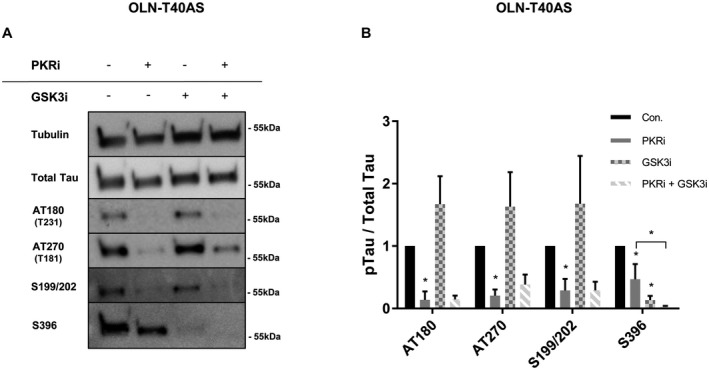
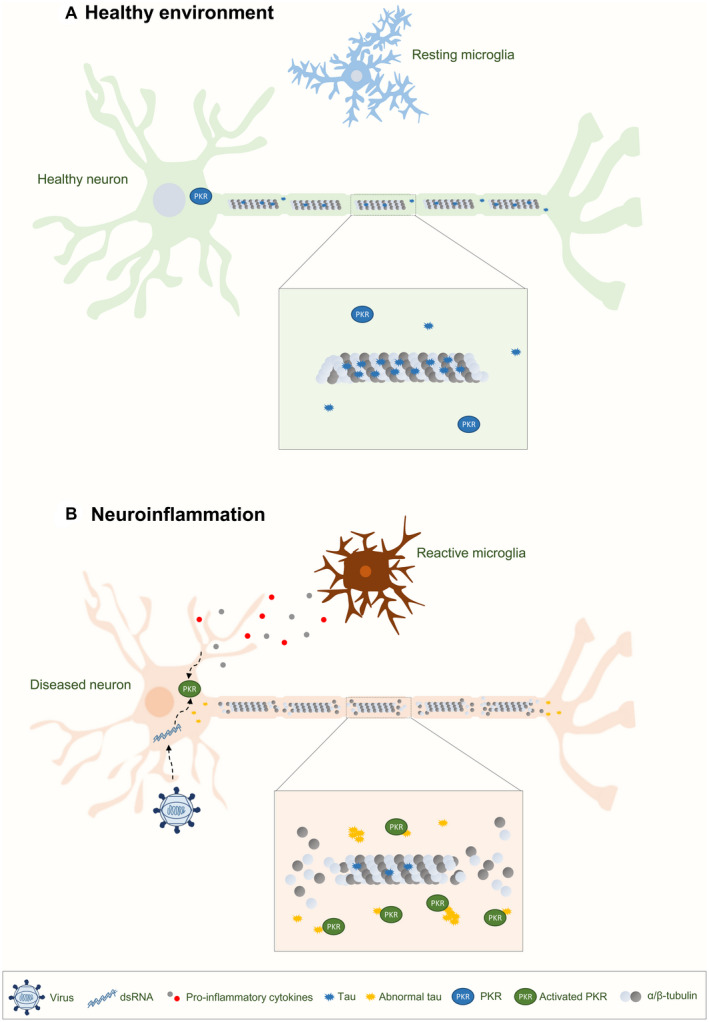
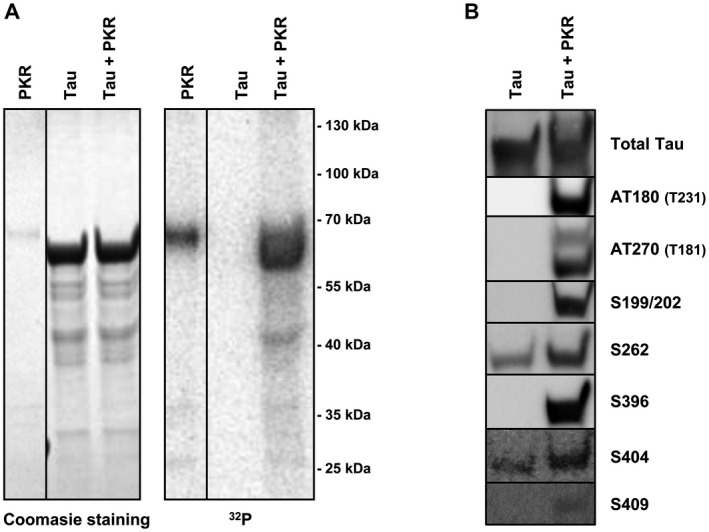
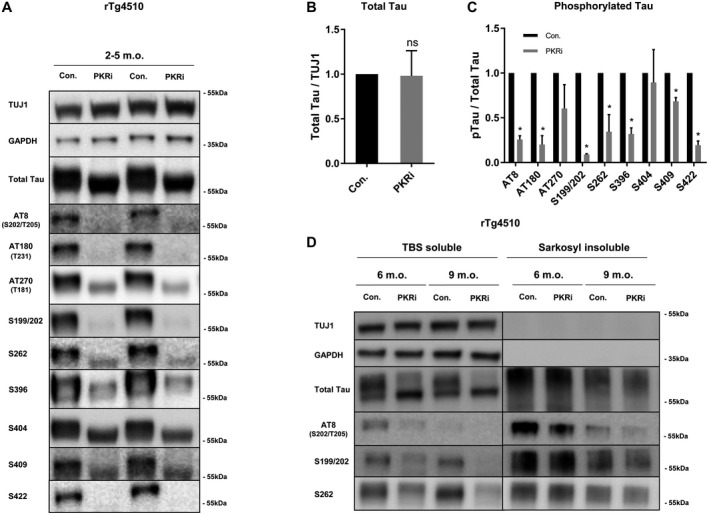
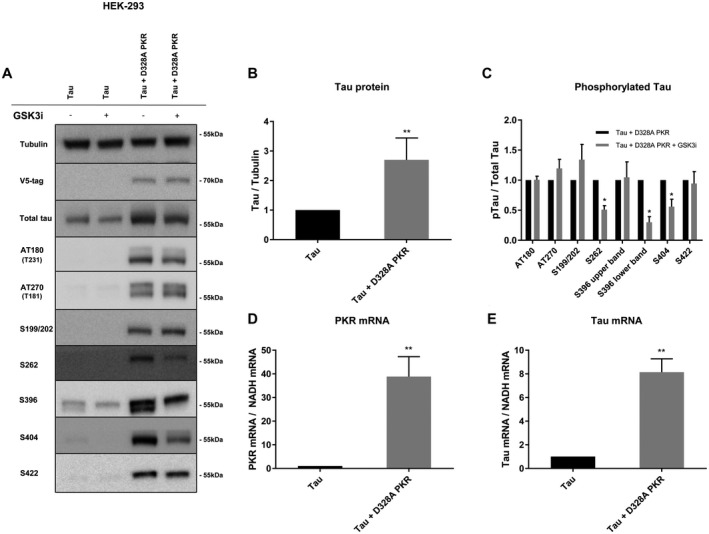
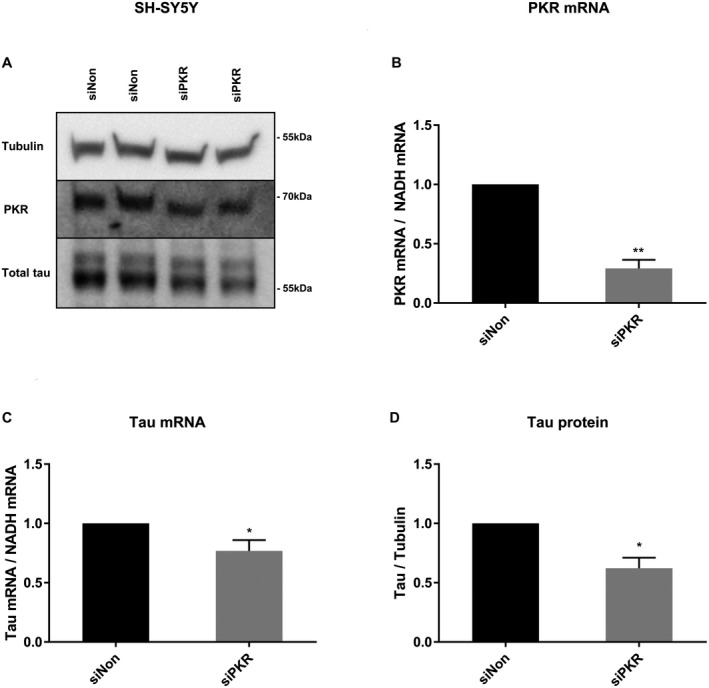
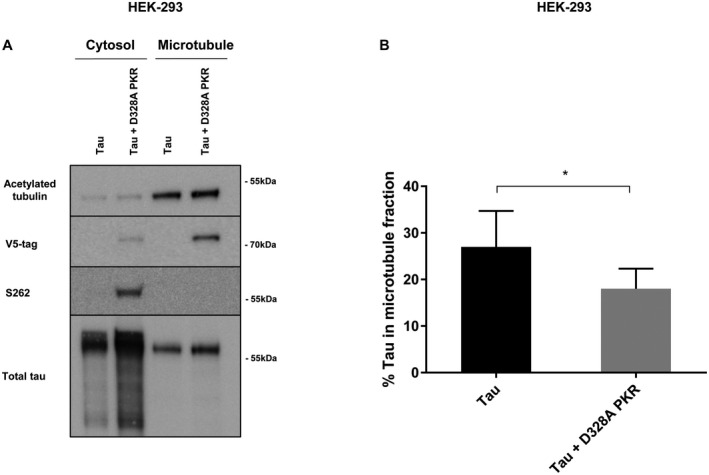
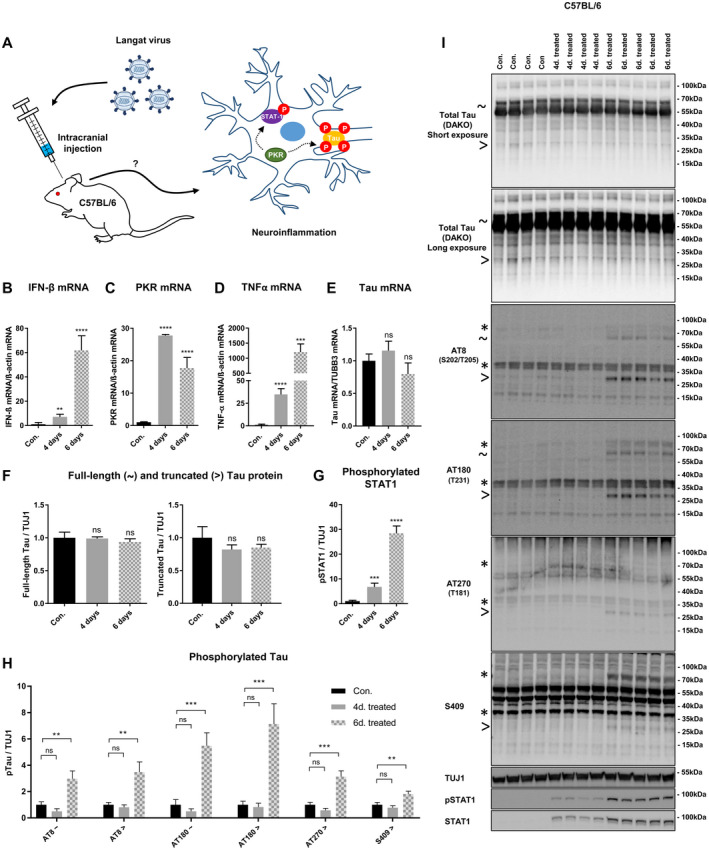
Deposition of extensively hyperphosphorylated tau in specific brain cells is a clear pathological hallmark in Alzheimer's disease and a number of other neurodegenerative disorders, collectively termed the tauopathies. Furthermore, hyperphosphorylation of tau prevents it from fulfilling its physiological role as a microtubule-stabilizing protein and leaves it increasingly vulnerable to self-assembly, suggestive of a central underlying role of hyperphosphorylation as a contributing factor in the etiology of these diseases. Via in vitro phosphorylation and regulation of kinase activity within cells and acute brain tissue, we reveal that the inflammation associated kinase, protein kinase R (PKR), directly phosphorylates numerous abnormal and disease-modifying residues within tau including Thr181, Ser199/202, Thr231, Ser262, Ser396, Ser404 and Ser409. Similar to disease processes, these PKR-mediated phosphorylations actively displace tau from microtubules in cells. In addition, PKR overexpression and knockdown, respectively, increase and decrease tau protein and mRNA levels in cells. This regulation occurs independent of noncoding transcriptional elements, suggesting an underlying mechanism involving intra-exonic regulation of the tau-encoding microtubule-associated protein tau (MAPT) gene. Finally, acute encephalopathy in wild type mice, induced by intracranial Langat virus infection, results in robust inflammation and PKR upregulation accompanied by abnormally phosphorylated full-length- and truncated tau. These findings indicate that PKR, independent of other kinases and upon acute brain inflammation, is capable of triggering pathological modulation of tau, which, in turn, might form the initial pathologic seed in several tauopathies such as Alzheimer's disease and Chronic traumatic encephalopathy where inflammation is severe.
广泛磷酸化 tau 在特定脑细胞中的沉积是阿尔茨海默病和许多其他神经退行性疾病(统称为 tau 病)的明确病理标志。此外,tau 的过度磷酸化阻止其发挥作为微管稳定蛋白的生理作用,并使其越来越容易自组装,这表明过度磷酸化在这些疾病的发病机制中起着核心作用。通过体外磷酸化和细胞内激酶活性的调节以及急性脑组织,我们揭示了与炎症相关的激酶蛋白激酶 R (PKR) 可直接磷酸化 tau 中的许多异常和疾病修饰残基,包括 Thr181、Ser199/202、 Thr231、Ser262、Ser396、Ser404 和 Ser409。与疾病过程相似,这些 PKR 介导的磷酸化可使 tau 在细胞中主动从微管上解离。此外,PKR 的过表达和敲低分别增加和减少细胞中的 tau 蛋白和 mRNA 水平。这种调节独立于非编码转录元件,这表明存在一种潜在的机制,涉及编码微管相关蛋白 tau (MAPT) 基因的 tau 内显子调节。最后,颅内 Langat 病毒感染诱导的野生型小鼠急性脑病导致强烈的炎症和 PKR 上调,同时伴有全长和截断 tau 的异常磷酸化。这些发现表明,PKR 在急性脑炎症的情况下,可独立于其他激酶触发 tau 的病理性调节,这反过来可能在几种 tau 病(如阿尔茨海默病和慢性创伤性脑病)中形成最初的病理性种子,这些疾病中炎症严重。