Department of Immunology and Infection, Biomedical Research Institute, Hasselt University, Diepenbeek, Belgium.
Inflammation, Microbiome and Immunosurveillance, INSERM UMR99, Université Paris-Saclay, Châtenay-Malabry, France.
J Neuroinflammation. 2020 Jul 27;17(1):224. doi: 10.1186/s12974-020-01899-x.
The presence of foamy macrophages and microglia containing intracellular myelin remnants is a pathological hallmark of neurodegenerative disorders such as multiple sclerosis (MS). Despite the importance of myelin internalization in affecting both central nervous system repair and neuroinflammation, the receptors involved in myelin clearance and their impact on the phagocyte phenotype and lesion progression remain to be clarified.
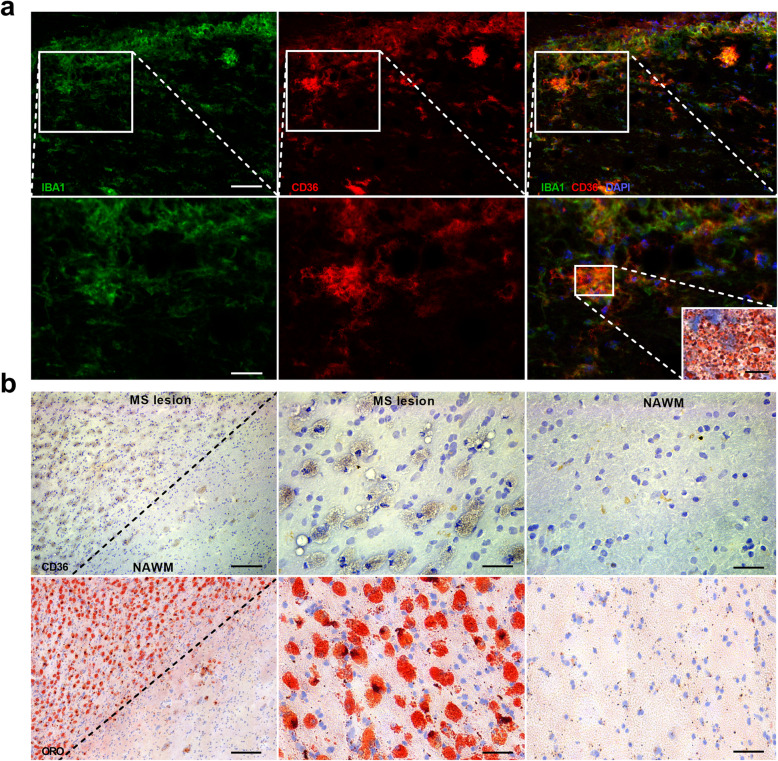
Flow cytometry, quantitative PCR, and immunohistochemistry were used to define the mRNA and protein abundance of CD36 in myelin-containing phagocytes. The impact of CD36 and nuclear factor erythroid 2-related factor 2 (NRF2) on the phagocytic and inflammatory features of macrophages and microglia was assessed using a pharmacological CD36 inhibitor (sulfo-N-succinimidyl oleate) and Nrf2 bone marrow-derived macrophages. Finally, the experimental autoimmune encephalomyelitis (EAE) model was used to establish the impact of CD36 inhibition on neuroinflammation and myelin phagocytosis in vivo.
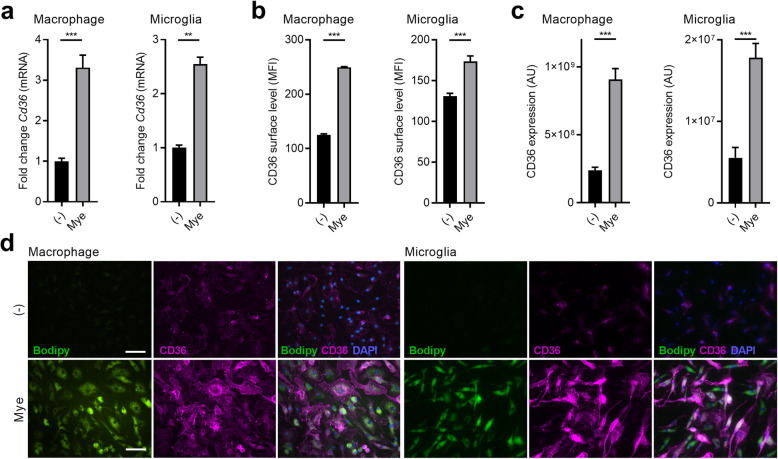
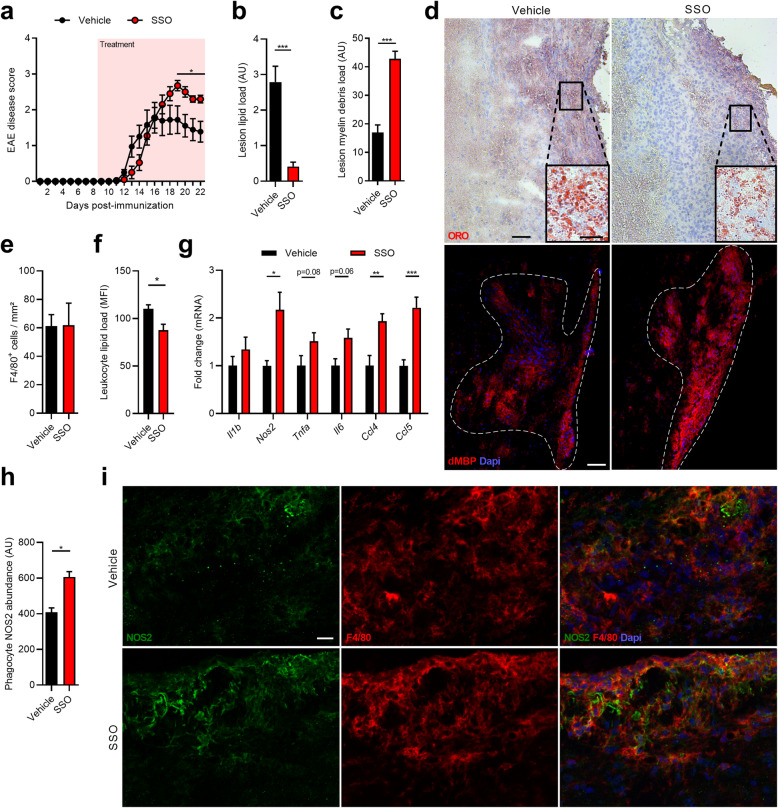
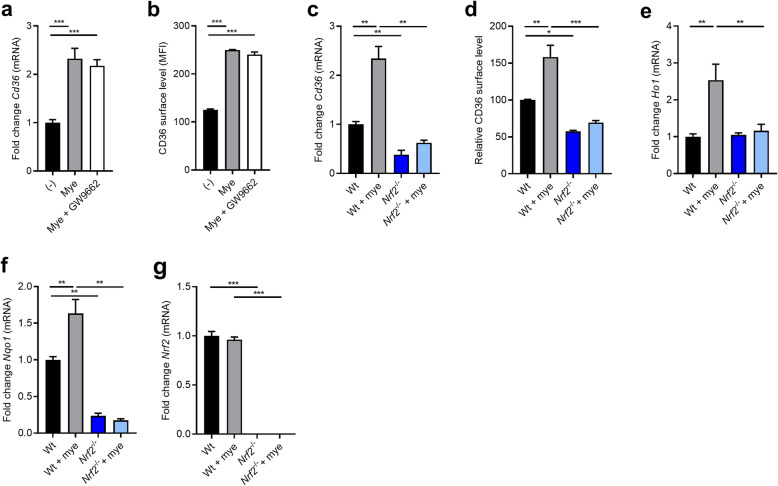
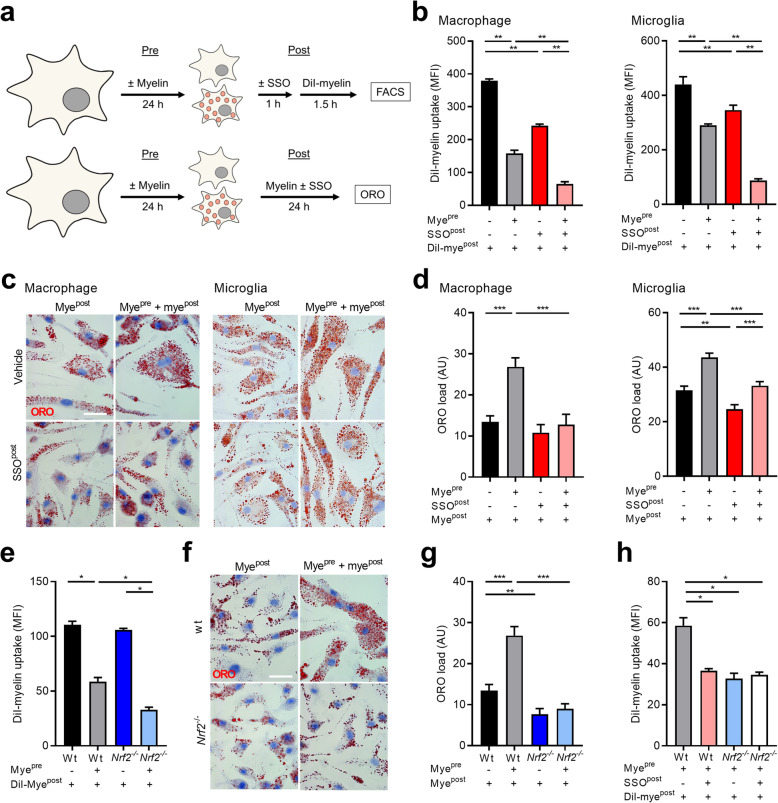
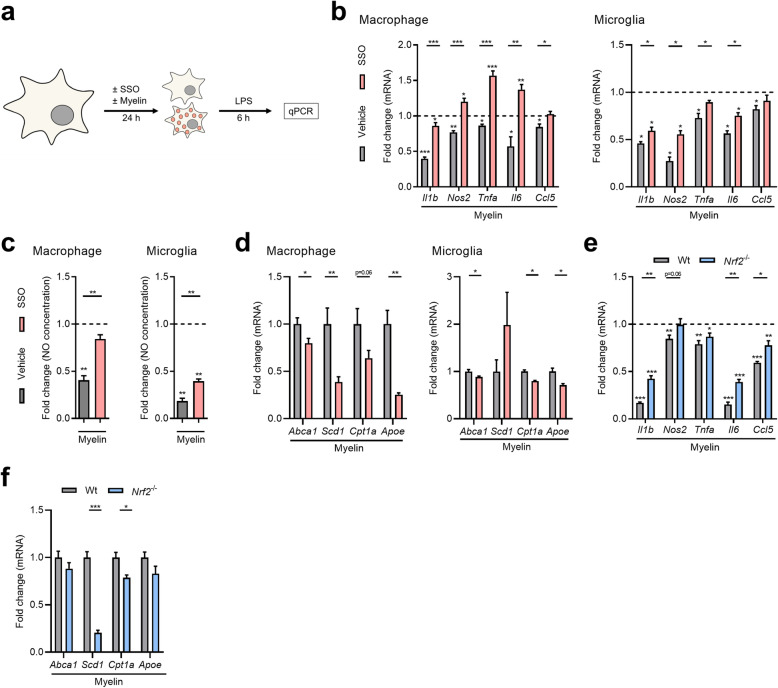
Here, we show that the fatty acid translocase CD36 is required for the uptake of myelin debris by macrophages and microglia, and that myelin internalization increased CD36 expression through NRF2. Pharmacological inhibition of CD36 promoted the inflammatory properties of myelin-containing macrophages and microglia in vitro, which was paralleled by a reduced activity of the anti-inflammatory lipid-sensing liver X receptors and peroxisome proliferator-activated receptors. By using the EAE model, we provide evidence that CD36 is essential for myelin debris clearance in vivo. Importantly, CD36 inhibition markedly increased the neuroinflammatory burden and disease severity in the EAE model.
Altogether, we show for the first time that CD36 is crucial for clearing myelin debris and suppressing neuroinflammation in demyelinating disorders such as MS.
泡沫状巨噬细胞和含有细胞内髓鞘残余物的小胶质细胞的存在是神经退行性疾病(如多发性硬化症(MS))的病理标志。尽管髓鞘内化对中枢神经系统修复和神经炎症都有重要影响,但参与髓鞘清除的受体及其对吞噬细胞表型和病变进展的影响仍有待阐明。
使用流式细胞术、定量 PCR 和免疫组织化学技术来定义含髓鞘吞噬细胞中 CD36 的 mRNA 和蛋白丰度。使用 CD36 药理学抑制剂(琥珀酰亚胺辛酸盐)和核因子红细胞 2 相关因子 2(NRF2)骨髓衍生巨噬细胞来评估 CD36 和 NRF2 对巨噬细胞和小胶质细胞吞噬和炎症特征的影响。最后,使用实验性自身免疫性脑脊髓炎(EAE)模型来确定 CD36 抑制对体内神经炎症和髓鞘吞噬的影响。
在这里,我们表明脂肪酸转运蛋白 CD36 是巨噬细胞和小胶质细胞摄取髓鞘碎片所必需的,髓鞘内化通过 NRF2 增加了 CD36 的表达。CD36 的药理学抑制促进了体外含髓鞘巨噬细胞和小胶质细胞的炎症特性,这与抗炎脂质感应肝 X 受体和过氧化物酶体增殖物激活受体的活性降低相平行。通过使用 EAE 模型,我们提供了证据表明 CD36 是体内清除髓鞘碎片所必需的。重要的是,CD36 抑制在 EAE 模型中显著增加了神经炎症负担和疾病严重程度。
总之,我们首次表明 CD36 对于清除脱髓鞘疾病(如 MS)中的髓鞘碎片和抑制神经炎症至关重要。