He Dali, Liang Jiahe, Wang Hengen, Jiao Yong, Wu Bin, Cui Dong, Cao Tiesheng, Li Yanyan, Wang Jing, Zhang Bo
Department of Urology, Tangdu Hospital, The Fourth Military Medical University, Xi'an, China.
Department of Ultrasound Diagnostic, Tangdu Hospital, The Fourth Military Medical University, Xi'an, China.
Front Bioeng Biotechnol. 2020 Jul 3;8:732. doi: 10.3389/fbioe.2020.00732. eCollection 2020.
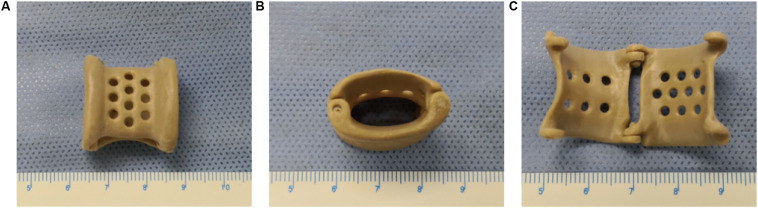
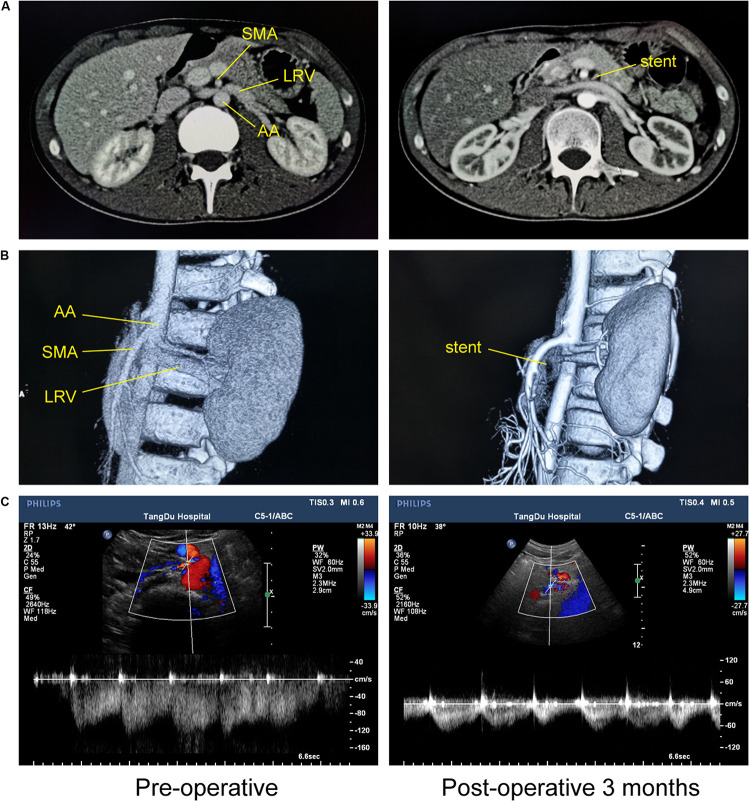
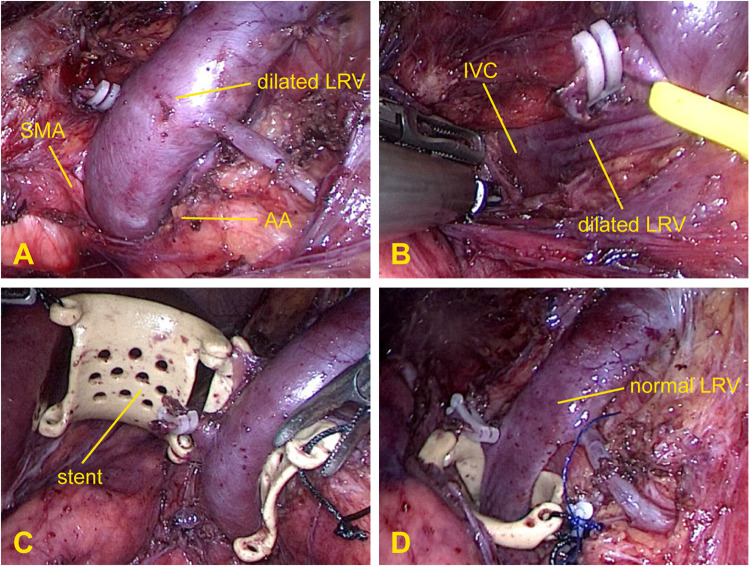
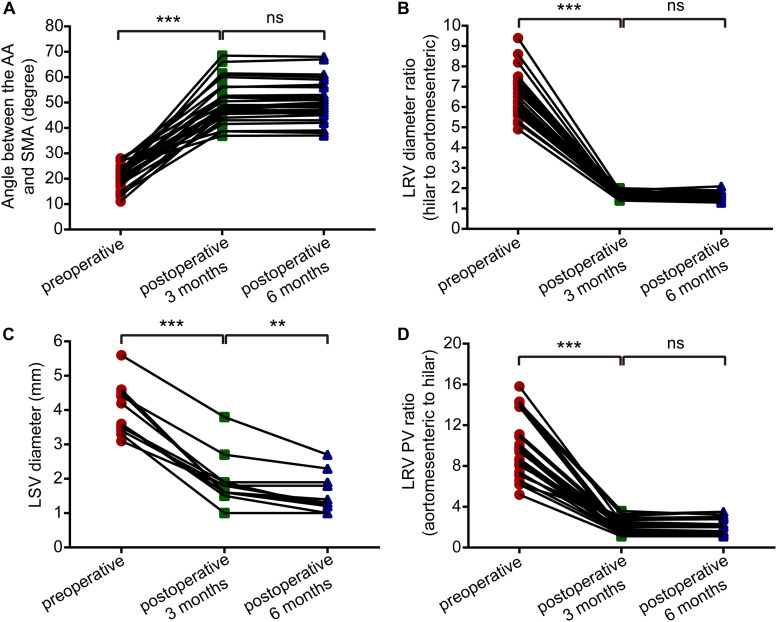
Minimally invasive options are safe and reliable alternatives for the treatment of nutcracker syndrome (NCS). After continued efforts, our team successfully devised a new and effective therapeutic method: 3D-printed extravascular stenting of the left renal vein. From December 2017 to May 2019, 28 patients (25 men and 3 women) from different parts of China between 18 and 37 years old (mean, 23.6 years) diagnosed with NCS were admitted for laparoscopic 3D-printed extravascular stenting treatment. The post-operative follow-up duration was 6-24 months (median, 16.3 months). Technical success of the operation was achieved in all patients. After treatment, the NCS symptoms all patients resolved or improved during the follow-up period, without relapse. Most symptoms, including macro-/microhematuria, proteinuria, and flank/abdominal pain, tended to resolve within 3-6 months after the surgery; other symptoms, such as left-sided varicocele, also showed varying degrees of improvement at different times post-operatively. Perioperative complications were noted in two patients, including transient and mild lymphatic leakage, without any adverse effects. All extravascular stents were visualized on computed tomography and Doppler ultrasound scans, and no migration or any side effects occurred during the entire follow-up period. Compared to endovascular stenting or polytetrafluoroethylene artificial vessel procedures, 3D-printed polyetheretherketone extravascular stenting has more advantages in terms of stent design and rigidity and approach rationality while successfully preventing stent migration and thrombosis. Therefore, this method may serve as an accurate and effective treatment for NCS patients.
微创治疗方案是胡桃夹综合征(NCS)安全可靠的替代治疗方法。经过不懈努力,我们团队成功设计出一种新的有效治疗方法:左肾静脉三维打印血管外支架置入术。2017年12月至2019年5月,来自中国不同地区的28例确诊为NCS的患者(25例男性,3例女性),年龄在18至37岁之间(平均23.6岁),接受了腹腔镜三维打印血管外支架置入治疗。术后随访时间为6至24个月(中位数为16.3个月)。所有患者手术技术成功。治疗后,所有患者的NCS症状在随访期间均得到缓解或改善,无复发。大多数症状,包括肉眼/镜下血尿、蛋白尿和胁腹/腹痛,在术后3至6个月内趋于缓解;其他症状,如左侧精索静脉曲张,在术后不同时间也有不同程度的改善。2例患者出现围手术期并发症,包括短暂性轻度淋巴漏,无任何不良影响。所有血管外支架在计算机断层扫描和多普勒超声扫描中均清晰可见,在整个随访期间未发生移位或任何副作用。与血管内支架置入术或聚四氟乙烯人工血管手术相比,三维打印聚醚醚酮血管外支架置入术在支架设计、刚性和入路合理性方面具有更多优势,同时成功防止了支架移位和血栓形成。因此,该方法可作为NCS患者准确有效的治疗方法。