Department of Neurology, Xiangyang No. 1 People's Hospital, Hubei University of Medicine, No. 15 Jiefang Road, Fancheng District, Xiangyang, 441000, People's Republic of China.
Research Center for Experimental Medicine, Ruijin Hospital, Affiliated to Shanghai Jiao Tong University School of Medicine, Shanghai, 200025, China.
Lipids Health Dis. 2020 Jul 28;19(1):177. doi: 10.1186/s12944-020-01353-0.
Intima-media thickness (IMT) and small dense low-density lipoprotein cholesterol (sdLDL-C) have been reported to be related to atherosclerosis and stroke. This study is trying to explore the association between IMT and sdLDL-C in Chinese acute ischaemic stroke (AIS) subjects.
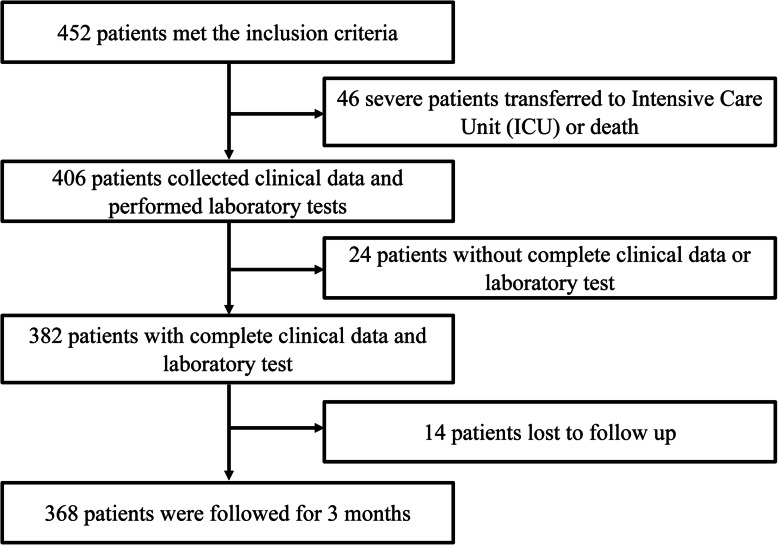
This study enrolled total 368 consecutive AIS patients and 165 non-AIS controls from November 2016 to February 2019. Mean IMT and carotid plaques were measured by using carotid ultrasonography method. Blood glucose and lipid parameters were measured by using an automatic biochemical instrument. SdLDL-C was detected by using the Lipoprint LDL system. IMT > 1.0 mm was defined as increased IMT. Plaque stability based on the nature of the echo was determined by ultrasound examination. Risk factors for IMT were identified by using multivariate logistic regression analysis. A logistic regression model was established to predict AIS risk. Python software (Version 3.6) was used for the statistical analysis of all data.
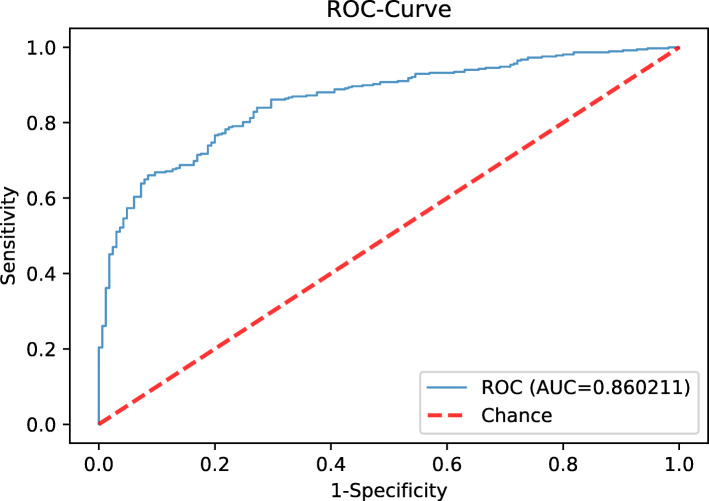
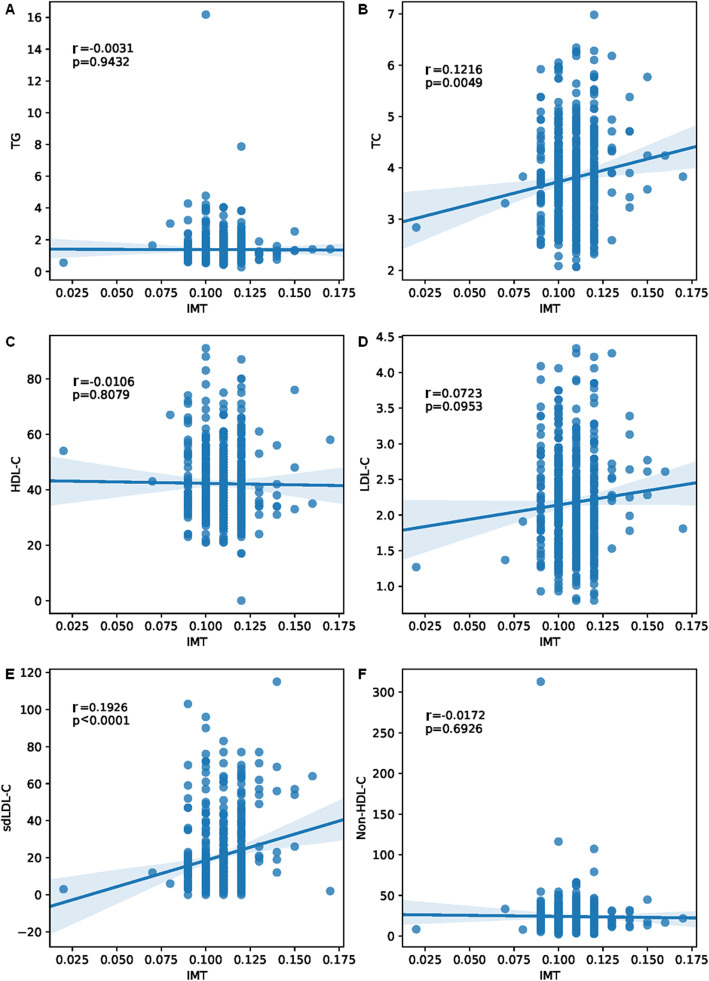
The carotid IMT, proportion of plaques, and the sdLDL-C, triglycerides (TG) and glucose levels were obviously higher in AIS patients than those in controls. SdLDL-C level in the IMT thickening group was higher than that in the normal IMT group. SdLDL-C and total cholesterol (TC) were risk factors for IMT, while sdLDL-C was an independent risk factor. The IMT value of the unstable plaque group was markedly higher than that of the stable plaque group. The predictive value of IMT for AIS was better than that of low-density lipoprotein cholesterol (LDL-C) and non-high-density lipoprotein cholesterol (non-HDL-C) but not as good as that of sdLDL-C. A logistic regression model was established to predict AIS risk. Additionally, carotid IMT and sdLDL-C were closely related to AIS severity and outcomes.
SdLDL-C and TC were risk factors for increased IMT, while sdLDL-C was an independent risk factor. A prediction model based on IMT and other variables was established to screen the population with high AIS risk.
内-中膜厚度(IMT)和小而密的低密度脂蛋白胆固醇(sdLDL-C)与动脉粥样硬化和中风有关。本研究旨在探讨中国急性缺血性中风(AIS)患者中 IMT 与 sdLDL-C 的关系。
本研究纳入了 2016 年 11 月至 2019 年 2 月期间连续 368 例 AIS 患者和 165 例非 AIS 对照组。采用颈动脉超声法测量平均 IMT 和颈动脉斑块。采用自动生化仪测量血糖和血脂参数。采用 Lipoprint LDL 系统检测 sdLDL-C。IMT>1.0mm 定义为 IMT 增厚。根据回声性质确定斑块稳定性。采用多变量 logistic 回归分析确定 IMT 的危险因素。建立 logistic 回归模型预测 AIS 风险。所有数据的统计分析均采用 Python 软件(版本 3.6)。
与对照组相比,AIS 患者的颈动脉 IMT、斑块比例以及 sdLDL-C、三酰甘油(TG)和血糖水平明显升高。IMT 增厚组的 sdLDL-C 水平高于正常 IMT 组。sdLDL-C 和总胆固醇(TC)是 IMT 的危险因素,而 sdLDL-C 是独立的危险因素。不稳定斑块组的 IMT 值明显高于稳定斑块组。IMT 对 AIS 的预测价值优于低密度脂蛋白胆固醇(LDL-C)和非高密度脂蛋白胆固醇(non-HDL-C),但不如 sdLDL-C。建立了一个基于 IMT 和其他变量的预测 AIS 风险的 logistic 回归模型。此外,颈动脉 IMT 和 sdLDL-C 与 AIS 严重程度和结局密切相关。
sdLDL-C 和 TC 是 IMT 增加的危险因素,而 sdLDL-C 是独立的危险因素。建立了基于 IMT 和其他变量的预测模型,以筛选 AIS 风险较高的人群。