Department of Cardiothoracic & Vascular Surgery, Aarhus University Hospital, Palle Juul-Jensens Boulevard 99, 8200, Skejby, Aarhus N, Denmark.
Center for Global Health (GloHAU), Department of Public Health, Aarhus University, Aarhus, Denmark.
BMC Public Health. 2020 Jul 29;20(1):1187. doi: 10.1186/s12889-020-09294-0.
Undernourished people have an increased risk of premature mortality from both infectious and non-communicable diseases. Aside from screening purposes, assessment of nutritional status is a useful tool in management and evaluation of various chronic diseases. Body-Mass-Index (BMI) is today the most commonly used marker of nutritional status however, this method presents a challenge in many low resource settings and immobile patients. Mid-upper arm circumference (MUAC) is another anthropometric measure that requires minimal equipment and little training. So far, MUAC cutoffs for undernutrition are well established in children < 5 years but there is still no consensus for a specific cutoff in adults. The objective of this study was to compare MUAC with BMI and suggest a MUAC cut-off corresponding to a BMI of 18.5 kg/m2 to identify underweight in adults.
A cross-sectional study was conducted at two urban public hospitals in Nepal. The following variables where collected: MUAC, weight, height, sex, age and self-reported medical history.
< 19 years of age, pregnancy and oedema. Sensitivity and specificity for a MUAC value corresponding to BMI < 18.5 was calculated. ROC analysis was performed for male and female as well as Pearson's correlation of MUAC and BMI.
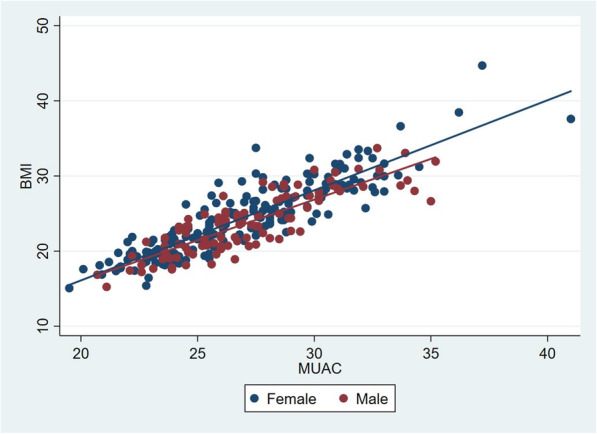
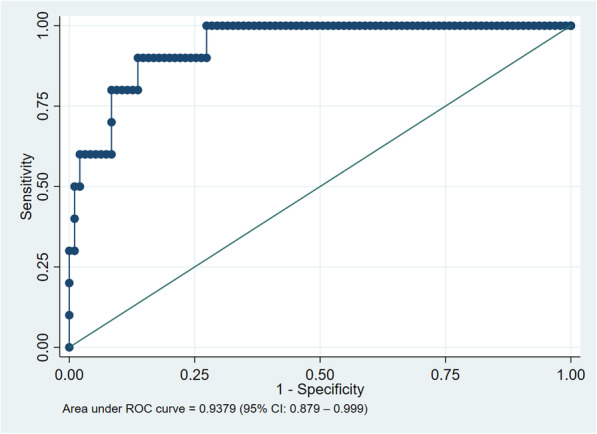
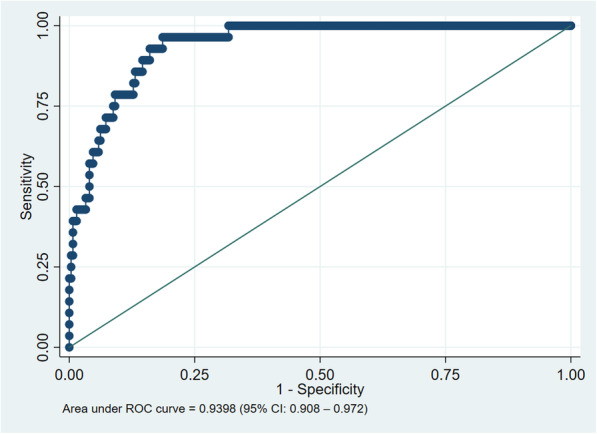
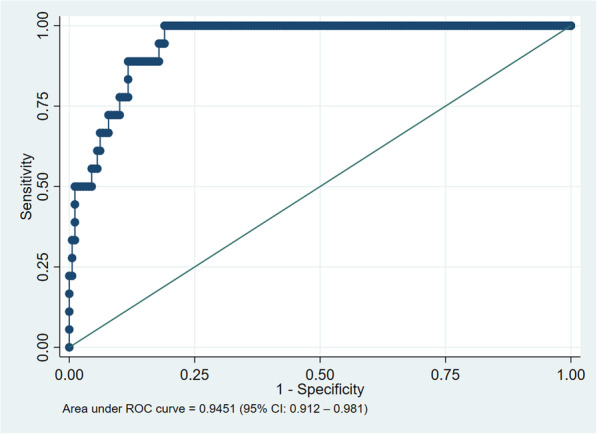
A total of 302 people between 18 and 86 years of age, 197 women and 105 men, were included. Of these, 90 people suffered from rheumatic heart disease. MUAC was highly correlated with BMI in both women r = 0.889 and men r = 0.846. Best statistically derived MUAC cutoff corresponding to a BMI < 18.5 kg/m was 24.5 cm (Youdens Index = 0.75; sensitivity 92.86; specificity 82.48), with high predictive value (AUROCC> 0.9). The setting based optimal MUAC cutoff was also 24.5 cm. No considerable variation was found in sex- and disease specific subgroups.
MUAC is strongly correlated with BMI in adults in Nepal. For simplicity, a MUAC of 24.5 cm is the optimal statistically and setting based cutoff in both women and men to identify underweight (BMI < 18.5 kg/m).
营养不良的人因传染病和非传染性疾病而早逝的风险增加。除了筛查目的外,评估营养状况也是管理和评估各种慢性疾病的有用工具。体重指数(BMI)是目前最常用的营养状况标志物,但在许多资源匮乏的环境和无法移动的患者中,这种方法存在挑战。中上臂围(MUAC)是另一种需要最少设备和很少训练的人体测量指标。到目前为止,< 5 岁儿童的营养不良 MUAC 切点已经确立,但成年人仍然没有特定的切点共识。本研究的目的是比较 MUAC 与 BMI,并建议 MUAC 切点对应于 18.5 kg/m2 的 BMI,以识别成年人的体重不足。
在尼泊尔的两家城市公立医院进行了一项横断面研究。收集了以下变量:MUAC、体重、身高、性别、年龄和自我报告的病史。
年龄< 19 岁、怀孕和水肿。计算 MUAC 值对应于 BMI < 18.5 的灵敏度和特异性。对男性和女性进行 ROC 分析以及 MUAC 和 BMI 的 Pearson 相关性分析。
共纳入 302 名 18 至 86 岁的患者,其中 197 名女性和 105 名男性,其中 90 人患有风湿性心脏病。MUAC 与女性 r = 0.889 和男性 r = 0.846 的 BMI 高度相关。最佳统计学衍生的 MUAC 切点对应于 BMI < 18.5 kg/m2 为 24.5 cm(约登指数 = 0.75;灵敏度 92.86%;特异性 82.48%),具有较高的预测值(AUROCC>0.9)。基于设定的最佳 MUAC 切点也是 24.5 cm。在性别和疾病特异性亚组中没有发现明显的差异。
MUAC 与尼泊尔成年人的 BMI 密切相关。为简单起见,女性和男性的 MUAC 最佳统计和基于设定的切点为 24.5 cm,用于识别体重不足(BMI < 18.5 kg/m2)。