Department of Genetics, School of Medicine, Stanford University, Palo Alto, CA, USA.
Cardiovascular Institute, Stanford School of Medicine, Stanford, CA, USA.
Nature. 2020 Jul;583(7818):693-698. doi: 10.1038/s41586-020-2449-8. Epub 2020 Jul 29.
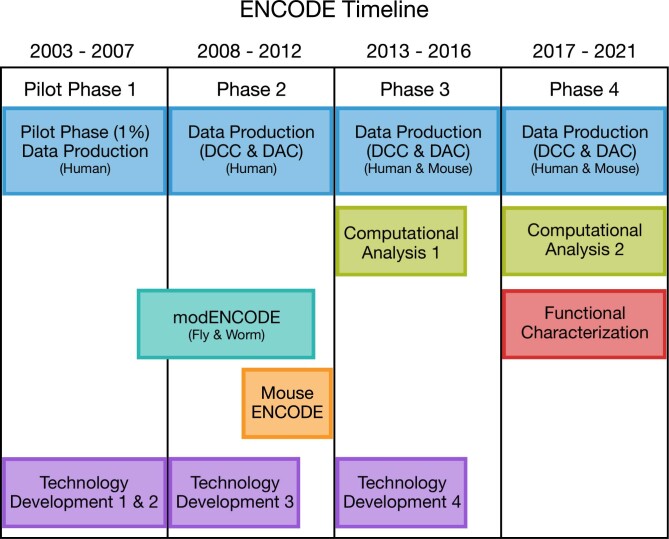
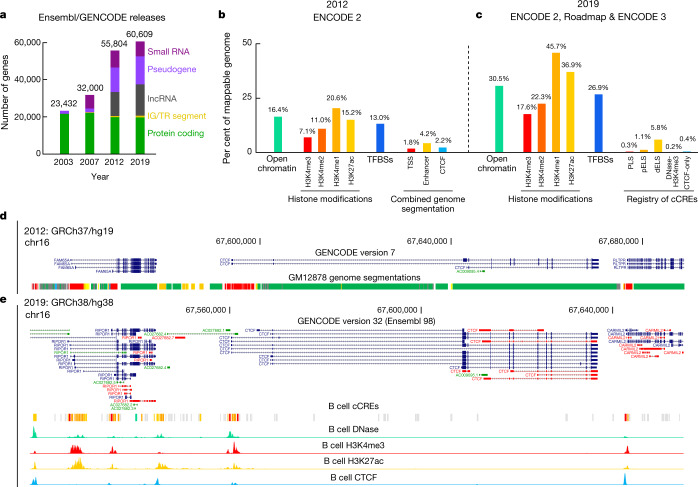
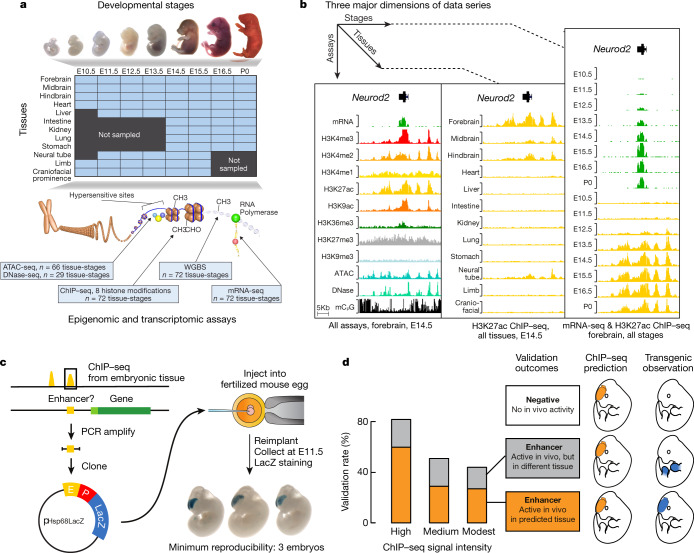
The Encylopedia of DNA Elements (ENCODE) Project launched in 2003 with the long-term goal of developing a comprehensive map of functional elements in the human genome. These included genes, biochemical regions associated with gene regulation (for example, transcription factor binding sites, open chromatin, and histone marks) and transcript isoforms. The marks serve as sites for candidate cis-regulatory elements (cCREs) that may serve functional roles in regulating gene expression. The project has been extended to model organisms, particularly the mouse. In the third phase of ENCODE, nearly a million and more than 300,000 cCRE annotations have been generated for human and mouse, respectively, and these have provided a valuable resource for the scientific community.
DNA 元件百科全书(ENCODE)项目于 2003 年启动,其长期目标是绘制人类基因组中功能元件的综合图谱。这些功能元件包括基因、与基因调控相关的生化区域(例如转录因子结合位点、开放染色质和组蛋白标记)以及转录本异构体。这些标记可作为候选顺式调控元件(cCRE)的位点,这些元件可能在调节基因表达方面发挥功能作用。该项目已经扩展到模式生物,特别是小鼠。在 ENCODE 的第三阶段,分别为人类和小鼠生成了近 100 万个和 30 多万个 cCRE 注释,这些注释为科学界提供了宝贵的资源。