Department of Biological Sciences, Boise State University, Boise, ID, 83725, USA.
Sci Rep. 2020 Jul 30;10(1):12886. doi: 10.1038/s41598-020-69828-9.
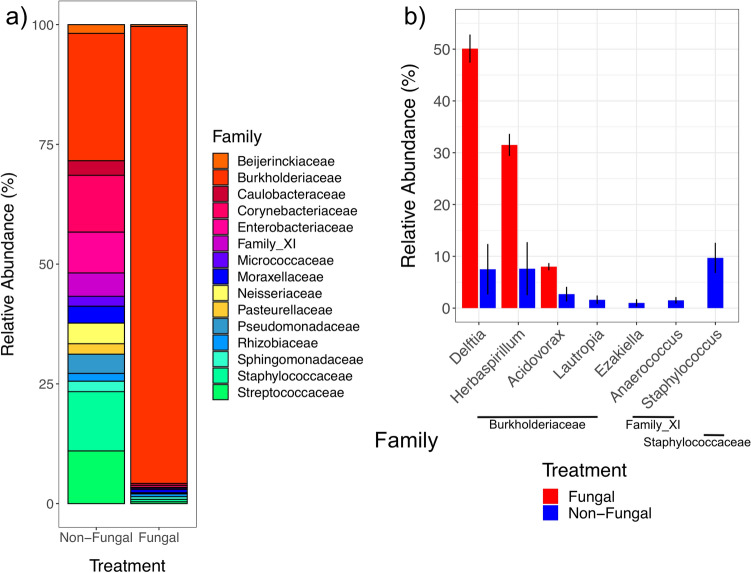
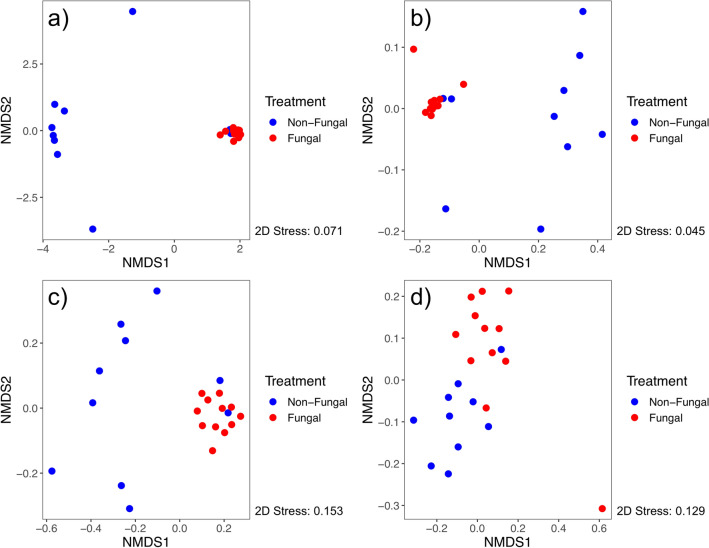
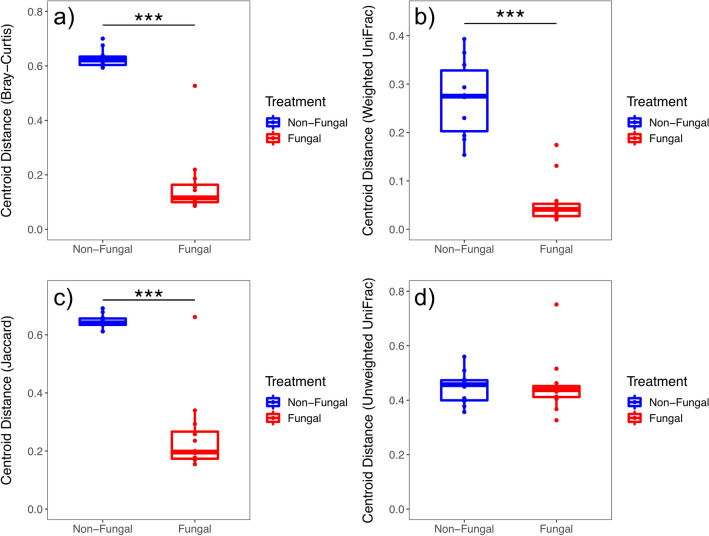
Research characterizing arthropod-associated microbiota has revealed that microbial dynamics can have an important impact on host phenotypic traits. The influence of fungi on these interactions are emerging as targets for research, especially in organisms associated with global human health. A recent study demonstrated colonization of a widespread gut fungus (Zancudomyces culisetae) in a larval mosquito (Aedes aegypti) digestive tract affected microbiomes in larvae and newly emerged adult females (Frankel-Bricker et al. Appl Environ Microbiol, 2020. https://doi.org/10.1128/AEM.02334-19) but did not investigate these processes in males. The objective of the study presented here was to assess fungal influences on adult male mosquito microbiomes to enable a more complete assessment of fungal-bacterial-host interactions in the A. aegypti-Z. culisetae system. Sequencing of 16S rRNA gene amplicons from microbiomes harbored in adult males directly after emerging from pupae revealed larval fungal exposure significantly decreased overall microbial community diversity, altered microbiome composition and structure, and decreased within-group microbiome variation across individuals. Further, bacteria in the family Burkholderiaceae were present in high abundance in fungal-exposed males, likely contributing to the disparate microbiota between treatment groups. Comparisons between male and the female microbiomes analyzed in Frankel-Bricker et al. (2020), showed distinct shifts in bacterial communities incurred by larval exposure to fungi, potentially revealing sex-specific fungal-bacterial-host dynamics in A. aegypti. These findings highlight the complex role a gut fungus can play in influencing the microbial communities harbored in an important insect and emphasize the significance of accounting for an organism's sex when studying fungal-bacterial-host dynamics.
研究表明,节肢动物相关微生物群的动态变化可能对宿主表型特征产生重要影响。真菌对这些相互作用的影响正成为研究的目标,尤其是在与全球人类健康相关的生物中。最近的一项研究表明,在幼虫蚊子(埃及伊蚊)消化道中定殖一种广泛存在的肠道真菌(Zancudomyces culisetae)会影响幼虫和新出现的成年雌性个体的微生物组(Frankel-Bricker 等人,应用环境微生物学,2020 年。https://doi.org/10.1128/AEM.02334-19),但未研究这些过程在雄性个体中的作用。本研究的目的是评估真菌对成年雄性蚊子微生物组的影响,以便更全面地评估埃及伊蚊-Z. culisetae 系统中的真菌-细菌-宿主相互作用。从刚从蛹中孵化出来的成年雄性个体的微生物组中扩增 16S rRNA 基因的测序结果显示,幼虫真菌暴露显著降低了整体微生物群落多样性,改变了微生物组的组成和结构,并降低了个体间的组内微生物组变异。此外,在真菌暴露的雄性个体中,伯克霍尔德菌科的细菌丰度较高,可能是导致处理组之间微生物组存在差异的原因。与 Frankel-Bricker 等人分析的雄性和雌性微生物组进行比较(2020 年),显示幼虫暴露于真菌后细菌群落发生了明显变化,这可能揭示了埃及伊蚊中性别特异性的真菌-细菌-宿主动态。这些发现强调了肠道真菌在影响重要昆虫所携带微生物组方面的复杂作用,并强调了在研究真菌-细菌-宿主动态时考虑生物体性别的重要性。