Grupo de Microbiología Molecular, Escuela de Microbiología, Universidad de Antioquia, Medellín, Colombia.
Escuela de Microbiología, Universidad de Antioquia, Medellín, Colombia.
Microbiome. 2018 Aug 27;6(1):148. doi: 10.1186/s40168-018-0528-y.
The understanding of the roles of gut bacteria in the fitness and vectorial capacity of mosquitoes that transmit malaria, is improving; however, the factors shaping the composition and structure of such bacterial communities remain elusive. In this study, a high-throughput 16S rRNA gene sequencing was conducted to understand the effect of developmental stage, feeding status, species, and geography on the composition of the gut bacterial microbiota of two main Colombian malaria vectors, Anopheles nuneztovari and Anopheles darlingi.
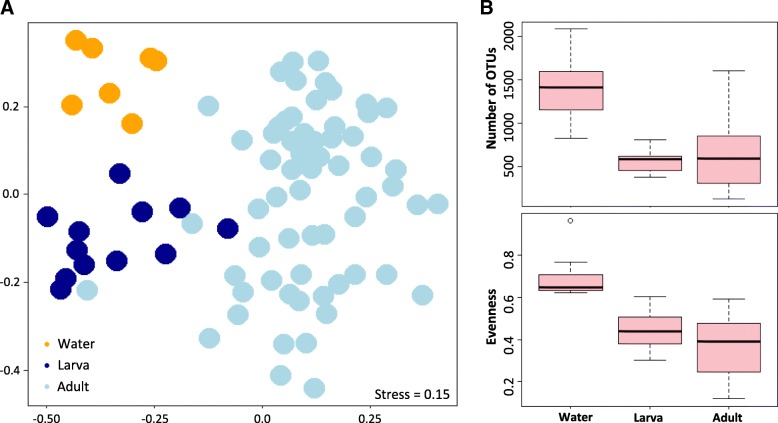
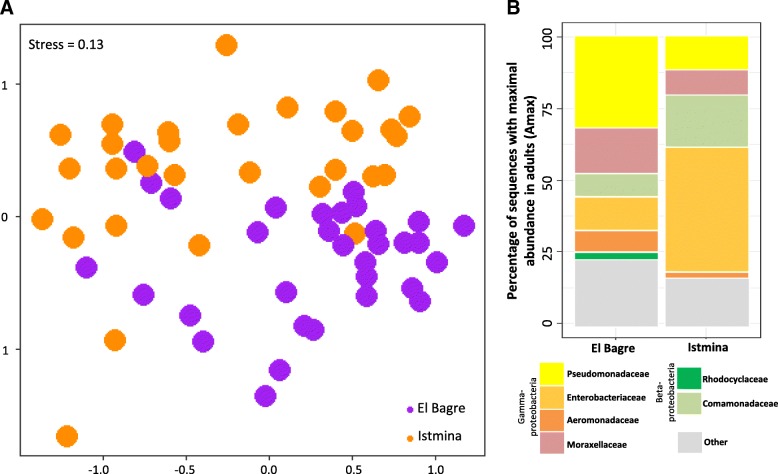
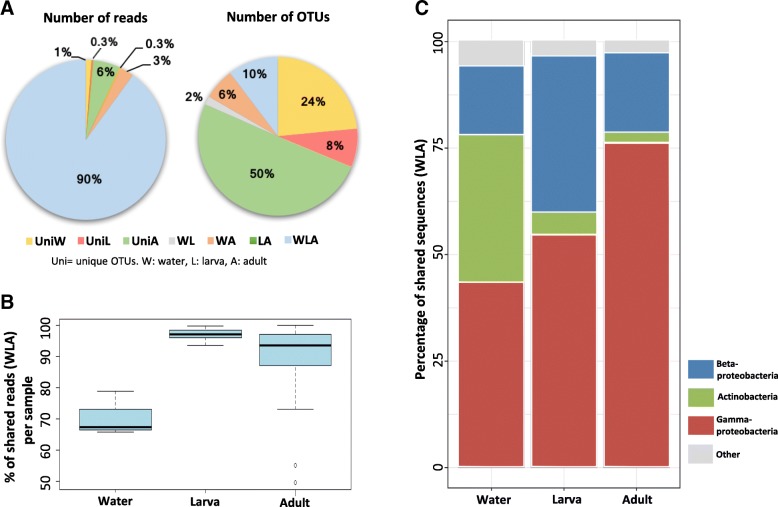
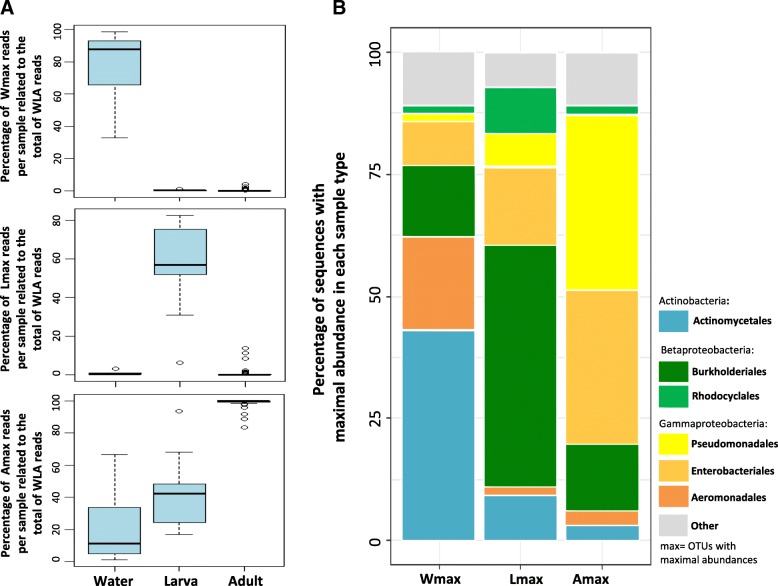
The results revealed that mosquito developmental stage, followed by geographical location, are more important determinants of the gut bacterial composition than mosquito species or adult feeding status. Further, they showed that mosquito gut is a major filter for environmental bacteria colonization.
The sampling design and analytical approach of this study allowed to untangle the influence of factors that are simultaneously shaping the microbiota composition of two Latin-American malaria vectors, essential aspect for the design of vector biocontrol strategies.
人们越来越了解肠道细菌在传播疟疾的蚊子的适应能力和传播能力中的作用,但影响这些细菌群落组成和结构的因素仍难以捉摸。在这项研究中,我们进行了高通量 16S rRNA 基因测序,以了解发育阶段、摄食状态、物种和地理位置对两种主要哥伦比亚疟疾传播媒介按蚊属纳蚊和按蚊属达令的肠道细菌微生物群组成的影响。
结果表明,蚊子的发育阶段,其次是地理位置,比蚊子的种类或成蚊的摄食状态更能决定肠道细菌的组成。此外,研究还表明,蚊子的肠道是环境细菌定植的主要过滤器。
本研究的采样设计和分析方法能够理清同时影响两种拉丁美洲疟疾传播媒介肠道微生物群落组成的因素,这是设计媒介生物防治策略的重要方面。