Castro Jonatas S, Braz-Mota Susana, Campos Derek F, Souza Samara S, Val Adalberto L
Aquaculture Graduate Program, Nilton Lins University, Manaus, Brazil.
Laboratory of Ecophysiology and Molecular Evolution, National Institute of Amazonian Research, Manaus, Brazil.
Front Physiol. 2020 Jul 8;11:772. doi: 10.3389/fphys.2020.00772. eCollection 2020.
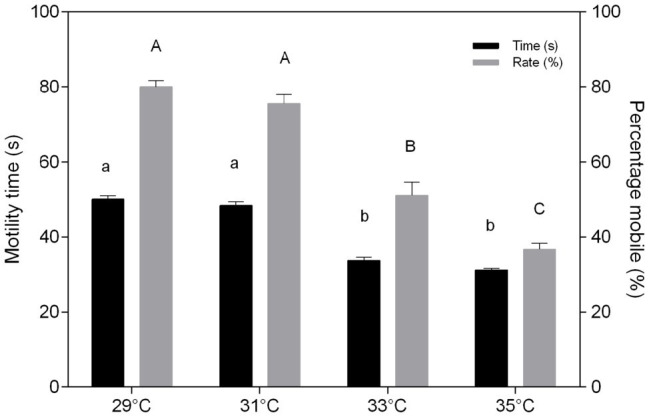
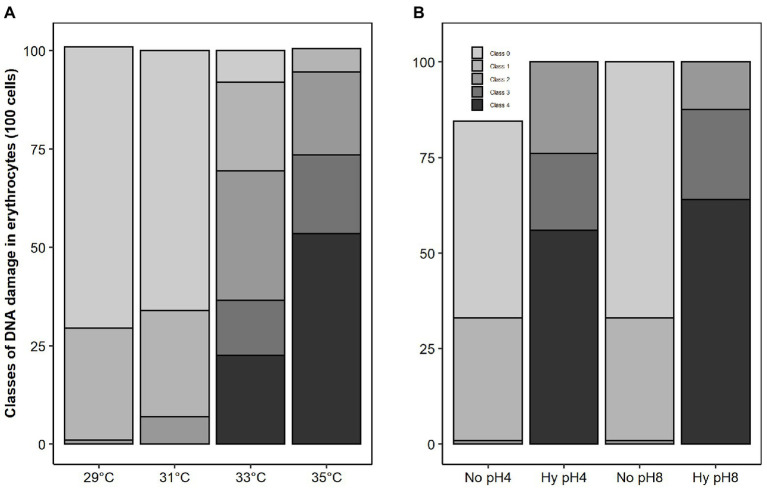
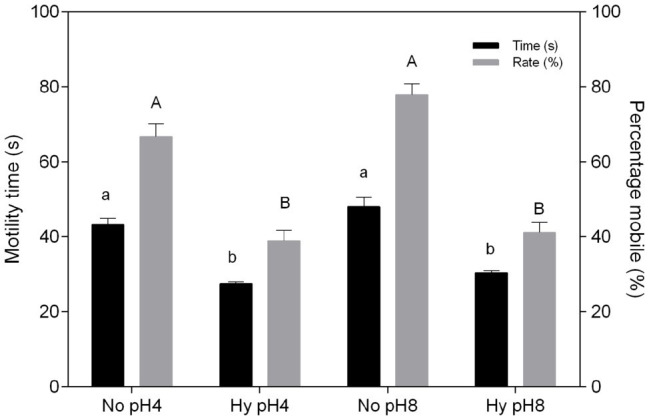
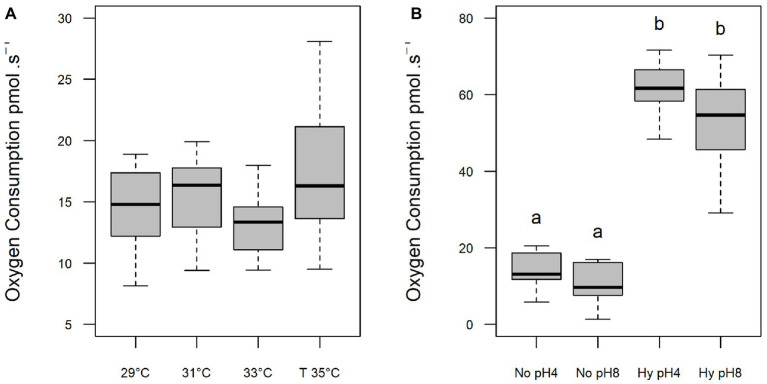
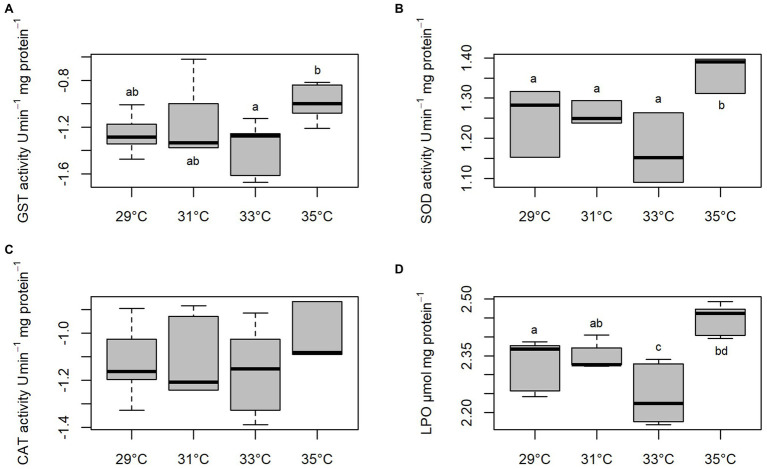
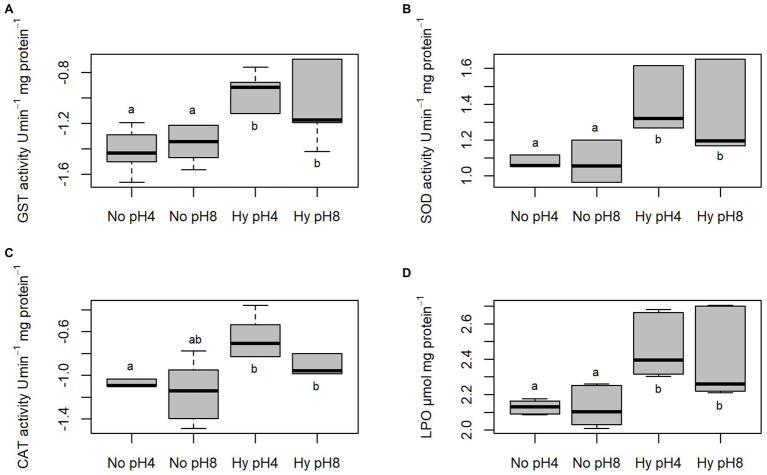
The control of abiotic parameters is fundamental for fish survival, growth and reproduction. These factors have a direct effect on sperm quality. Thus, this study evaluated the effect of different temperatures (29, 31, 33, and 35°C), pHs (4 and 8), and hypoxia (1 mgO L) on sperm motility of (tambaqui). The results indicated a longer duration of sperm motility at 29°C (50.1 ± 2.70 s) that progressively decreased when exposed to 35°C (31.2 ± 1.31 s) and hypoxia at pH 4 (27.4 ± 1.42 s) and pH 8 (30.44 ± 1.66 s; < 0.05), respectively. Sperm oxygen consumption increased in hypoxia at both pH (pH 4 = 61.22; pH 8 = 54.74 pmol s). There was an increase in the activity of glutathione-S-transferase (GST) and superoxide dismutase (SOD), as well as in lipid peroxidation levels (LPO) and DNA damage in sperm exposed to higher temperatures and hypoxia. The pH 4 and pH 8 under normoxia did not affect the quality of sperm. These results suggest that water warming and acidification, consequences of climate changes, significantly affect the reproduction of , reducing the quality of spermatozoids during fertilization.
非生物参数的控制对鱼类的生存、生长和繁殖至关重要。这些因素对精子质量有直接影响。因此,本研究评估了不同温度(29、31、33和35°C)、pH值(4和8)以及低氧(1 mgO₂/L)对坦巴基鱼精子活力的影响。结果表明,在29°C时精子活力持续时间较长(50.1±2.70秒),当暴露于35°C(31.2±1.31秒)以及pH值为4(27.4±1.42秒)和pH值为8(30.44±1.66秒;P<0.05)的低氧环境时,精子活力持续时间逐渐缩短。在两种pH值的低氧环境下精子耗氧量均增加(pH值为4时=61.22;pH值为8时=54.74 pmol/s)。暴露于较高温度和低氧环境下的精子,谷胱甘肽 - S - 转移酶(GST)和超氧化物歧化酶(SOD)的活性增加,同时脂质过氧化水平(LPO)和DNA损伤也增加。常氧条件下pH值为4和pH值为8对坦巴基鱼精子质量没有影响。这些结果表明,气候变化导致的水温升高和酸化显著影响坦巴基鱼的繁殖,降低受精过程中精子的质量。