Lapointe Dominique, Cooperman Michael S, Chapman Lauren J, Clark Timothy D, Val Adalberto L, Ferreira Marcio S, Balirwa John S, Mbabazi Dismas, Mwanja Matthew, Chhom Limhong, Hannah Lee, Kaufman Les, Farrell Anthony P, Cooke Steven J
St. Lawrence River Institute of Environmental Sciences, Cornwall, ON, Canada.
Fish Ecology and Conservation Physiology Laboratory, Department of Biology and Institute of Environmental Science, Carleton University, Ottawa, ON, Canada.
Conserv Physiol. 2018 Oct 15;6(1):coy056. doi: 10.1093/conphys/coy056. eCollection 2018.
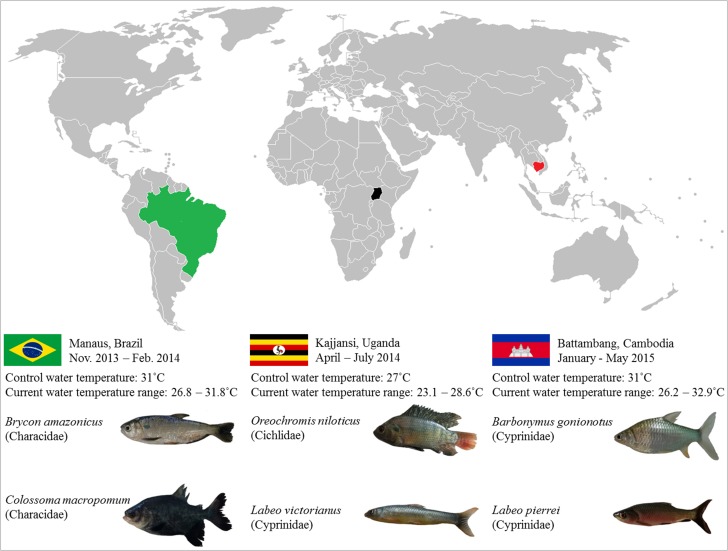
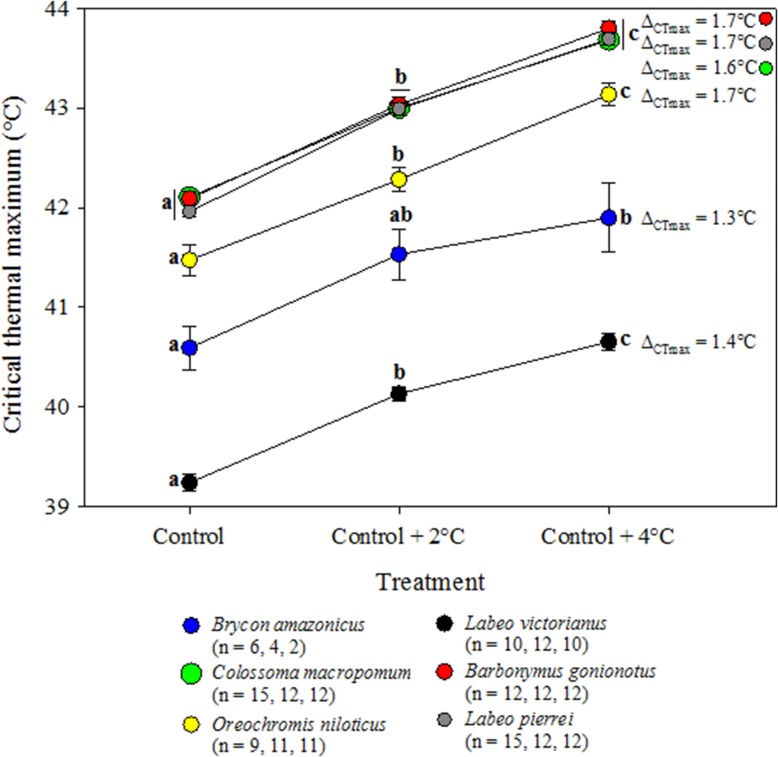
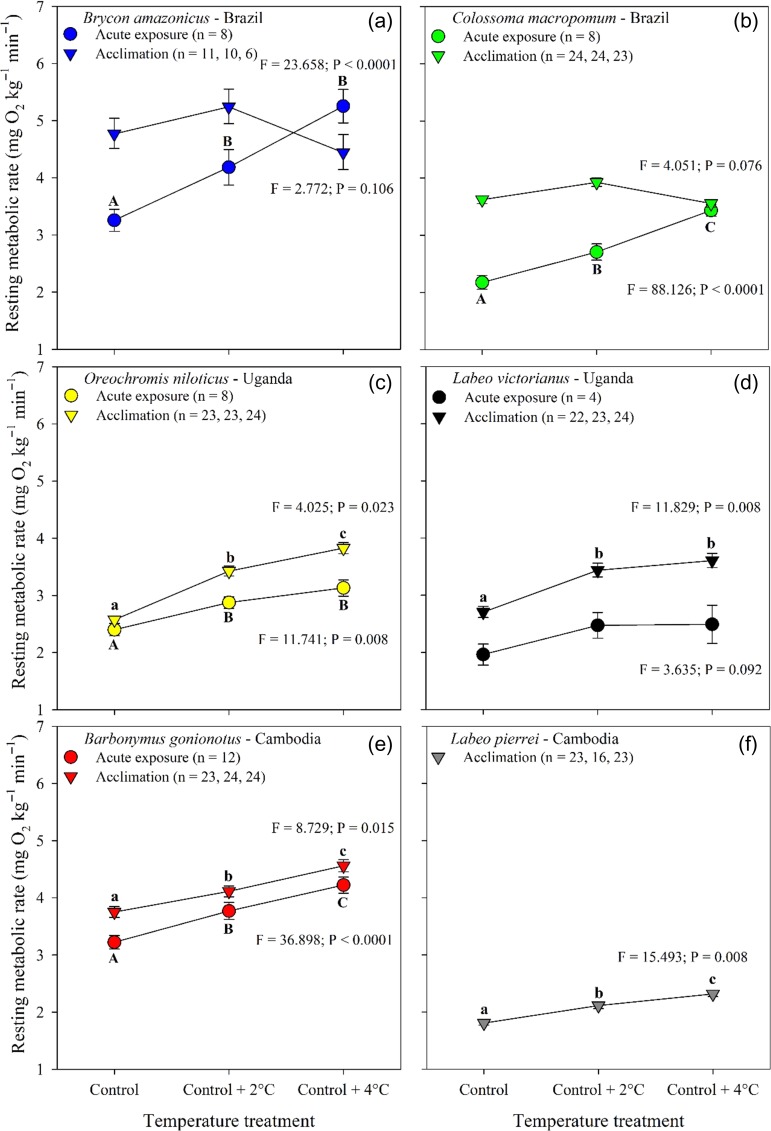
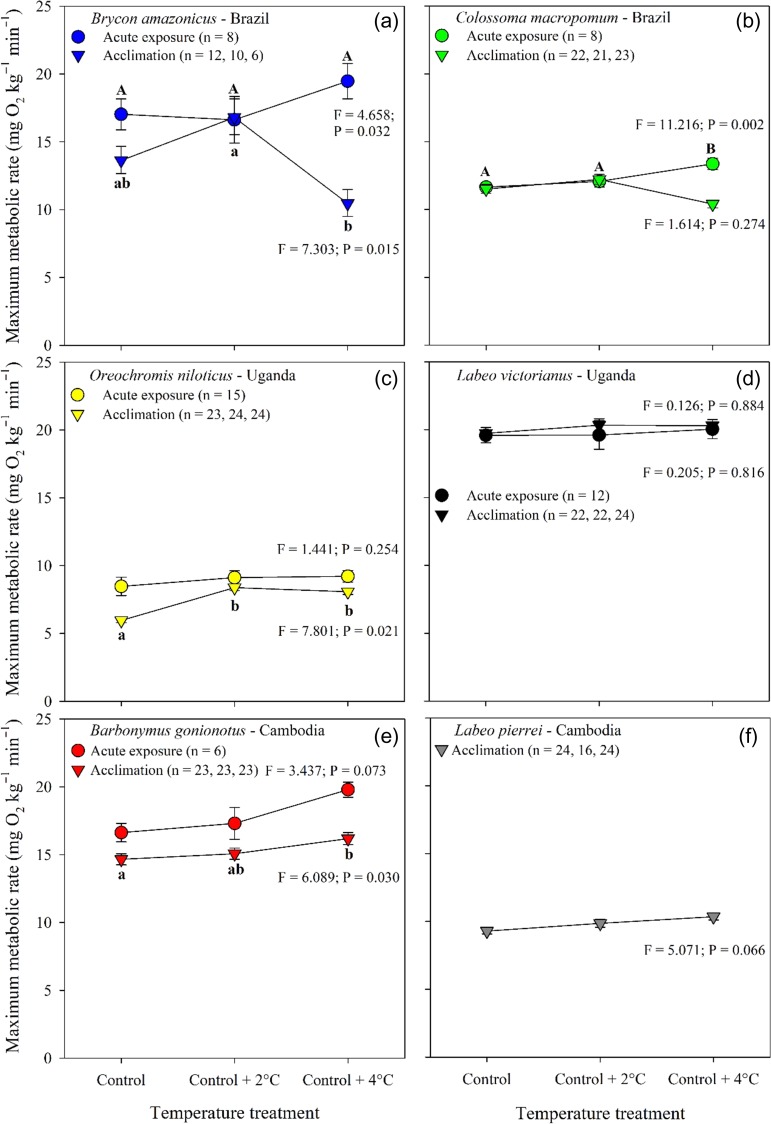
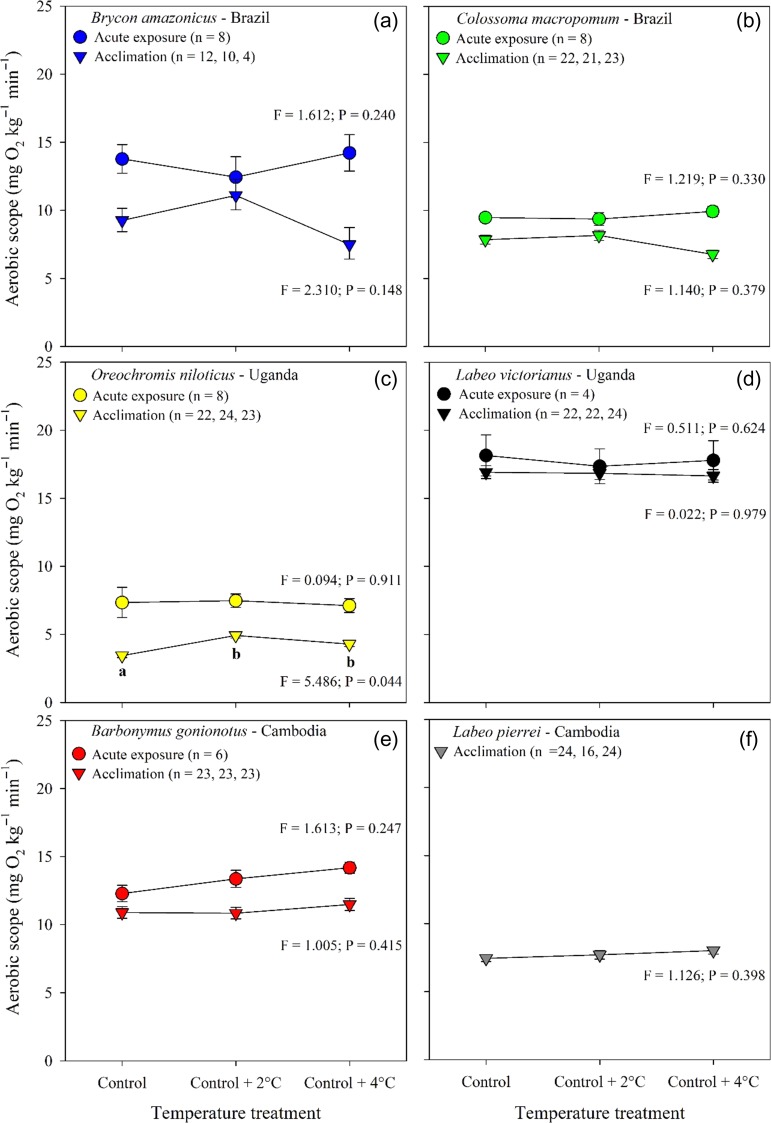
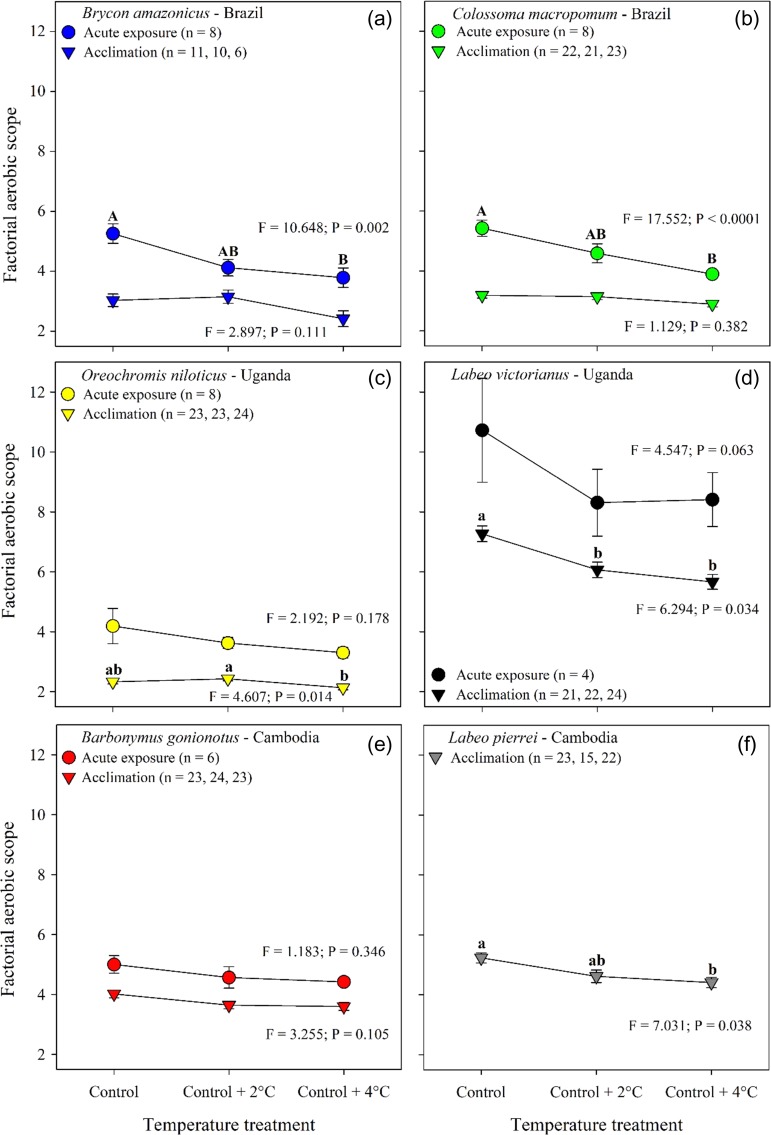
Equatorial fishes, and the critically important fisheries based on them, are thought to be at-risk from climate warming because the fishes have evolved in a relatively aseasonal environment and possess narrow thermal tolerance windows that are close to upper thermal limits. We assessed survival, growth, aerobic performance and critical thermal maxima (CTmax) following acute and 21 d exposures to temperatures up to 4°C higher than current maxima for six species of freshwater fishes indigenous to tropical countries and of importance for human consumption. All six species showed 1.3-1.7°C increases in CTmax with a 4°C rise in acclimation temperature, values which match up well with fishes from other climatic regions, and five species had survival >87% at all temperatures over the treatment period. Specific growth rates varied among and within each species in response to temperature treatments. For all species, the response of resting metabolic rate (RMR) was consistently more dynamic than for maximum metabolic rate, but in general both acute temperature exposure and thermal acclimation had only modest effects on aerobic scope (AS). However, RMR increased after warm acclimation in 5 of 6 species, suggesting incomplete metabolic compensation. Taken in total, our results show that each species had some ability to perform at temperatures up to 4°C above current maxima, yet also displayed certain areas of concern for their long-term welfare. We therefore suggest caution against the overly broad generalization that all tropical freshwater fish species will face severe challenges from warming temperatures in the coming decades and that future vulnerability assessments should integrate multiple performance metrics as opposed to relying on a single response metric. Given the societal significance of inland fisheries in many parts of the tropics, our results clearly demonstrate the need for more species-specific studies of adaptive capacity to climate change-related challenges.
赤道鱼类以及基于它们的至关重要的渔业,被认为因气候变暖而面临风险,因为这些鱼类在相对无季节变化的环境中进化,具有狭窄的热耐受窗口,且接近热上限。我们评估了六种原产于热带国家且对人类消费具有重要意义的淡水鱼,在急性暴露和21天暴露于比当前最高温度高4°C的温度后的存活率、生长、有氧性能和临界热最大值(CTmax)。所有六个物种的CTmax随着驯化温度升高4°C而增加了1.3 - 1.7°C,这些值与来自其他气候区域的鱼类非常匹配,并且五个物种在整个处理期间的所有温度下存活率均>87%。特定生长率因温度处理在每个物种内部和之间有所不同。对于所有物种,静息代谢率(RMR)的反应始终比最大代谢率更具动态性,但总体而言,急性温度暴露和热驯化对有氧范围(AS)的影响都较小。然而,6个物种中有5个在温暖驯化后RMR增加,表明代谢补偿不完全。总体而言,我们的结果表明,每个物种都有一定能力在比当前最高温度高4°C的温度下生存,但也显示出对其长期健康状况存在某些令人担忧的方面。因此,我们建议谨慎对待过于宽泛的概括,即所有热带淡水鱼物种在未来几十年将面临温度升高带来的严峻挑战,并且未来的脆弱性评估应整合多个性能指标,而不是依赖单一反应指标。鉴于内陆渔业在热带许多地区的社会重要性,我们的结果清楚地表明需要针对气候变化相关挑战的适应能力进行更多的物种特异性研究。